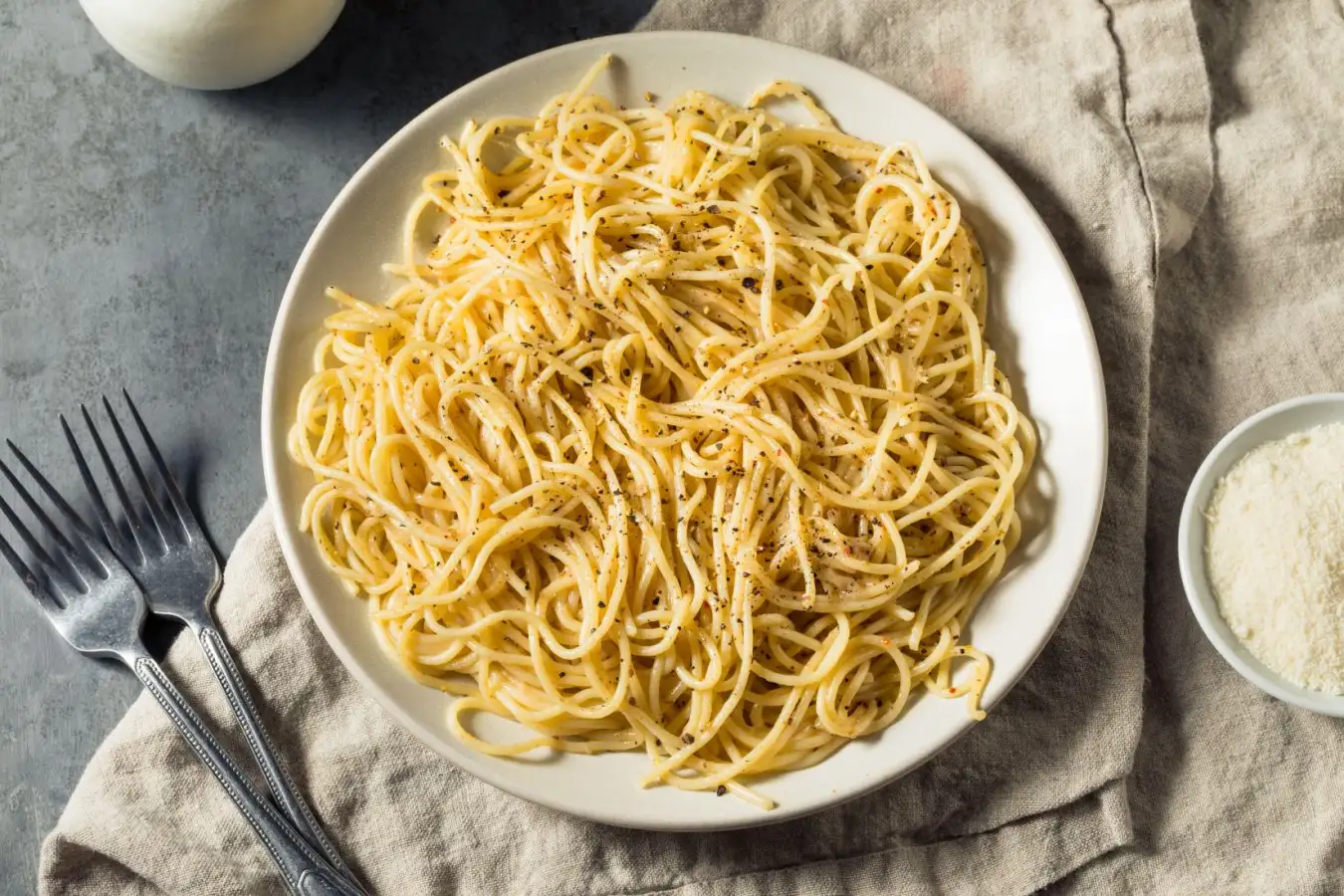
A smooth cacio e pepe pasta sauce can be hard to achieve
Brent Hofacker/Alamy
Scientists’ new recipes for a classic pasta dish and boiled eggs were among the most talked-about science stories of 2025, provoking delight and fury in equal measure.
In January, Ivan Di Terlizzi at the Max Planck Institute for the Physics of Complex Systems in Germany and his colleagues reported their analysis of how to make a perfect cacio e pepe pasta sauce, a silky emulsion of black pepper, pecorino cheese and water that is famously difficult to get smooth without clumps. The secret, according to the team, is to add a dash of cornstarch.
This finding was based on the meticulous testing of hundreds of different sauces with minor differences in the proportions of cheese, starch and water, which helped Di Terlizzi and his team plot out detailed graphs and diagrams showing when the sauce was likely to be free of clumps. But despite this scientific justification, their findings proved controversial, especially in the researchers’ home country of Italy.
“Because we are talking about Italian recipes, there were some social media comments that were not really enthusiastic, saying, ‘We have been doing these recipes for years now; these scientists want to teach us how to do new things; cooking should be more about love rather than science,’” says Di Terlizzi.
The response from the scientific community was more widely positive, says Di Terlizzi, with colleagues stopping him in physics conference corridors to ask excitedly about their paper. In September, Di Terlizzi and his colleagues won one of this year’s Ig Nobel prizes, a tongue-in-cheek competition recognising scientific work that makes people laugh, then think. “It’s finding order in the world that looks like a mess if you don’t look very closely with the eyes of rigour and mathematics,” says Di Terlizzi.
In February, Ernesto Di Maio at the University of Naples, Italy, and his colleagues devised a new method to cook perfectly boiled eggs that requires at least half an hour of attentive cooking. This is because the egg must be transferred between pans of 30°C (86°F) water and boiling water every 2 minutes for eight cycles, so that the white and yolk, which set at different temperatures, cook evenly.
The recipe proved popular online, but some social media users complained that it was too time-consuming for what is usually a quick meal to prepare. The media coverage led to some publicity in unexpected places, including a live cooking demonstration on Japan’s main public broadcaster and a question referencing the egg recipe on Italy’s version of the TV quiz show Who Wants to Be a Millionaire? “I’m just back from Washington, DC, where I went to a workshop for research management, and I cooked eggs for 30 people at one ambassador’s house,” says Di Maio.
Some of the scientific theory that the team used to perfect their egg boiling technique is now being repurposed for a more practical use, says Di Maio, which involves producing layered plastics by curing a single material at different sequential temperatures, similar to the egg.
The science of cheese and wine: France
Join an unforgettable exploration of France’s most iconic gastronomic treasures – wine and cheese – through the lens of science, tradition and terroir.
Topics:
- food and drink/
- 2025 news review
Source link : https://www.newscientist.com/article/2504572-physicists-stirred-up-controversy-with-scientific-cooking-tips-in-2025/?utm_campaign=RSS%7CNSNS&utm_source=NSNS&utm_medium=RSS&utm_content=home
Author :
Publish date : 2025-12-30 17:00:00
Copyright for syndicated content belongs to the linked Source.