
[ad_1]


Developed in partnership with the Our Partner
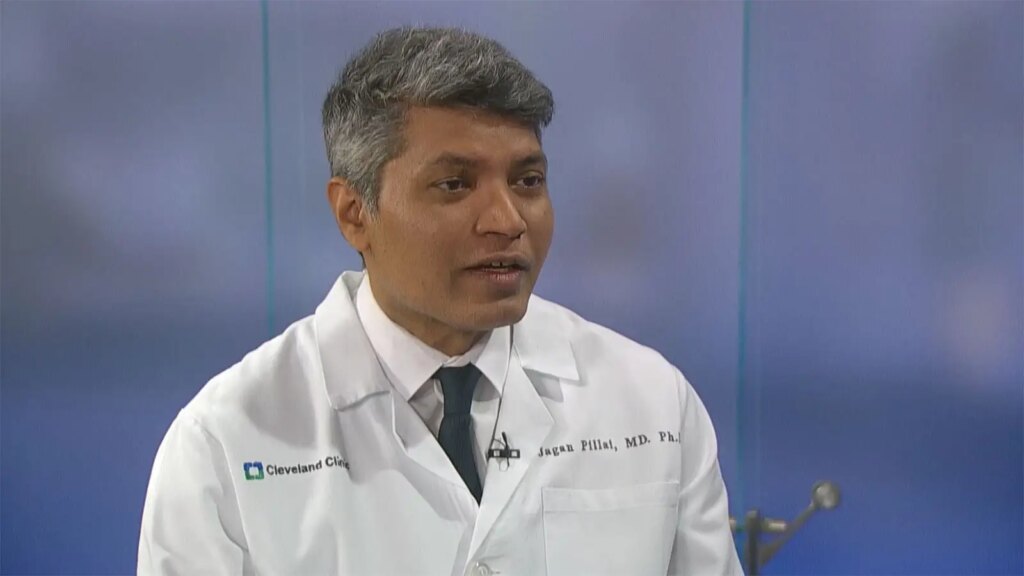
In “Beyond Diagnosis: Alzheimer’s Disease,” Cleveland Clinic behavioral neurologist Jagan Pillai, MD, PhD, and host Glenn Campbell continue their discussion on communicating effectively with patients and families facing a progressive neurodegenerative illness.
Each monthly installment examines an aspect of Alzheimer’s disease care, including diagnosis, prognosis, treatment decisions, and ongoing support for patients and caregivers.
This fourth of six episodes focuses on planning for future care needs, adapting communication as cognition changes, and helping families navigate the behavioral and practical challenges that arise throughout the disease course.
The following is a transcript of their remarks:
Campbell: Welcome to “Beyond Diagnosis,” where we talk with doctors about talking with patients. I’m your host, Glenn Campbell. Alzheimer’s disease is a relentless, incurable, and eventually fatal illness that poses profound challenges for patients, families, and clinicians.
Today, we’ll explore how a behavioral neurologist approaches diagnosis, therapy, prognosis, and management of Alzheimer’s many complexities. Our guest is Dr. Jagan Pillai, who directs Cleveland Clinic’s Center for Brain Health. Dr. Pillai, thanks so much for being here.
Pillai: Thank you, Glenn, for having me.
Campbell: The evolving dynamics of Alzheimer’s require navigating many tough issues. Ideally, Alzheimer’s patients should be involved in decisions about their long-term care, but of course that may require planning soon after diagnosis while the patient is still capable of being involved.
So, what guides your timing of this discussion about eventual transition to, say, residential memory care or to palliative care?
Pillai: Yeah, those are sometimes very challenging conversations, but the field itself has given some best-practice guidelines where a physician should be asking about some stage setting questions like medical power of attorney, living will, making a financial plan. So, those kinds of conversations happen pretty much very early in the visit. It may or may not be tied to a diagnosis of Alzheimer’s disease, but it could be part of the conversation that happens around evaluation with the neurologist so that they’re prepared for what may or may not happen.
So, I usually share the fact that I tend to make those plans for myself just so that we don’t know what’s going to happen to each of us. So, that makes it easier for families to recognize how to think about this and they’re not being picked out for making a pressing decision, but this is part of general planning for your life in a way that’s responsible for both yourself and your family and also helping your medical provider make the right decisions for that person.
The second part of the conversation is about what kind of support systems are needed. We talked about the fact that when a person reaches the point of dementia, they’re not able to maintain their daily routine independently in a safe manner.
So, in the Alzheimer’s disease dementia stage, the conversation shifts into what stages they could think about. Like, for example, the early stage, they can still function independently at home, but not so much outside. In the moderate stage of dementia, they may be needing prompts to finish their daily routine, whereas the late stage of dementia, they need to be walked through what needs to happen in their daily routine.
So, we can give the family a sense of what to expect at different stages and tailor the conversation about what kind of support services they may need at each stage and also prep them beforehand so the family can kind of track and be prepared for what to expect as things change for their loved ones.
Campbell: You mentioned changing management over the course of the patient’s disease. How do you adapt your communication strategy as a patient’s cognition declines over time?
Pillai: Yeah, that’s something that differs by each patient, but some general principles that I can think of is that many conversations that require self-insight are best handled earlier in the disease. So, we bring up some of these issues about decision making, who would be the person who would manage some of the choices that they’re going to make in the first two or three conversations.
We also bring in other care providers who are better positioned, maybe it’s a social worker, maybe it’s a psychologist, to help through these conversations if there are specific challenges in the individual. As the cognition declines, if a person is not able to communicate effectively, hopefully these kind of structures that we built earlier is helpful in carrying them forward. Rarely it so happens that families seek help very late in the disease. At that time, most of the conversations and decision making for the patient happens through their primary care provider.
Campbell: Managing behavioral changes has been identified by some clinicians as one of the toughest aspects of managing patients with Alzheimer’s. How do you help patients and families cope when these behavioral changes start to appear?
Pillai: Yeah. So, I think what’s happening is that behavior is something very, very socially impactful. How we judge a person, how you relate to the person, plays a lot in how we care for them. A family member or a care provider may be investing a lot of themselves in their care of the patient in terms of the hours, in terms of the effort and energy put in. And as the disease affects some aspects of cognition, it may also affect aspects of behavior.
So, there may be changes in empathy. There may be changes in a lack of awareness of how much the family member is putting into the care. So, oftentimes the family members face in a scenario of emptiness because they’re bringing in a lot. They don’t feel the warmth of being recognized for what they’re bringing in from the patient or the person who needs help.
So, that can be very disorienting and people handle it very differently. Oftentimes they’re angry because this is not something that they want to feel. They don’t feel validated in the care. Second is they might just feel exhausted and they don’t have enough attentional capacities to manage this person with so much attention and love.
Third is that they may be physically concerned because there may be aspects of agitation or wandering, some physical pushing or pulling, that may be concerning for their family member. So, in each of those situations, we try to address what is the primary reason a person feels overwhelmed. And sometimes it involves education about how much is a person responsible for? Why is this behavior happening? Where is it coming from? Is it really safe to have these behaviors? Is it something that we need to control? So, a lot of education happens there.
We use medications and only when we feel the patient is at risk for harm or for causing harm to other people. If not, we try to manage these changes through changes in their routine, changes in addressing their sleep patterns, the changes in engaging them with some meaningful tasks. So, we’ll look at all these factors and also help reset expectations of family members that there’s no way we can make it all go away, but we are trying to make this a better situation where they can understand what’s happening and be present without being overwhelmed.
So, that’s a tricky conversation and we bring our different team members to help this conversation. It could involve therapists, it could involve our social workers, our specific psychiatrists or psychologists involved in managing these things. I also found that patient support groups are very helpful for family members to have this conversation, see how other people have adapted, or how they have made sense of these behavioral changes to figure out what they need to do next.
Campbell: You mentioned a lot of the struggles that these family members contend with. What other ways might you or your colleagues be able to help families?
Pillai: One of the things that you notice is that there is a lot to unpack in each of these conversations and the family member or the patient is not getting a lot of time with a physician or another care provider continuously through the course of disease. They have an initial visit, a follow-up visit, and oftentimes the initial visits last for an hour and the follow-up visits say 30 minutes to 40 minutes.
But what the family members need is some dynamic process that helps them through their struggles as they’re making sense of things. And it’s very hard for a single physician or a care provider to be there to the degree that some of the families need. And how we solve the problem is to bring a team of us together that includes our social worker, our physical therapist, our speech therapist, or a cognitive therapist, or psychologist to make sure that each of them addresses a key concern that’s being brought up.
And when the family member, if they’re receptive to it and if they can access these resources, they feel like they have a way of bouncing off ideas and also getting reinforcing feedback on how best to manage these things. So, this dialogue that happens across this team of three, four people helps them navigate the next steps much more effectively rather than a one-off meeting with a physician or advanced care provider.
Campbell: So, do patients and families tend to appreciate that kind of team-based approach and the expertise of your different colleagues, or is it a mentality of they want to be seen by the doctor all the time?
Pillai: They do appreciate the additional perspectives people bring in. So, for any kind of meaningful care, there should be a connection between the care provider and the patient or the family. And that depends on the specific personality and the needs of the family.
And so they might find that they’re forming a meaningful connection with one of the team members more than others and eventually the message gets through that’s important and the switch gets turned on for them. I find that these opportunities are mostly appreciated by patients. Seeing a physician in the context of this team is also very helpful for them.
Campbell: Thanks for your insights, Dr. Pillai. And thank you for joining us on “Beyond Diagnosis,” where we explore not just what physicians know, but how to effectively and compassionately share that knowledge with patients. See you next time.
Please enable JavaScript to view the comments powered by Disqus.
[ad_2]
Source link : https://www.medpagetoday.com/beyond-diagnosis/alzheimers-disease/121549
Author :
Publish date : 2026-06-02 18:15:00
Copyright for syndicated content belongs to the linked Source.