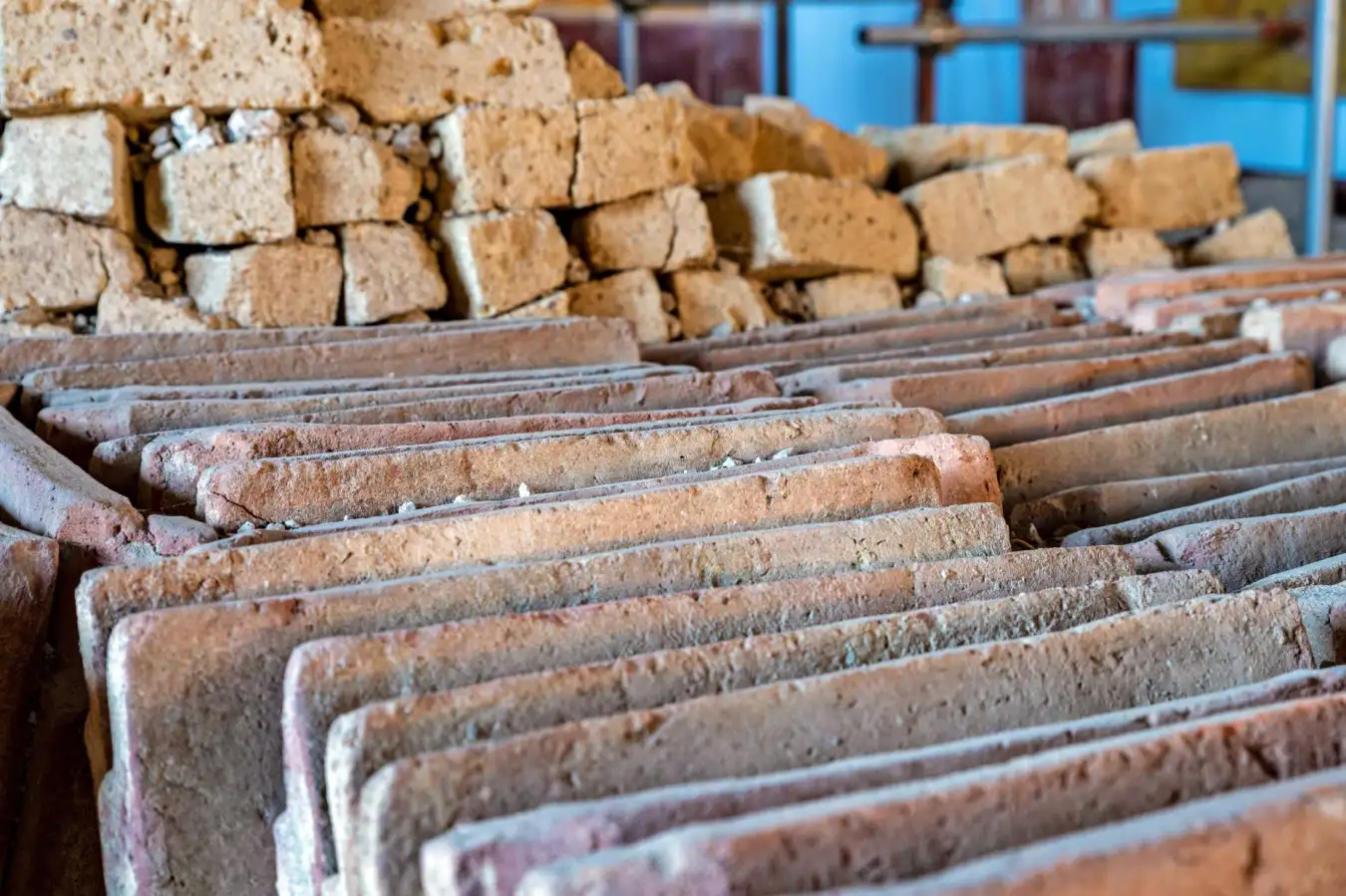
Ceramic roof tiles and tuff blocks excavated at an ancient building site in Pompeii
Archaeological Park of Pompeii
A newly excavated, ancient construction site at Pompeii, frozen in time after the eruption of Mount Vesuvius, has allowed archaeologists to finally determine the methods used to make Roman concrete.
Pompeii, near the modern city of Naples, Italy, was buried and preserved under volcanic ash in AD 79. Excavations on the building site first began in the 1880s before being halted until early 2023, when a major new dig was undertaken.
Following the new excavations, archaeologists discovered a near perfectly preserved concrete workshop, complete with marks on the walls detailing work schedules and material quantities. Concreting tools and piles of quicklime were also found, along with recycled roof tiles.
Admir Masic at the Massachusetts Institute of Technology says the team was stunned at how “exceptionally well preserved” the site was and that it offered an opportunity to understand Roman concreting methods in a way that “no laboratory reconstruction could ever replicate”.
“The materials were exactly as they were at the moment the eruption froze the city in time,” says Masic. “Studying it truly felt as if I had travelled in time back to 79 CE and was standing beside the workers as they mixed and placed their concrete.”
The team’s findings suggest that a long-held belief about how Romans made their concrete will now need to be revised.
Historical texts reported that Romans used slaked lime – calcium hydroxide – to make concrete, and mixed the lime with water before adding it to other ingredients, such as volcanic ash.
However, chemical analysis of the dry, pre-mixed piles found in the Pompeii workshop shows that the ancient concreters were, in fact, using a hot mixing method involving quicklime, or calcium oxide. This involved mixing the lime with all other ingredients, including volcanic ash or a mineral called before adding the water, and a chemical reaction heated up part of the concrete as it set.
“Our evidence shows that quicklime played the primary role in the structural concrete,” says Masic. “Slaked lime, by contrast, was generally used for finishing mortars and plasters, where workability and smooth surfaces were essential.”
One of the benefits of the hot mix method is that fragments of lime, called clasts, remain in the concrete after it sets, allowing for continuous self-repair of cracks and other minor structural faults.
“These lime clasts act as calcium reservoirs, dissolving and recrystallising in pores and cracks or reacting with volcanic ash to strengthen concrete microstructure,” says Masic.
A modern concreter would have understood the Roman concreting process in Pompeii and could have easily entered the workshop and almost immediately set to work, he says. “The chemistry is ancient, but the craft is recognisable.”
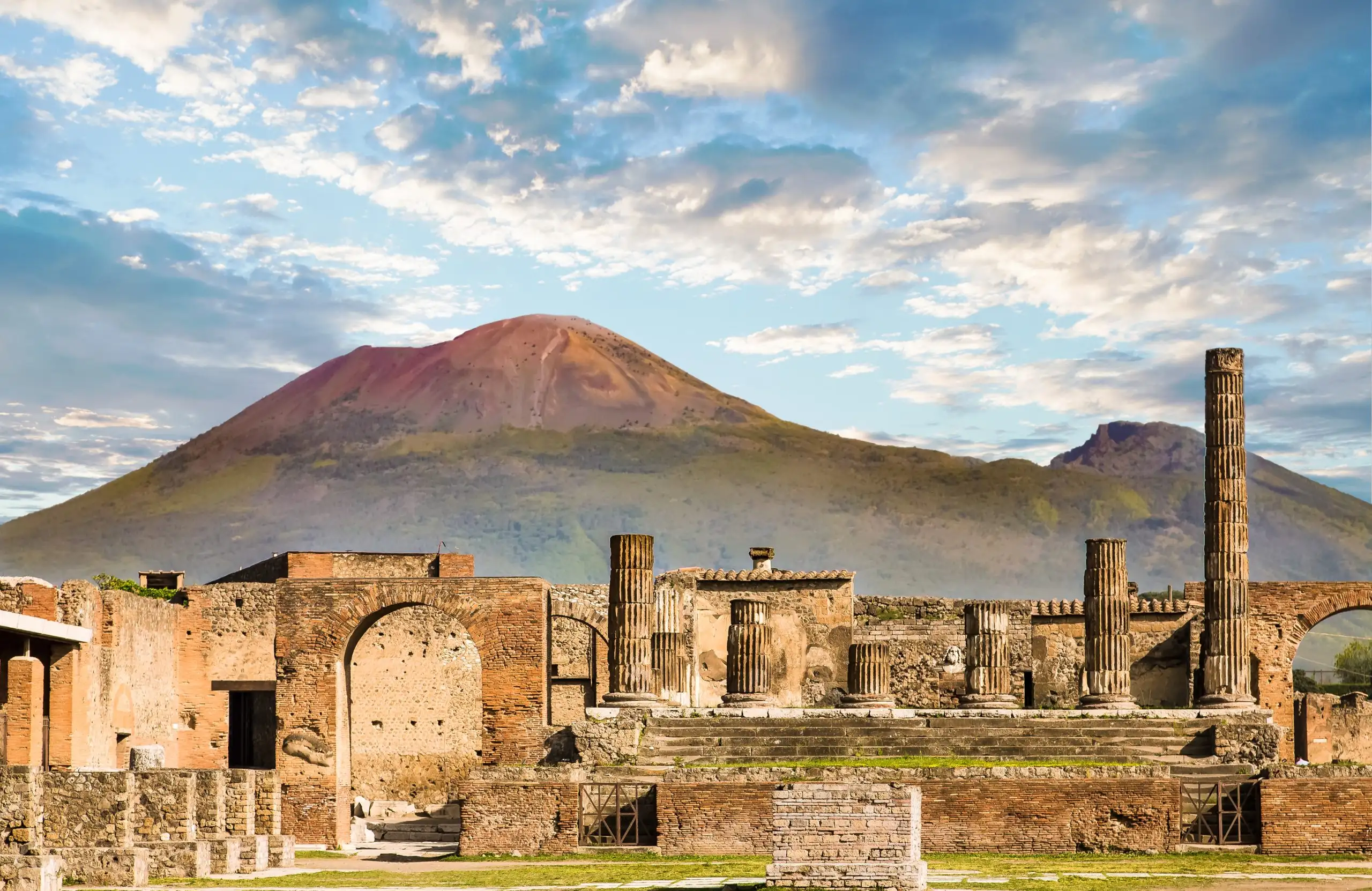
Historic Herculaneum – Uncovering Vesuvius, Pompeii and ancient Naples
Embark on a captivating journey where history and archaeology come to life through Mount Vesuvius and the ruins of Pompeii and Herculaneum.
Topics:
Source link : https://www.newscientist.com/article/2507648-pompeii-building-site-reveals-how-the-romans-made-concrete/?utm_campaign=RSS%7CNSNS&utm_source=NSNS&utm_medium=RSS&utm_content=home
Author :
Publish date : 2025-12-09 16:00:00
Copyright for syndicated content belongs to the linked Source.