
“There are some things I know are going to be universally difficult — I know I can’t order an MRI on anyone without a prior authorization, no matter what your insurance is and no matter what the condition is, because from the outpatient perspective where I work, nothing is urgent or emergent so it usually takes about a week,” reflected Molly Webber, MD. “MRIs are universally annoying.”
Webber is a family medicine physician in semi-rural Washington, where she sees a broad range of patients. Treating the full spectrum of medical conditions (outside of childbirth), Webber has frequent prior authorization demands in the prescription of medications as well as imaging. The delay in her patients’ ability to access prescribed care informs her decision-making around prescribing.
“When ordering brain MRIs, it’s usually something neurologic going on that I can’t explain. The person is not obviously sick enough to be in the emergency room or the hospital — they’re not obviously having a stroke — but the problem with neurologic stuff is it has the potential to progress in an unpredictable way.” And if the approval for the MRI is delayed or inaccessible, the emergency department might become the new, more expensive source of care.
Within the realm of prescriptions, while it is common knowledge that health insurance plans devise their own formularies, frustrations arise because “I as a physician have no way of knowing what’s on that list. So, if I prescribe an inhaler, I’m going to pick from a broad category and I always pick a generic one, and at least 50% of the time, it’ll come back and say I need to do prior auth or you can pick something else off the formulary, but the alternatives may or may not be appropriate. It’s frustrating because I know this decision happened through some sort of algorithm” that patient appointments become dedicated to explaining.
And while Webber does not always have strong preferences for one medication versus another in its class, the patient might experience a better response to one that the insurer does not prefer, which can in turn cause both paperwork burden and delays in care. “There are times, like with diabetes medications, where I know it’s clinically appropriate but they’re creating these obstacles.”
Not all of this paperwork burden falls squarely on Webber’s shoulders, as her office has a staffer dedicated to prior authorization administration. “But at the end of the day, I’m the one who has to look over whether or not I want to make a change, whether or not I want to appeal this, what are we going to say if we do appeal this. It’s a huge amount of time and resources.”
For Webber and other physicians interviewed, prescribing in this environment felt at times like a black box in addition to causing layers of bureaucracy apart from direct patient care. What’s more, this time spent navigating the health insurance bureaucracy is non-billable hours.
Researchers at KFF found that consumers appealed less than 1% of denied claims in ACA marketplace exchange plans in the 2023 plan year; among prior authorization denials within Medicare Advantage plans, KFF found a higher, but still low, appeal rate of 11.5% in 2024 (despite the fact that more than 80% of appeals were either fully or partially overturned). Given this context, it is vital to explore what accounts for this low rate of appeal.
Is it the administrative burden to the patients? Is it the information asymmetry between patients and their insurers? Is it the administrative burden to the physicians who are too overextended to navigate the hurdles of prior authorization approval?
Rather than containing costs in the healthcare system, payers’ reliance on utilization management practices shifts burden to physicians and, in turn, to their patients. These demands broadly fall under the umbrella of what some public administration scholars have termed “administrative capital” — or the understanding of the bureaucratic rules, processes, and behaviors.
One of the many layers of complexity in this system stems from the lack of uniformity of the relevant laws. Rather, there is pronounced variation across the states in ways that can significantly impact physicians’ experience of the prior authorization “peer-to-peer” review process, the outcomes of which may drive additional, administratively burdensome appeal processes.
The American healthcare system is notoriously fragmented, with some of the healthcare sector regulated by the Department of Labor through the Employee Retirement Income Security Act (ERISA) (which preempts state laws that “relate to” self-insured, or self-funded health plans); Medicare, Medicaid, and ACA marketplace plans regulated by CMS; and some health insurance plans regulated at the state level. Consequently, the state in which one pursues medical care might have a significant effect both on the physician’s and the patient’s experience of health insurance procedures and, consequently, access to benefits.
When a coverage denial is issued, the prescribing physician may engage in a “peer-to-peer” review with a physician employed by the patient’s insurer in the hope of reversing the decision. One source of considerable consternation among physicians is that not only are their prescribing decisions being reviewed by insurers who have not treated the patient, but also, those reviewing and denying prior authorizations are generally not required to be in the appropriate specialty for the condition being treated.
Strikingly, there are numerous states without any statutes regulating the specialties of providers engaged in this practice — indeed, only 28 states have such statutes — such that a family physician might be in the position of reviewing a rare neurology case in which there is limited familiarity with the appropriate standards of care or the newly available drugs on the market. That presents a major problem for patients and providers alike.
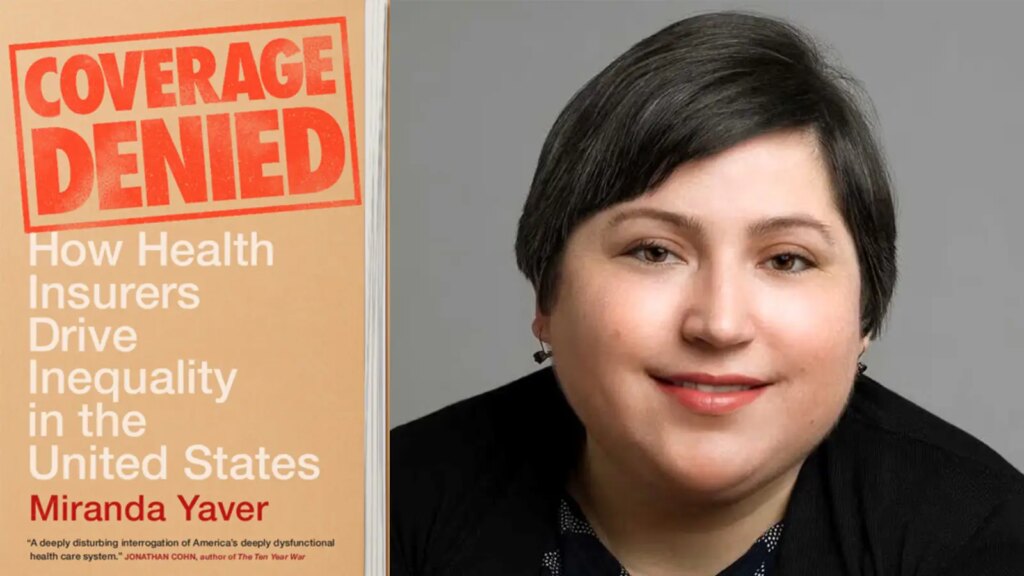
Miranda Yaver, PhD, is a political scientist and a professor of health policy and management at the University of Pittsburgh. She is the author of the forthcoming book, “Coverage Denied: How Health Insurers Drive Inequality in the United States,” from which this piece was excerpted and adapted.
Please enable JavaScript to view the comments powered by Disqus.
Source link : https://www.medpagetoday.com/opinion/second-opinions/120861
Author :
Publish date : 2026-04-20 18:15:00
Copyright for syndicated content belongs to the linked Source.