

Jan Sonnenmair/Getty Images
- The United States is at risk of losing its measles elimination status, which it has held since 2000.
- The designation may be revoked because in 2025, the U.S. experienced its highest number of measles cases since 1992.
- Experts say the upward trend may continue in 2026 due to vaccination hesitancy and conflicting messaging from federal health officials.
The United States may soon lose its measles exemption status, which it has held for the past quarter-century.
In November 2025, PAHO officials announced that Canada had lost its measles exemption status due to ongoing outbreaks.
By mid-January 2026, the CDC had confirmed 171 measles cases in 9 U.S. jurisdictions: Arizona, Florida, Georgia, North Carolina, Ohio, Oregon, South Carolina, Utah, and Virginia.
So far, no cases among international visitors to the United States have been reported.
The bulk of these cases have occurred in South Carolina, where 145 cases were reported to the CDC as of January 13. Since October, 585 measles cases were confirmed in the state.
In 2025, the United States recorded a 33-year high in measles cases, with the CDC confirming 2,242 cases nationwide. That was the highest level of U.S. measles cases since 1992.
CDC officials reported that 89% of the 2025 cases were associated with 49 outbreaks in various regions of the country.
About a quarter of the cases were in children under 5 years of age. About 93% of cases occurred in unvaccinated people or those with unknown vaccination status.
Three deaths and 245 hospitalizations were attributed to the measles outbreaks.
Nathan Lo, MD, an assistant professor of medicine at Stanford University, said there’s a simple explanation for the sharp rise in measles cases in the United States.
“Measles cases were high in 2025 due to declining vaccination in the U.S. and high measles circulation globally,” Lo told Healthline.
Lo said the trend indicates that measles cases will continue their upward trend this year.
“So far, measles cases continue to demonstrate sustained circulation in the U.S., which suggests the U.S. will have another year of high measles cases,” he continued.
Federal health officials appeared to downplay the continued spread of measles.
CDC principal deputy director Ralph Abraham claimed that the ongoing spread is “just the cost of doing business,” suggesting transmission was inevitable due to international travel to and from the United States.
Experts say there is a simple reason why measles can spread so rapidly
“It’s unbelievably contagious. It’s the most contagious disease we’ve ever seen,” said Danelle Fisher, MD, a pediatrician at Providence Saint John’s Health Center in Santa Monica, California.
She noted that people with measles can be contagious 4 days before symptoms emerge and 7 to 10 days afterward.
“Measles is a highly contagious disease that can turn deadly,” added Anne Liu, MD, a clinical associate professor of pediatrics, immunology, and allergy at Stanford University.
“People who are unvaccinated and people who are immunocompromised should be quite concerned about the growing footprint of this outbreak,” Liu told Healthline.
Experts say that vaccine misinformation and ongoing hesitancy are major factors in the sudden rise in measles cases in the United States.
“With continued vaccine hesitancy, and the number of mistruths on social media and the community, and the confusing and conflicting recommendations coming from the FDA and CDC, there is every reason to suspect that more parents/guardians will decline routine childhood vaccinations, including measles vaccinations,” said Graham Tse, MD, a pediatrician and chief medical officer of MemorialCare Miller Children’s & Women’s Hospital in Long Beach, CA. “It is likely that measles outbreaks will continue, and the numbers could rise in 2026,” Tse told Healthline.
Recent research has demonstrated the impacts of vaccine hesitancy.
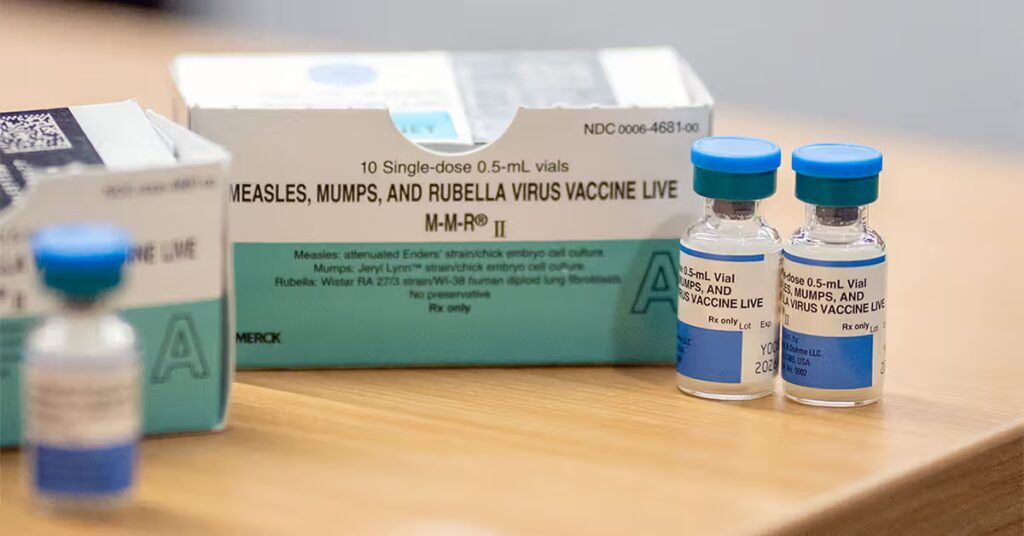
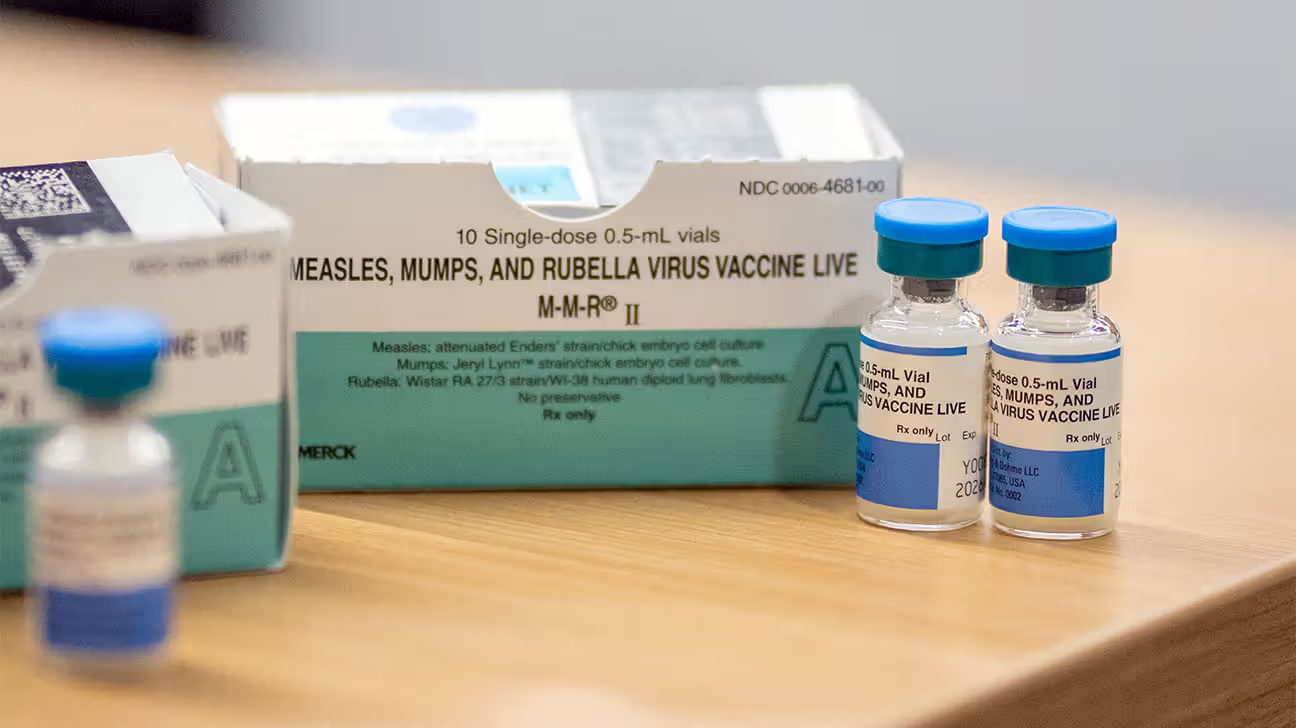
A 2025 study published in JAMA Network Open found that measles-mumps-rubella (MMR) vaccination rates remained below the 93% herd immunity threshold. The study examined 149,000 children in Ohio spanning 20 months from the initial onset of the 2025 measles outbreak.
William Schaffner, MD, an infectious disease specialist and professor of medicine at Vanderbilt University in Nashville, Tennessee, reaffirmed the importance of measles vaccination.
“Vaccination is the way to prevent measles. There are no other ways,” Schaffner told Healthline.
Other experts agreed. “The vast majority of measles cases are in unvaccinated individuals, including in children too young to be vaccinated,” Lo said. “The best way to prevent measles and its spread is through vaccination.”
“Measles is a highly contagious disease so one infected person can spread it to many others,” Tse added.
In early January, federal health officials released new vaccination recommendations for children.
The guidelines reduce the number of primarily targeted diseases from 16 to what the Department of Health and Human Services (HHS) has described as the 11 “most serious infectious diseases.”
CDC officials added that vaccinations for children against influenza, COVID-19, and rotavirus should be based on “shared clinical decision-making,” which means parents must consult with a healthcare professional before their children receive the vaccinations.
Experts say these new guidelines could led to confusion or skepticism that will further lower childhood vaccination rates.
“The changes to the childhood vaccination schedule and subsequent conflicting recommendations with national organizations and states now create confusion with parents and guardians and ultimately may cause increased vaccine declination,” Tse said.
Measles caused more than 3 million illnesses annually in the United States before the vaccine became widely available in the mid-1950s. Those cases resulted in 48,000 hospitalizations and 500 deaths annually.
The virus is transmitted through the air or by direct contact with a surface that has droplets that contain the virus.
Symptoms will usually appear within 14 days. Those symptoms include:
- widespread skin rash
- high fever
- cough
- sore throat
About 30% of measles cases lead to some form of complication, the most common being ear infections and diarrhea. Serious complications are rare, but they include:
Liu said there is also a long-term consequence to measles.
“One of the lesser-known features of measles is that it can wipe out part of a person’s immune memory from prior infections, leaving them vulnerable to infections they have previously had and successfully battled,” she said.
Experts say there are precautions you can take to lower your risk of contracting measles.
The number one way is through vaccination.
“The best way to prevent the spread of measles is through routine vaccination for measles,” said Tse. “Once enough of the population has immunity to measles through vaccination, the measles virus cannot spread easily and cause outbreaks.
Fisher urges parents to ensure that children have received their recommended vaccines. She also recommended that adults who are unvaccinated or are unsure about their vaccination status get immunized.
She said the vaccines not only protect an individual but also children and adults who can’t get vaccinated due to medical treatments or compromised immune systems.
“It’s incumbent on all of us to protect the most vulnerable in our society,” Fisher said.
Schaffner agreed. “There are many children and adults living among us who are immunocompromised. If they were to contract measles, they would get very sick,” he said. “We all protect them by being vaccinated and creating a ‘cocoon’ of protection around them, making it difficult for the virus to get past us to find them.”
Fisher cautioned unvaccinated people from taking planes, trains, or any other form of mass transportation. She said this group should only consider essential travel.
She added that you can also make adjustments at your job to lower the number of people you come into contact with. People who work at or visit schools or healthcare facilities should take extra precautions.
In addition, Fisher advised everyone to be cautious around anyone with a cough or other symptoms of measles.
“Be very wary of anyone with any kind of upper respiratory illness,” she said.
Even going to the grocery store might be risky for those who aren’t vaccinated.
Fisher added that people who have had the disease or are fully vaccinated don’t have much to worry about.
“You’re not going to get sick and you’re not going to spread it,” she said.
Source link : https://www.healthline.com/health-news/us-measles-outbreak-2026
Author :
Publish date : 2026-01-21 10:01:44
Copyright for syndicated content belongs to the linked Source.