Novel saroglitazar significantly improved biochemical response rates in patients with primary biliary cholangitis (PBC) who had an inadequate response to ursodeoxycholic acid or couldn’t tolerate it, according to the EPICS-III randomized clinical trial.
Among 148 patients, 56.7% of those randomized to oral saroglitazar (55 of 97) had a biochemical response at 52 weeks compared with 9.8% of those randomized to placebo (five of 51, P<0.001). Biochemical response was defined as alkaline phosphatase (ALP) less than 1.67 times the upper limit of normal (ULN, 116 U/L), at least a 15% decrease in ALP relative to baseline, and total bilirubin no greater than the ULN.
Biochemical response at week 52 was even greater with saroglitazar among the 93 patients who had baseline ALP no more than three times the ULN (83.1% vs 14.7%), although not a statistically significant difference, reported Raj Vuppalanchi, MBBS, of Indiana University in Indianapolis, at the European Association for the Study of the Liver annual meeting in Barcelona.
Higher baseline ALPs also trended toward greater response with the dual peroxisome proliferator activated receptor (PPAR), with rates of 18.7% on saroglitazar (six of 32) compared with 0% on placebo (none of 14), again not statistically significant.
“Saroglitazar represents a novel and efficacious dual PPAR therapy in individuals with PBC who had an inadequate response or intolerance to ursodeoxycholic acid,” Vuppalanchi said during his presentation. Saroglitazar’s 1-mg dosing, excellent safety profile, and potent alpha agonism “make it an attractive treatment option,” he noted.
The FDA has granted saroglitazar’s New Drug Application a Priority Review designation for PBC, with a decision slated by Nov. 27, 2026. The drug is also being developed for treatment of dyslipidemia in type 2 diabetes and for other liver diseases.
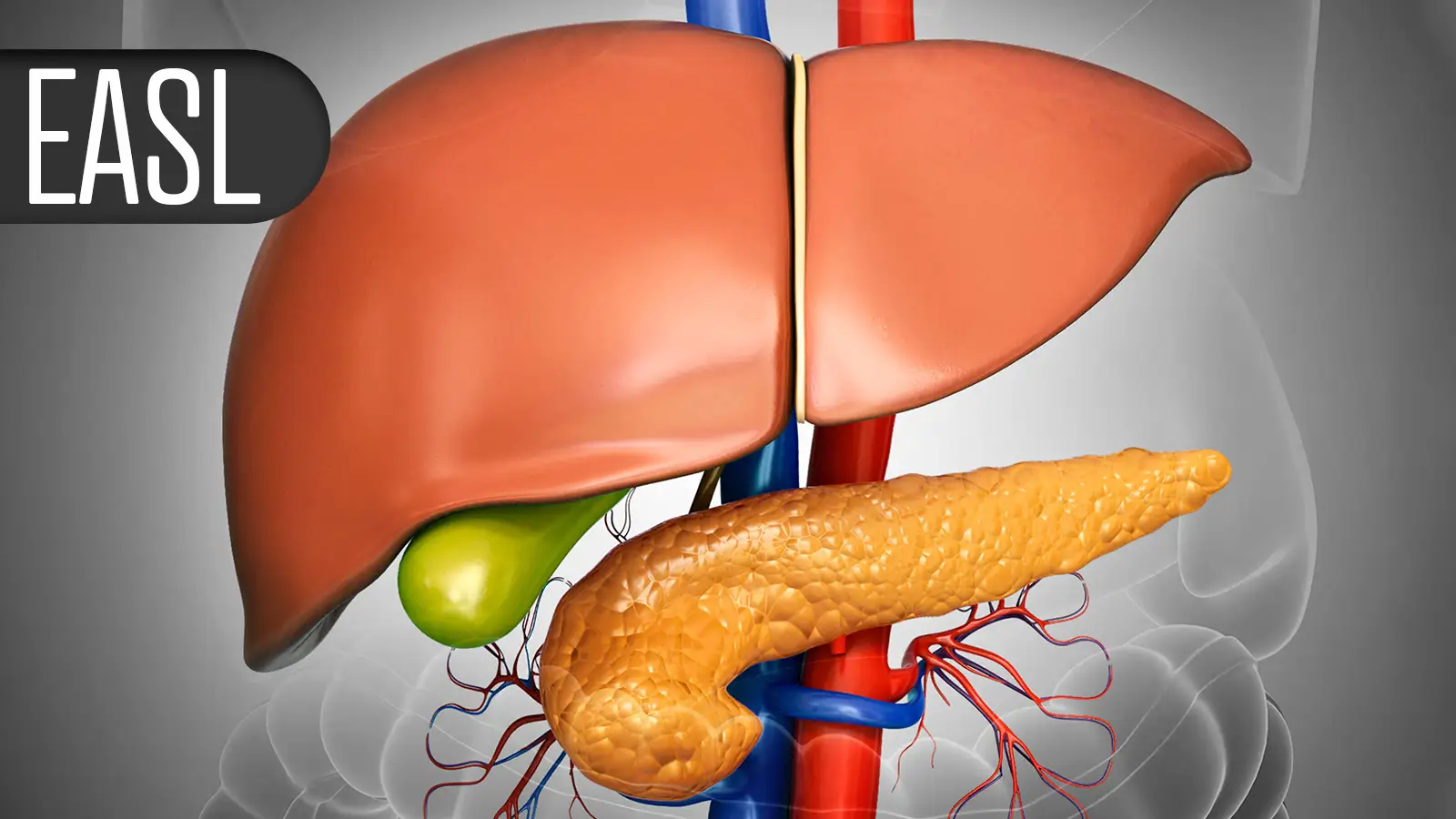
PBC is a chronic liver disease defined by progressive destruction of the liver’s bile ducts. The resulting buildup of bile in the liver leads to inflammation, fibrosis, and cirrhosis. The disorder primarily affects women — an estimated 65 of every 100,000 U.S. women. Ursodeoxycholic acid (UDCA) is first-line therapy for PBC, but an estimated 40% of patients don’t have an adequate response to the drug, and 5 to 10% can’t tolerate it.
The phase III portion of the EPICS-III trial enrolled 148 adults with PBC in Argentina, Iceland, Turkey, and the U.S. who had an ALP at least 1.67 times the ULN after treatment with UDCA for at least 12 months or who were at that ALP level and weren’t able to tolerate UDCA. Patients also had to have total bilirubin levels less than two times the ULN.
Participants were randomly assigned 2:1 to receive 1-mg oral saroglitazar magnesium or placebo daily for 52 weeks. The study’s primary endpoint was patients’ biochemical response at week 52.
Median age was 56 years in the saroglitazar group and 55 years in the placebo group, and 92.8% and 86.3% of patients were female, respectively. Mean PBC duration was 95.6 months in the saroglitazar group and 108.4 months in the placebo group, and mean duration of UDCA treatment was 73.3 months and 88.8 months, respectively.
Mean ALP levels were 363.0 U/L in the saroglitazar group and 317.2 U/L in the placebo group, with 36.1% and 31.4% of patients, respectively, having ALP levels greater than three times the ULN.
Saroglitazar’s biochemical response happened quickly, and patients saw sustained results through week 52. By week 8, 54.8% of the saroglitazar group and 2.0% of the placebo group achieved a biochemical response. By week 52, the saroglitazar group saw a 33.5% decrease in ALP levels, while the placebo group saw a 6.5% increase (P<0.001). Significantly more saroglitazar patients than placebo patients achieved ALP normalization, at 8.2% versus 0% (P=0.016).
Change in 5-D Itch Scores didn’t differ between groups at week 52 after adjustment for baseline levels.
Treatment-emergent adverse events (TEAE) were common in both groups, at 81.1% of saroglitazar patients and 90.5% of placebo patients. The most common TEAEs were pruritus (22.5% and 33.3%, respectively), headache (15.3% and 11.1%), and hypertension (11.7% and 1.6%). TEAEs led 4.5% of saroglitazar patients and 3.2% of placebo patients to leave the study.
Fracture was somewhat more common with saroglitazar (3.6% vs 1.6% on placebo), but serum creatinine increase of more than 1.5-fold from baseline was similar (1.8% vs 1.6%), as was weight gain of at least 5 kg (20.7% vs 19%). No rhabdomyolysis, drug-induced liver injury, or Hy’s law criteria violations occurred.
The high proportion of Hispanic patients in the trial — 35.1% in the saroglitazar group and 39.2% in the placebo group — might have pulled down the study’s overall biochemical response rates, Vuppalanchi noted. “We did see a difference in this population,” he explained. “These patients have been diagnosed far longer; they have had treatment with UDCA for many years and still had elevated ALP levels. They probably represent a difficult-to-treat population, as we all recognize.”
Source link : https://www.medpagetoday.com/meetingcoverage/easl/121529
Author :
Publish date : 2026-06-01 17:53:00
Copyright for syndicated content belongs to the linked Source.