
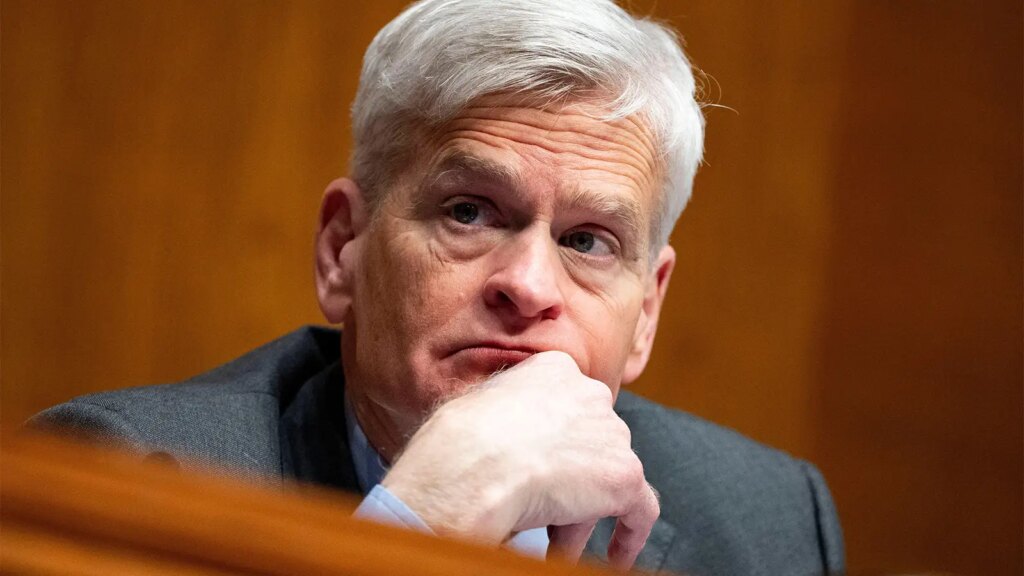
When Sen. Bill Cassidy, MD (R-La.), questioned Robert F. Kennedy Jr. during his confirmation hearing for health secretary last winter, many physicians and public health leaders saw something increasingly rare in American politics: a lawmaker genuinely wrestling with science, evidence, and institutional responsibility in real time.
Cassidy, a physician by training, openly acknowledged concerns about Kennedy’s long history of vaccine skepticism. He cited studies. He referenced public trust. He articulated fears shared by many within medicine about what happens when scientific uncertainty is replaced by political certainty.
And then he voted yes.
That moment felt contradictory to many in healthcare. But it revealed something larger about the current state of health policy in America, and what Cassidy’s departure from the Senate may ultimately mean.
For years, Cassidy occupied an increasingly narrow space in American politics: a conservative physician-legislator who still believed that institutions, expertise, and evidence mattered. He was hardly beyond criticism. Many public health advocates disagreed with him on healthcare access, pandemic policy, and federal health reform. Yet, even critics often recognized that he approached health policy from a place grounded in medicine itself rather than political identity.
That distinction matters more now than ever.
His vote to confirm Kennedy as health secretary reflected a calculation familiar to policymakers in polarized systems: whether preserving influence inside the room requires compromising with forces one privately mistrusts. Under the current administration, Cassidy urged the CDC to reject a recommendation from its advisory committee to get rid of the universal birth dose of the hepatitis B vaccine, and he opposed the controversial nomination of wellness influencer Casey Means as surgeon general. He continued to promote public health, even when it was politically unpopular. Cassidy also reportedly secured commitments on vaccine oversight before casting that fateful vote to confirm Kennedy. Whether that was pragmatism or legitimization of a movement that has systematically eroded trust in science, reasonable people will continue to disagree. But it is not the most important question his exit raises.
The deeper concern is that figures like Cassidy, who ultimately held a steadfast belief in science and institutional responsibility, despite his vote for Kennedy, may no longer be politically viable at all.
Public frustration with healthcare institutions is real and not without basis. Patients face crushing costs, bureaucratic indifference, and a system that too often feels designed for everything except their care. Public health agencies made consequential mistakes during the pandemic and struggled, sometimes badly, to communicate uncertainty. That erosion of trust did not emerge from nowhere.
But there is a critical difference between demanding that institutions earn back trust and abandoning confidence in expertise altogether. The first is accountability. The second is a different kind of danger.
Medicine advances because science is iterative and self-correcting. Public health succeeds not because agencies are infallible, but because society maintains enough collective trust to act during moments of crisis. When scientific credibility becomes fully subordinated to political identity, rebuilding it is extraordinarily hard, and the consequences fall hardest on patients, not politicians.
What the country needs are leaders capable of holding two convictions simultaneously: that healthcare institutions require genuine reform, transparency, and humility, and that evidence, expertise, and scientific rigor are not negotiable. Those are not opposing ideas. The failure to hold both at once is precisely how we arrived here.
The challenges ahead make this urgent. Chronic disease now consumes the majority of healthcare spending and shortens millions of lives. A mental health crisis, particularly among young people, continues to deepen without adequate clinical or policy response. Artificial intelligence is already reshaping clinical decision-making in ways that outpace regulatory frameworks and ethical consensus. None of these will yield to ideology. All of them require leaders who can engage complexity honestly, communicate uncertainty without losing credibility, and make evidence-based decisions in politically hostile environments.
Whether one agreed with Cassidy or not, his departure forces an uncomfortable question: Are those kinds of leaders becoming too politically costly to survive?
That may be the most consequential part of his legacy.
Please enable JavaScript to view the comments powered by Disqus.
Source link : https://www.medpagetoday.com/opinion/second-opinions/121342
Author :
Publish date : 2026-05-19 15:51:00
Copyright for syndicated content belongs to the linked Source.