[ad_1]
- Undertreatment of opioid withdrawal symptoms has been associated with early patient-directed discharge, which, in turn, is linked to higher rates of mortality, readmission, and overdose.
- A retrospective study suggested that each doubling of the daily dose of short-acting opioids for withdrawal symptoms was associated with an 8% reduction in the hazard of early patient-directed discharge.
- Future studies should examine the unintended consequences of using short-acting opioids for withdrawal symptoms, including the potential for “outcompeting” buprenorphine or methadone initiation.
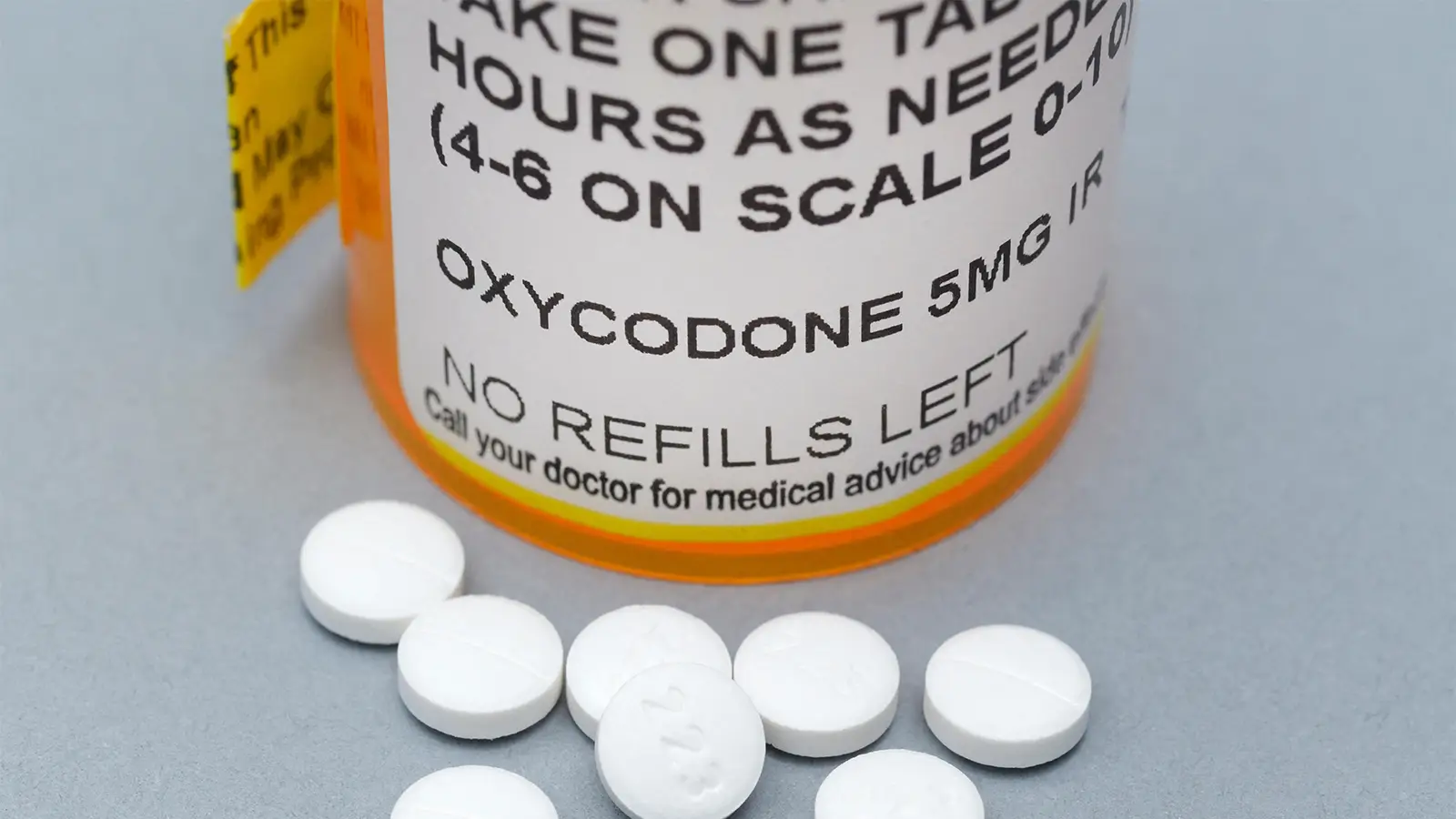
Treating opioid withdrawal with short-acting opioids showed a dose-dependent association with a reduction in early patient-directed discharge in hospitalized adults receiving medications for opioid use disorder (OUD), according to a retrospective cohort study.
In the final adjusted model of 669 hospitalizations representing 520 patients, each doubling of the daily dose of short-acting opioids was associated with an 8% reduction in the hazard of early patient-directed discharge (adjusted HR 0.92, 95% CI 0.86-0.99, P=0.03), reported Alexander Logan, MD, of the University of California San Francisco, and co-authors in JAMA Network Open.
This finding was not surprising, Logan told MedPage Today. “I observed that every week in my clinical practice,” he added.
Of note, there was no statistically significant association between time to first dose of short-acting opioid and patient-directed discharge within 72 hours.
“The gold-standard treatment for opioid use disorder is either methadone or buprenorphine, which are both life-saving medications,” Logan noted. “We know that starting those in the hospital is feasible and associated with improved outcomes.”
“The challenge in our population is that it’s really hard to control opioid withdrawal and cravings with those medications alone, in part because of the challenge posed by fentanyl” and other synthetic opioids, which lead patients to have higher opioid tolerance, he explained.
Undertreatment of withdrawal symptoms has been associated with early patient-directed discharge, which, in turn, is linked to higher rates of mortality, readmission, and overdose, Logan and colleagues pointed out.
“If we can help patients stay and get their complete course of treatment, their outcomes are going to be better,” Logan said.
In recent years, more hospital-based addiction consultation teams have been targeting opioid cravings and withdrawal with short-acting opioids and adjunctive medications. This study is the first to investigate the association between treatment for opioid withdrawal with short-acting opioids, alongside OUD medications, and patient-directed discharge, the authors noted.
The study was conducted at an urban safety-net hospital in San Francisco. Logan and team extracted all hospitalizations for OUD from the electronic health record in which a clinician ordered an “opioid withdrawal order set” from February to December 2024.
“The order set includes as-needed oral oxycodone or oral hydromorphone as the first-line short-acting opioids to treat opioid cravings and/or withdrawal (e.g., clinical opioid withdrawal score ≥5) and as-needed intravenous hydromorphone as the second-line opioid medication for the same indications,” the authors wrote.
Mean patient age was 44, 79.4% were men, and 83% were unhoused. Of the 669 hospitalizations, 13.8% resulted in early patient-directed discharge.
Medications were available with or without a consultation with the addiction care team. Clinicians were advised to use the order in patients with higher opioid tolerance and to avoid using it for patients without OUD or with lower opioid tolerance, such as those taking prescription opioid medications.
A limitation of the study was that the authors were not able to adjust for potential confounders; for example, the severity of OUD, degree of physiological dependence, severity of withdrawal symptoms, or severity of hospital illnesses, which might be tied to the outcomes in the study population. Generalizability may also be a limitation as the study site has a strong substance use infrastructure not found in every hospital.
“In addition, clinicians who increase short-acting opioid doses more aggressively to treat opioid withdrawal may reduce patient-directed discharges through other means, and differences in care provision may confound our results,” Logan and colleagues wrote.
In the future, Logan said the team plans to continue to study the optimal doses of these medications and optimal timing, despite this analysis being negative on the timing question. It will also be important to look at potential unintended consequences of this model related to safety, increased length of stay, and potentially “outcompeting” methadone or buprenorphine initiation, he noted.
[ad_2]
Source link : https://www.medpagetoday.com/psychiatry/opioids/121822
Author :
Publish date : 2026-06-17 21:21:00
Copyright for syndicated content belongs to the linked Source.