
[ad_1]
- WHO guidelines recommend combination courses of parenteral artesunate and parental quinine for severe malaria cases in “areas with established artemisinin resistance.”
- Treatment with artesunate led to similar outcomes among children hospitalized with severe malaria whether they had Plasmodium falciparum genetic variants linked to artemisinin resistance or not in an observational study in Uganda.
- The findings show that artesunate is still the best first-line intravenous therapy for children with severe malaria, researchers said.
Standard treatment with intravenous artesunate led to similar outcomes among children hospitalized with severe malaria whether they had Plasmodium falciparum genetic variants linked to artemisinin resistance or not, according to an observational study in Uganda.
Median in-hospital stay was 98 hours among patients with PfK13 variants and 91 hours in those with wild-type PfK13, a difference that wasn’t significant (P=0.99). Readmission rates by day 180 were also similar, at 24.3% versus 24%. The half-life of geometric mean parasite clearance was 4.47 hours in the PfK13 variant group and 3.07 hours in the wild-type group.
In-hospital death rates were numerically lower among the PfK13 variant group compared with the wild-type group by day 5 (1.7% vs 5.5%), day 28 (2.8% vs 6.6%), and day 180 (3.4% vs 8.2%), though these differences were not significant, reported Kathryn Maitland, MD, of Imperial College London, and colleagues in correspondence in the New England Journal of Medicine.
“The findings are reassuring that we can confidently recommend that artesunate for now is still the best first-line intravenous therapy for children with severe malaria,” Maitland told MedPage Today. “The WHO 2025 recommendation to add in quinine — which is more costly and very difficult to implement — for treatment in areas with established artemisinin resistance is not supported by this study’s findings.”
First-line IV artesunate treatment, a semisynthetic derivative of artemisinin, replaced quinine therapy for severe P. falciparum malaria in the wake of the AQUAMAT trial. According to WHO guidelines, parenteral artesunate “is the treatment of choice for all severe malaria.”
The rise of artemisinin resistance in Africa is an emerging public health threat, Maitland and colleagues noted, and updated WHO guidelines recommend combination courses of parenteral artesunate and parenteral quinine for severe malaria cases in “areas with established artemisinin resistance.”
The SMAART-CHARISMA study included children ages 3 months to 15 years hospitalized with malaria between December 2022 and October 2024 in northern Uganda. All children received at least three doses of IV artesunate followed by a full 3-day course of oral artemether-lumefantrine (Coartem).
Median age was 34 months in the PfK13 variant group and 41 months in the wild-type group, and 27.1% and 23%, respectively, had three or more severity features.
PfK13 variants led to a greater prevalence of severe anemia (hemoglobin less than 5 g/dL) that required an immediate lifesaving transfusion compared with wild-type parasites (33% vs 23%), Maitland noted. That’s a concern in settings where transfusion supplies aren’t reliable. “This could result in early mortality in children awaiting transfusion, especially in children with sickle cell disease who independently have longer parasite clearance times,” she warned.
Overall, transfusions were performed in 40.1% of the PfK13 variant patients and 39.3% of the wild-type patients. The relative percent decreases in lactate levels at 8 hours were also similar between the two groups, at 45% and 42%, respectively.
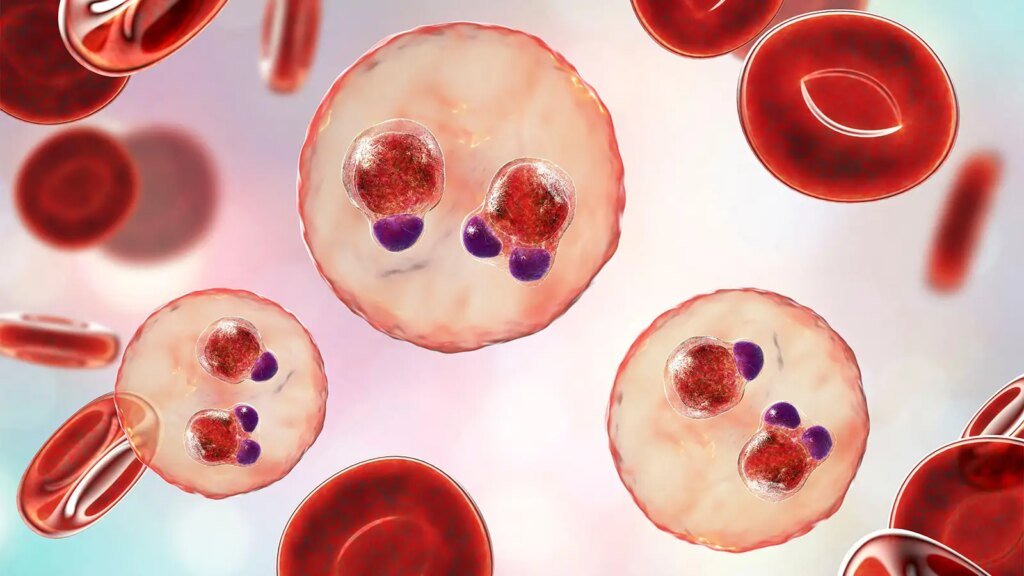
Parasite stages may help explain the findings. Although PfK13 mutations slow the clearance of malaria parasites from circulation, Maitland explained, they affect parasitic clearance only during the early ring stage, which isn’t associated with clinical complications. In contrast, mature parasites — which are stuck in the deep capillary beds of blood vessels — remain highly sensitive to artemisinin.
Given that PfK13 variants vary by region, Maitland noted, further research is needed in other areas of Africa with documented artemisinin resistance.
Please enable JavaScript to view the comments powered by Disqus.
[ad_2]
Source link : https://www.medpagetoday.com/infectiousdisease/generalinfectiousdisease/121603
Author :
Publish date : 2026-06-04 19:36:00
Copyright for syndicated content belongs to the linked Source.