
[ad_1]
- Epidural analgesia during labor was not linked with neonatal neurological morbidity or other adverse neonatal and pediatric outcomes.
- Epidurals are the most effective pain relief in labor but their impact on neonatal health remains understudied.
- This study was among Scottish women, who opt for epidural analgesia at far lower rates than U.S. women.
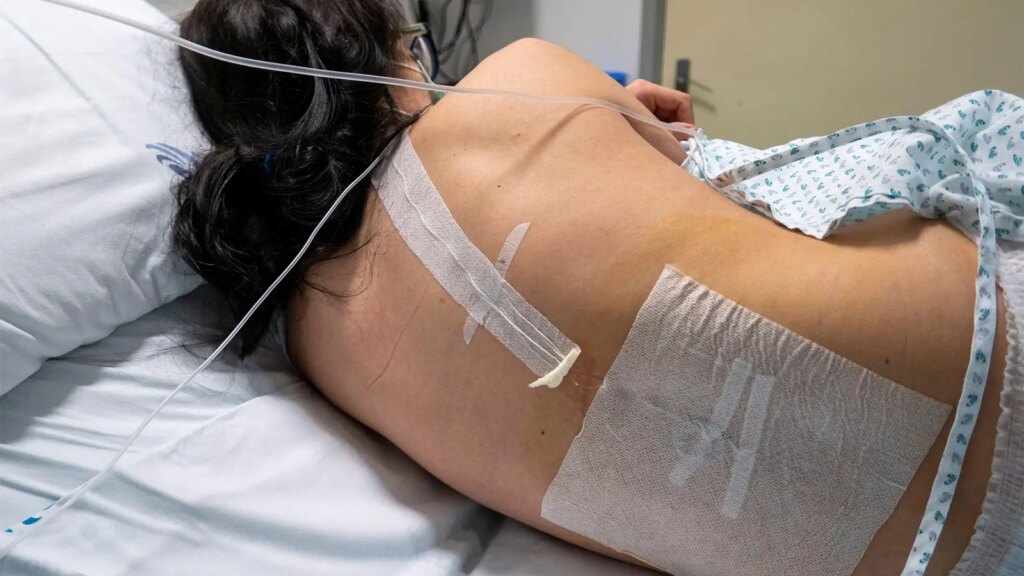
Epidural analgesia in labor was not linked to adverse neonatal neurological outcomes, a Scottish cohort study found.
An analysis of nearly half a million deliveries found no association between epidural analgesia in labor and neonatal neurological morbidity (adjusted relative risk [aRR] 0.87, 95% CI 0.68-1.12), reported Rachel Kearns, MBChB, MD, of Glasgow Royal Infirmary in Scotland, and colleagues.
Neonatal neurological morbidity occurred in 434 infants (0.9 per 1,000 births; 95% CI 0.8-1.0) and those who had an epidural had lower rates compared to those who didn’t have epidural analgesia (crude event rate 0.07% vs 0.09%), the researchers wrote in The BMJ.
Moreover, there was no link between epidural use and other adverse outcomes:
- Other severe neonatal morbidity: (aRR 1.17, 95% CI 0.90-1.51)
- Neonatal sepsis: (aRR 1.11, 95% CI 0.90-1.37)
- Apgar score <4 at 5 minutes: (aRR 0.97, 95% CI 0.87-1.09)
- Neonatal mortality at 28 days: (aRR 0.81, 95% CI 0.62-1.06)
- Cerebral palsy in childhood: (aRR 0.80, 95% CI 0.60-1.06)
Subgroup analyses revealed that the findings were consistent across different modes of birth, maternal risk status, and gestational ages.
“These results should reassure parents and clinicians that epidural analgesia use in labor is safe for babies and support informed, evidence-based decision making about analgesic options in labor,” the authors wrote.
Epidural analgesia is the most effective pain relief during labor and may reduce severe maternal morbidity. By lowering physiological stress, it reduces cortisol and catecholamine release, and is also associated with physiological side effects like maternal hypotension, altered uteroplacental perfusion, fetal heart rate abnormalities, and maternal fever. These changes, as well as the placental transfer of drugs, may affect fetuses and neonates, but research on neonatal and childhood outcomes tied to epidural use is limited.
Nikki Zite, MD, MPH, of the University of Tennessee Medical Center in Knoxville, who was not involved in the study, told MedPage Today that epidurals are far more common in the U.S. than Scotland. Less than a quarter of the Scottish patients analyzed in the study had epidural analgesia in labor (23.2%), but Zite noted that about three-quarters of U.S. women opt for it even though mis- and disinformation about the harms of epidurals proliferates online.
“It’s still reassuring to have more evidence that epidurals do not increase neonatal or childhood morbidity,” Zite added.
For this cohort study, researchers linked six Scotland-wide administrative databases to analyze all women in labor with singleton pregnancies between 24+0 and 42+6 weeks’ gestation from January 2007 to December 2019. Epidural analgesia was defined as “a conventional lumbar epidural administered at any point during labor.” About 5% of women who get epidurals convert to spinal or general anesthesia.
Births where the mode of delivery, child identity, or analgesia data were not recorded were excluded, as were planned cesarean births.
The primary outcome was a composite of neonatal neurological morbidity — including hypoxic ischemic encephalopathy, neonatal seizures, intraventricular hemorrhage, intraventricular infarction, periventricular leukomalacia, meningitis, encephalitis, kernicterus, hypotonia, birth asphyxia, or other cerebral diagnosis — occurring within 28 days of birth.
Secondary outcomes included neonatal sepsis, an Apgar score <4 at 5 minutes after birth, childhood cerebral palsy, and other neonatal morbidity. All outcomes were identified with ICD-10 codes.
The study included 495,695 women, of whom 114,897 received epidural analgesia. Median maternal age was 29. Those who received epidural analgesia tended to be younger or giving birth for the first time; have diabetes, preeclampsia, or a higher body mass index; and live in a more socioeconomic disadvantaged area.
The researchers noted some limitations, including that the low absolute incidence of neonatal outcomes limited statistical power, area deprivation was used as a proxy for socioeconomic status, and women who got epidurals differed systematically from those who didn’t. Researchers also lacked data on physiological variables and on what influenced clinicians’ and patients’ decision making regarding epidurals. Lastly, ethnicity data was missing for nearly 40% of women, though Scotland is predominantly white.
Please enable JavaScript to view the comments powered by Disqus.
[ad_2]
Source link : https://www.medpagetoday.com/obgyn/pregnancy/122204
Author :
Publish date : 2026-07-15 22:30:00
Copyright for syndicated content belongs to the linked Source.