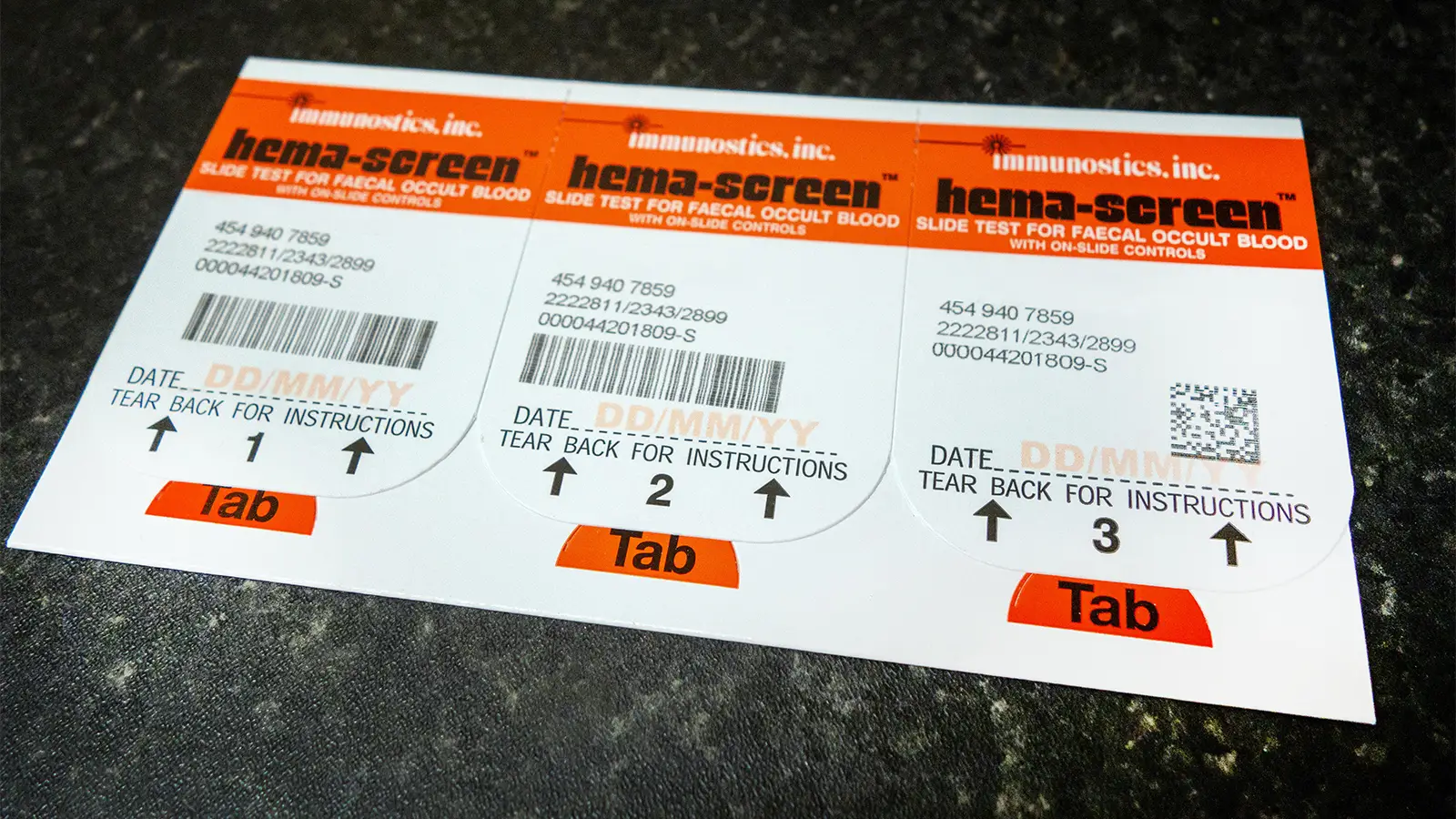
- For patients with a positive fecal occult blood test in a cohort study, those who did not undergo a follow-up colonoscopy had an increased incidence of colorectal cancer.
- Those who underwent colonoscopy and had a negative result had a much lower incidence of colorectal cancer compared with the general population.
- These findings highlight the importance of improving colonoscopy participation rates after a positive fecal occult blood test result.
Patients with a positive fecal occult blood test (FOBT) who did not undergo follow-up colonoscopy had a fourfold increased incidence of colorectal cancer, a Swedish population-based cohort study showed, indicating that targeted strategies may be needed to engage this high-risk group.
Among nearly 15,000 patients with a positive FOBT, 13% never underwent a follow-up colonoscopy, and this group had a significantly higher risk of colorectal cancer compared with the general population (standardized incidence ratio [SIR] 4.21, 95% CI 3.24-5.48), reported researchers led by Hanna Heyman, MD, of the Karolinska Institutet in Stockholm.
Meanwhile, the 87% of those FOBT-positive patients who went on to have a colonoscopy and had a negative result had an incidence of colorectal cancer roughly half that of the general public (SIR 0.52, 95% CI 0.39-0.68), the team detailed in JAMA Network Open.
“These findings underscore the importance of improving participation rates in colonoscopy after a positive FOBT result,” the authors wrote. “Targeted interventions to enhance follow-up adherence should be prioritized to effectively reduce [colorectal cancer] incidence.”
“Given limited colonoscopy resources and the expansion of screening programs to include broader and younger populations, it is essential for screening efforts to be efficient,” they added. “Resources should be allocated where they will have the greatest impact, and targeted strategies should be developed to engage high-risk individuals who do not attend follow-up procedures.”
This prospective cohort study was conducted from January 2008 through December 2021 within a population-based colorectal cancer screening program in the Stockholm-Gotland region that initially used biennial FOBT as the primary screening test in the target population of adults ages 60 to 69. In 2015, FOBT was replaced with a fecal immunochemical test (FIT).
Of 318,096 individuals invited to colorectal cancer screening (defined as the study’s general population), 14,873 had a positive FOBT result (52.4% male, median age 65 years). Of the patients who underwent a follow-up colonoscopy, 73.5% of those had a negative result.
In the group with negative colonoscopy results, 52 colorectal cancers occurred during follow-up, with 55.8% of cases in women. The median time to colorectal cancer diagnosis was 4.8 years. Among these cases, the most common stage was I (30.8%), followed by IV (26.9%). Incidence of colorectal cancer in this group was lower in men (SIR 0.37, 95% CI 0.25-0.56) compared with women (SIR 0.71, 95% CI 0.49-1.03).
In the group with a positive FOBT or FIT result who did not adhere to follow-up colonoscopy, 100 cases of colorectal cancer were diagnosed, 44 of which were within 6 months of the mailing date of the result and excluded from the analysis because it was suspected that the individuals had initiated a clinical investigation before or during the screening process. The median time to diagnosis was 2.8 years. Most cancers were stage III (30.4%), and the most common location was the sigmoid colon (26.8%).
Stratified by test type, SIRs were higher among participants screened with FIT (SIR 7.60, 95% CI 4.84-11.94) compared with those screened with FOBT (SIR 3.43, 95% CI 2.48-4.74).
Heyman and colleagues acknowledged that the study had several limitations. Notably, the cohort included people screened with both FOBT and FIT, which may affect generalizability since FIT is now the standard method.
Source link : https://www.medpagetoday.com/gastroenterology/coloncancer/120423
Author :
Publish date : 2026-03-20 20:38:00
Copyright for syndicated content belongs to the linked Source.