
[ad_1]
- Guidelines recommend antibiotics, intranasal corticosteroid sprays, and saline rinses for individual episodes of acute rhinosinusitis, with endoscopic sinus surgery as a possible treatment if the condition recurs multiple times a year.
- Endoscopic sinus surgery improved quality of life related to recurrent acute rhinosinusitis compared with conservative medical therapy alone in a small randomized trial.
- The trial was limited by premature termination, resulting in imprecise effect sizes.
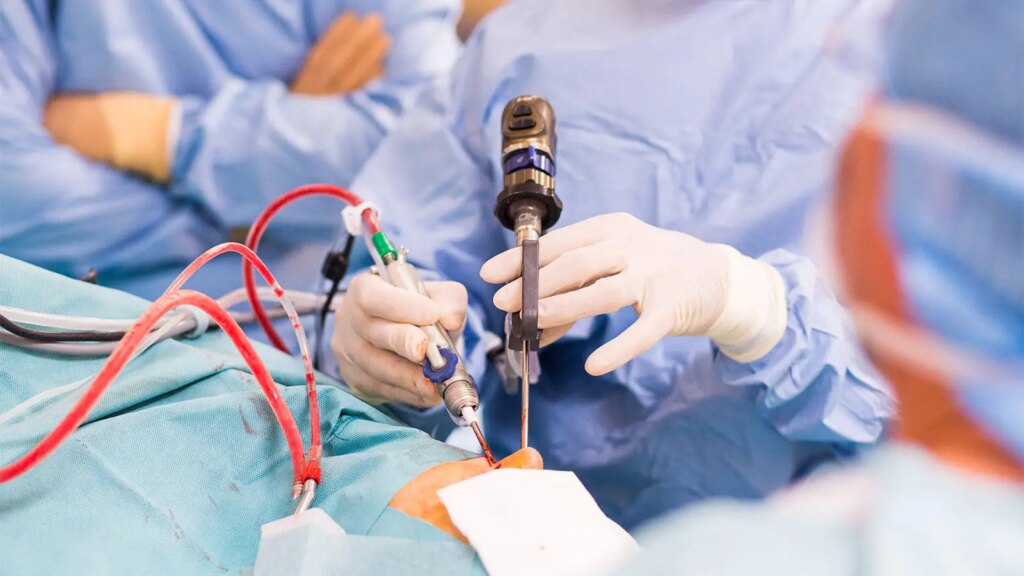
For patients with recurrent acute rhinosinusitis, endoscopic sinus surgery improved quality of life related to the condition, whereas conservative medical treatment alone did little, a small randomized trial showed.
Improvement in the mean rhinosinusitis-related quality-of-life score on the SinoNasal Outcome Test 22 (SNOT-22, range 0-110, with higher scores being worse) from baseline to 6 months was 22.41 points greater after surgery and medical treatment versus medical treatment only (−21.74 vs +0.24 points), exceeding the minimal clinically important difference of 9 points.
Surgery more than doubled the likelihood of achieving that 9-point reduction (78% vs 33%), reported Heidi Kaski, MD, of Oulu University Hospital in Finland, and colleagues in JAMA Otolaryngology–Head & Neck Surgery.
The findings of this first randomized trial of endoscopic surgery for recurrent acute rhinosinusitis align with results from observational studies suggesting benefits, they noted, and suggest that endoscopic sinus surgery “is an effective treatment without major problems.”
Guidelines recommend antibiotics, intranasal corticosteroid sprays, and saline rinses for individual episodes of acute rhinosinusitis, with endoscopic sinus surgery as a possible treatment if the condition recurs multiple times a year.
Given previously modest levels of evidence for these treatments, Kaski and colleagues conducted an open-label randomized trial comparing the two approaches with 6-month follow-up.
The researchers recruited 59 adults with physician-diagnosed recurrent acute rhinosinusitis episodes who were referred to an academic medical center’s otolaryngology clinic in Finland between May 2020 and June 2024. Recurrence was defined as episodes occurring at least three times during the past 6 months, four times during the past year, or twice per year for 3 consecutive years.
Enrollment required persistent symptoms despite conservative treatment. Nasal endoscopy and cone-beam or standard CT scans ruled out chronic rhinosinusitis.
Patients’ mean age was 40 years, and 88% were women. The trial stopped short of the planned enrollment of 78 patients due to low uptake.
Participants were randomly assigned to endoscopic sinus surgery (uncinectomy, middle meatal antrostomy, and anterior ethmoidectomy, with septoplasty and turbinate reduction allowed to improve surgical access) or medical therapy alone (intranasal corticosteroids and saline lavages and sprays, with allowed use of antibiotics, antihistamines, oral corticosteroids, and sympathomimetics).
For the primary outcome, median follow-up time differed between the two groups, at 227 days in the operative group and 201 in the conservative group. The researchers noted that this was due to including the median 19 days of waiting time for surgery and the postoperative visit.
Both groups could also have treatment for possible allergic rhinitis, but results didn’t differ by allergy status. Adding septoplasty or turbinate reduction to surgery did not improve the change in SNOT-22 score.
“Per-protocol analyses of secondary outcomes supported the primary findings for the most part,” Kaski and team wrote. This included greater improvement in quality of life as measured by a change in Research and Development 36-Item Health Survey (RAND-36) physical composite scores with surgery (11-point difference, 95% CI 3-19), along with small positive differences in healthcare utilization, absences from work or study, and the need for medication.
Kaski and team characterized the surgical complications and postoperative symptoms as minor and transient. Four patients received intervention for an operative complication, which included three infections and one case of synechia with septal perforation.
Because the trial ended enrollment prematurely, the researchers cautioned that the effect sizes are imprecise, “and for many outcome measures, no definitive conclusions can be drawn about the magnitude of the differences.”
Other limitations included uncertainty about whether rhinosinusitis was bacterial or viral and potential exaggeration of positive effects of surgery due to the open-label design, although Kaski and colleagues attempted to mitigate recall bias with study notebooks filled out continuously by patients and phone call reminders at 3 months.
Please enable JavaScript to view the comments powered by Disqus.
[ad_2]
Source link : https://www.medpagetoday.com/surgery/otolaryngology/121879
Author :
Publish date : 2026-06-23 14:14:00
Copyright for syndicated content belongs to the linked Source.