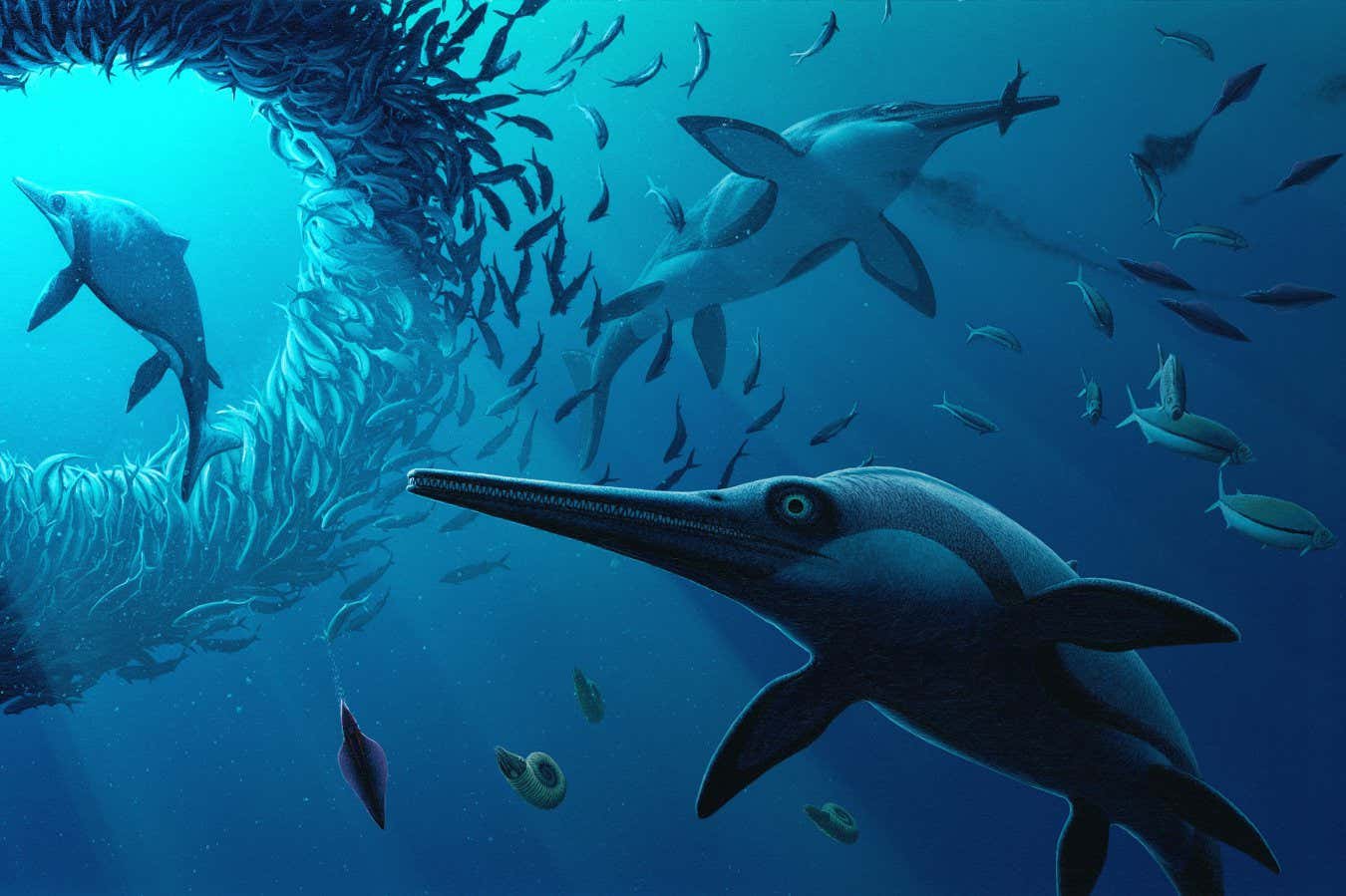
A reconstruction of what the Xiphodracon may have looked like
Bob Nicholls
Meet the “Sword Dragon”, a newly-named species of ichthyosaur – predatory prehistoric reptiles that dominated the oceans while dinosaurs ruled the land.
The beautifully-preserved fossilised skeleton was found on the UK’s Jurassic Coast near an area called Golden Cap back in 2001, and sat for years in the collections of the Royal Ontario Museum in Canada.
“They knew it was something interesting,” says Dean Lomax at the University of Manchester, UK. “They were going to work on it but they just never did.”
Lomax and his colleagues have now prepared and identified the specimen, which has an enormous eye socket and a long, sword-like snout. The fossil also has “needle-like piercing teeth [that] are very much designed for feasting on soft-bodied prey like squid and fish”, says Lomax. “You can get a good sense of how this thing would have been in life, basically relying on really good vision to hunt, probably in dim conditions.”
The animal would have been around 3 metres long – about the size of a common bottlenose dolphin – and lived during an age of the Early Jurassic called the Pliensbachian, some 193 to 184 million years ago.
It has features that have never been seen in an ichthyosaur before, including a unique bone around the nostril called a lacrimal with prong-like structures. “The level of three-dimensional preservation, particularly of cranial sutures and delicate structures such as the lacrimal and prefrontal projections, is exceptional,” says Aubrey Roberts at the Natural History Museum at the University of Oslo in Norway.
A dark mass between the ribs might be its last meal, but the team couldn’t determine what that was.
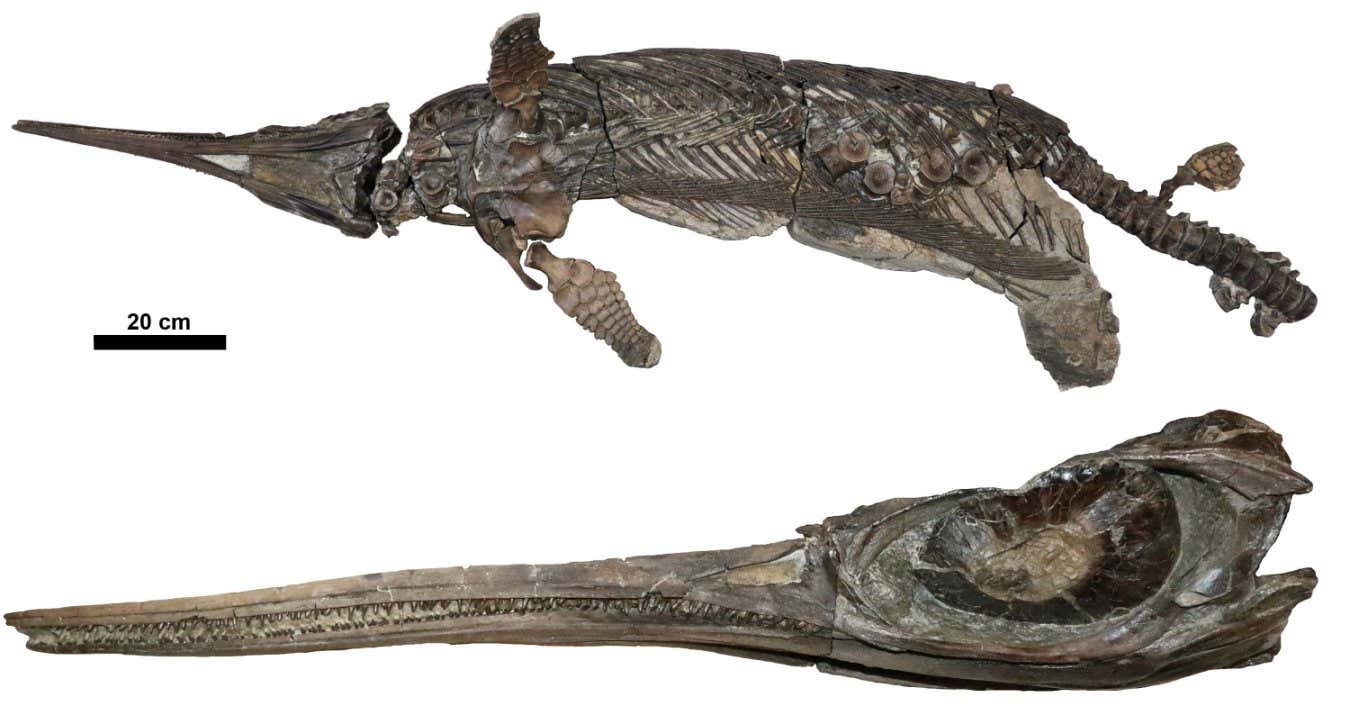
The fossilised Xiphodracon goldencapensis
Dr Dean Lomax
Because of the lethal-looking snout, the researchers have named the ichthyosaur Xiphodracon goldencapensis, or the Sword Dragon from Golden Cap.
The specimen also reveals something about ichthyosaur evolution. “The main significance of this find is its age,” says Roberts. At the end of the Triassic Period, there were huge super-predator ichthyosaurs, like Ichthyotitan – thought to be nearly 25 metres long, as big as a blue whale. But these giant reptiles disappear from the fossil record after the end-Triassic extinction event some 201.4 million years ago, which also marks the start of the Jurassic Period.
The remains of a wide variety of smaller ichthyosaurs have been found dating to the Jurassic, says Lomax. Many are known from before the Pliensbachian and many after, but there are two types that are quite distinct, with no species in common.
“Triassic ichthyosaurs were notoriously weird,” says Neil Kelley at Vanderbilt University in Tennessee. “And their Jurassic descendants have often been seen as a bit more ‘samey’ in sharing a superficially similar dolphin-like appearance.”
“Xiphodracon adds another hue to the broader ichthyosaur rainbow,” he says, by contributing to the evidence Jurassic ichthyosaurs pursued a variety of lifestyles, with differing diets, swimming speeds and preferred habitats.
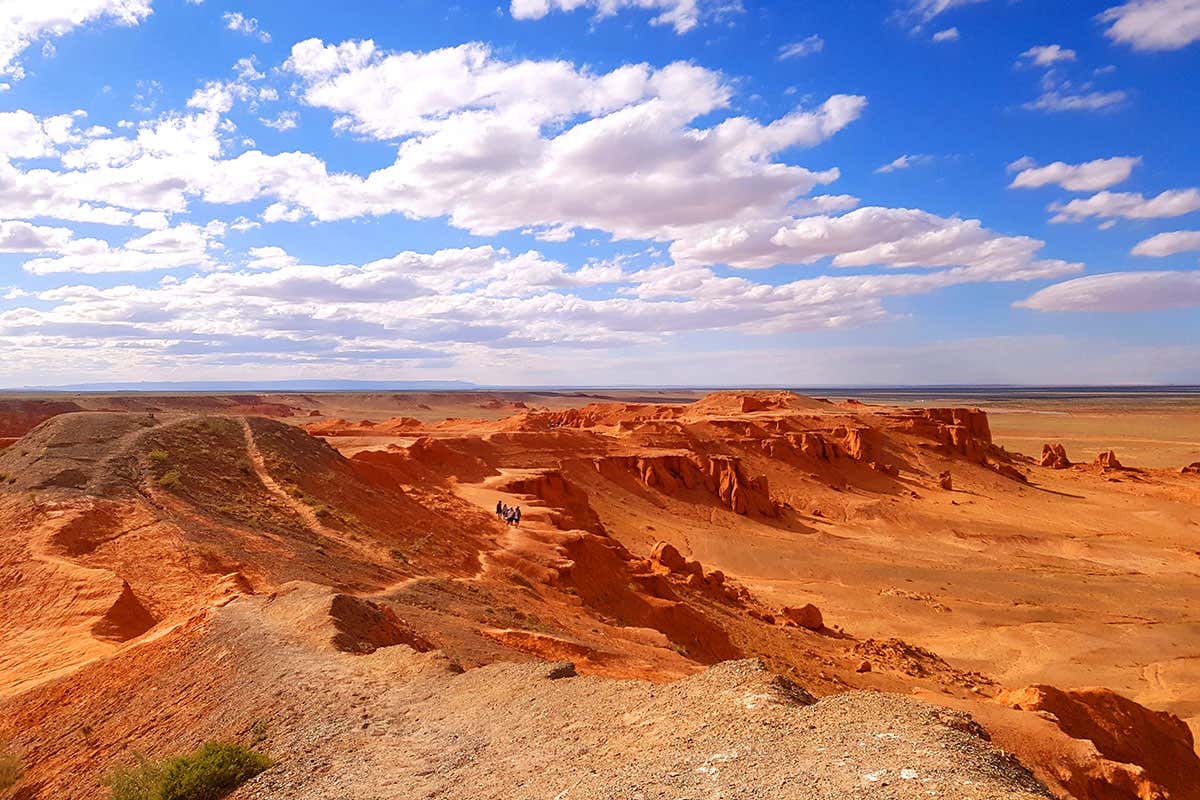
Dinosaur hunting in the Gobi desert, Mongolia
Embark on an exhilarating and one-of-a-kind expedition to uncover dinosaur remains in the vast wilderness of the Gobi desert, one of the world’s most famous palaeontological hotspots.
Topics:
- palaeontology/
- marine life
Source link : https://www.newscientist.com/article/2499640-sword-dragon-ichthyosaur-had-enormous-eyes-and-a-lethal-snout/?utm_campaign=RSS%7CNSNS&utm_source=NSNS&utm_medium=RSS&utm_content=home
Author :
Publish date : 2025-10-10 01:00:00
Copyright for syndicated content belongs to the linked Source.