
Developed in partnership with the Our Partner
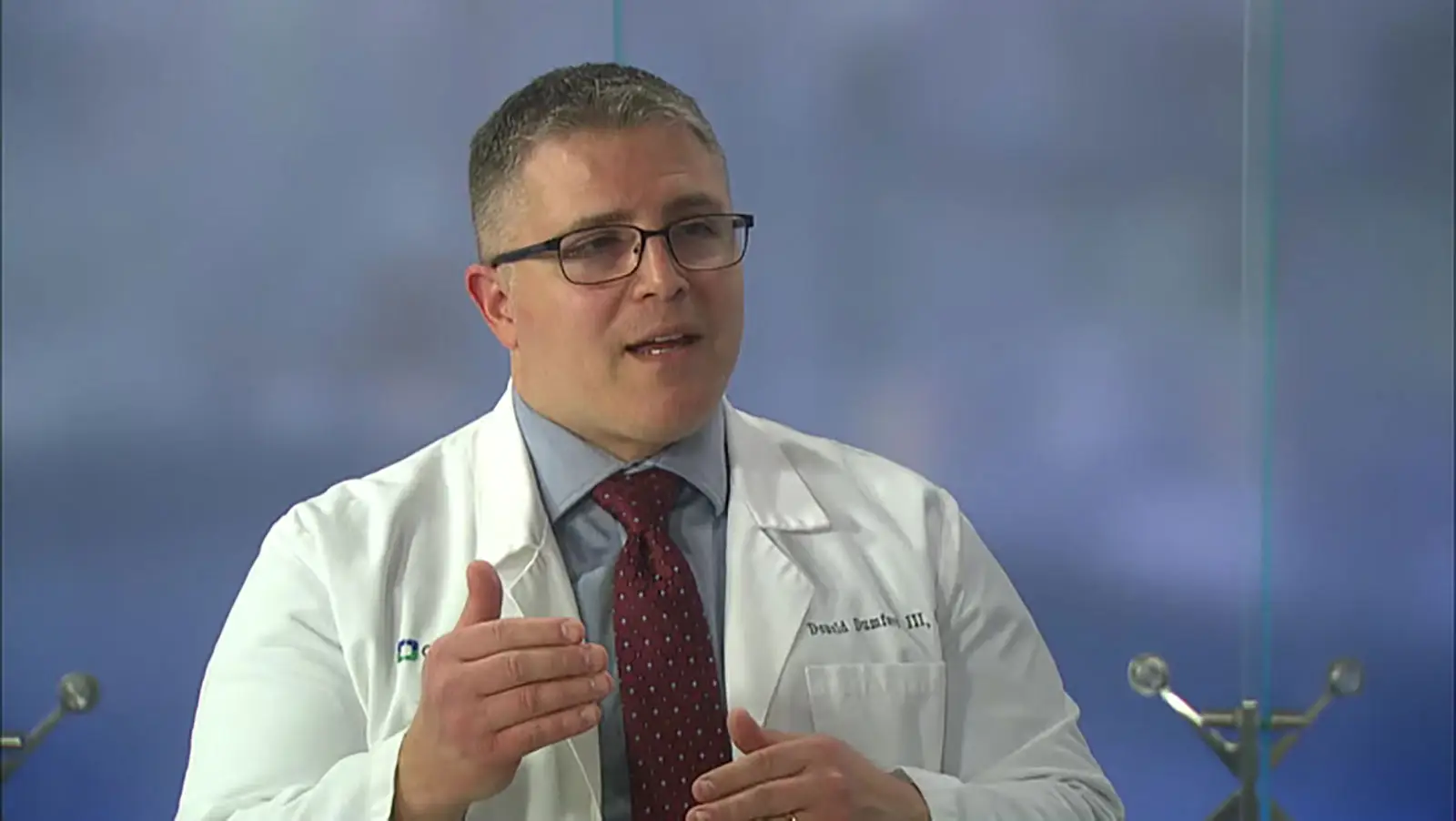
In “Beyond Diagnosis: Vaccines,“ Cleveland Clinic infectious disease specialist Donald Dumford III, MD, and host John Mangels continue their conversations on communicating effectively and empathetically with patients around vaccination decisions.
Each monthly installment examines an individual aspect of these crucial discussions, including building trust, addressing misinformation, and navigating emotionally and culturally influenced concerns.
This fourth of six episodes focuses on tailoring vaccine discussions to individual patient values and risk factors, communicating benefits in personally relevant terms, and helping patients prioritize which vaccines matter most.
The following is a transcript of their remarks:
Mangels: Welcome to “Beyond Diagnosis,” where we talk with doctors about talking with patients. I’m your host, John Mangels.
Today, we’re exploring one of the more challenging topics that clinicians face: speaking with patients about vaccinations.
Our guest is Cleveland Clinic infectious disease specialist Dr. Donald Dumford. He spends a lot of time navigating these dialogues: listening, building trust, and helping patients understand their choices. Dr. Dumford, thanks for being here.
Dumford: Thanks so much for having me.
Mangels: Patients’ attitudes about being vaccinated are shaped by lots of things. How do you tailor the conversations you have with patients whose hesitations might stem from cultural factors, family factors, economic factors? How do you approach those?
Dumford: Yeah. I think when we’re talking about that and sort of delving into the why of the vaccine hesitancy, I always make sure to remind them about their own particular health issues that make it impaired for some things. We know that for a lot of vaccines, it’s a personal choice and they have to weigh what you’re saying with what they’re valuing and what they’re hearing.
Mangels: How do you explain vaccine-related risks and benefits in a way that feels personally relevant to the person you talk to and not just a statistical conversation?
Dumford: If we think about it in particular for those patients with, say, heart and lung issues and think about it from that vantage point, I kind of say, “We’ve got this, which is putting you at higher risk for hospitalization or even death,” and start to line those up and say, “This is something that we can reduce that risk, and I’d really hate to see this happen when it’s something we could have prevented.”
Mangels: I’m guessing you get patients who come in with stacks of papers like this and say, “I’ve read this, I know this.” How do you adjust your approach to those patients that are really data driven as opposed to emotion?
Dumford: Doctors tend to find out pretty quickly which patients are the ones that are emotion driven, which ones are the data driven. I know the patients when we’re having these discussions with that I’m going to have to come with facts and figures. And I think it’s just knowing those patients and kind of being ready to steer this way or that way. And I’ll use the example of, say, if we’ve got a hundred people that look like you, the risk for the disease is this much and we could reduce it this much through vaccination. And I think that helps with those data-driven patients in particular to kind of understand better.
Mangels: Do you have ways about talking about the consequences of not being vaccinated that wouldn’t provoke a patient’s fears?
Dumford: That’s the one thing is trying to make sure you’re not making them more fearful than they already are. We have to realize that a lot of times in a doctor’s office, it’s already a stressful situation. I think in these situations where we’re talking about vaccines and not being vaccinated, I give them some recommendations about what they can do to prevent themselves otherwise if they’re vaccinated and compared how that’s going to mitigate their risk to if they are vaccinated.
Mangels: Are there other consequences of not being vaccinated that you discuss with your patients?
Dumford: I try to remember to remind patients that they’re not just getting vaccinated for themselves, but for others too. When I talk about vaccines, especially thinking about flu and COVID and what we might be reducing as far as transmission, I ask, “Who lives with you?” And I remind people that we have to think about what those around us are going through. Do we have friends or family members that we’re going to be interacting with who have weakened immune systems, heart conditions, or lung conditions that may put them at risk for more severe outcomes? And just trying to remind them that you’re not just reducing your risk, but you’re reducing the risk for those around you.
Mangels: That’s so important to get that focus off of just me, me, me, and those around me that I care the most about and don’t want bad things for.
Dumford: Right, exactly. I remind them this is a way that we can help take care of each other.
Mangels: How do you help patients distinguish between vaccines that are optional, recommended, and really essential in a meaningful way?
Dumford: I think it’s really just kind of saying it out loud. Being an infectious disease doctor, I have a lot of HIV patients. So using them as an example, I have a variety of patients who either have a really good immune system in that situation or can have a really bad immune system in that situation. And I think in those cases, I’ll be like, “For these particular things, we could forego this because your immune system’s pretty strong, but you have these other risk factors, so I think you really need this vaccine in particular.” Because especially for those vaccine-hesitant patients, there’s some things you say, “Well, if I can really get this patient to get this vaccine, it’s really going to help them out.” My HIV population, they’re at a particularly high risk for whooping cough and complications with whooping cough. We could see that too with patients with chronic lung problems.
And I let them know as we’re talking about getting vaccinated for that, that I really think that this one in particular is going to be helpful, especially, and I’ll kind of bring in saying, “This is what we’re seeing in the community right now. This is what we’re seeing going around.” We know that, say for whooping cough in particular, that numbers have been on the rise the past several years, and just say, “I really think that this one in particular is going to keep you safe and healthy.”
Mangels: I’m guessing in the fall and winter, particularly when you’re seeing patients, older patients, immunocompromised patients, they may need to get more than one vaccination at a time, flu, COVID, RSV [respiratory syncytial virus]. What do you say to patients who just say, “I just don’t want to take all those at the same time.” How do you approach that?
Dumford: Well, I think there’s a couple things. You let them know that getting multiple vaccines at one time has not been found to be detrimental. We know that when patients, say, get flu and COVID at the same time, they’re not more likely to have any severe side effects from that. So I think that’s one thing to do. And the other thing sometimes I do is I will let them space things out if I can’t convince them that it’s safe to proceed with it. So I’ll say, “OK, well, let’s give vaccine A today. Why don’t you come back next week? We’ll get vaccine B.” And I might just kind of think about what’s most likely to be circulating at that time.
I think the other thing too, sometimes patients come in with the thought that if you’re revving up the immune system so much with these vaccines, that it could be detrimental to their health. But I think we just have to remind everybody that as humans, we’re being exposed to stuff all the time that our immune system is responding or reacting to, and we’re not going to overwhelm the immune system with these vaccines because the immune system is working all the time.
Mangels: And that’s a really good strategy, it sounds like, to space them a little bit if that gets the patient over the hump of getting it versus not getting it.
Dumford: I think so. I’ve had some good success as far as meeting the patient where they are in those cases, having them come back to the office for the added vaccines and really figuring out what the risk is for what’s circulating in the community to be able to figure out what’s mission imperative now and what we could put off until later.
Mangels: Which gets back to what we were talking about is differentiating between optional, recommended, and wow, you really need to get this.
Dumford: Exactly.
Mangels: Thanks so much for your insights, Dr. Dumford. And thank you for joining us on “Beyond Diagnosis,” where we explore not just what physicians know, but how to effectively and compassionately share that knowledge with patients. See you next time.
Source link : https://www.medpagetoday.com/beyond-diagnosis/vaccines/120630
Author :
Publish date : 2026-04-03 14:47:00
Copyright for syndicated content belongs to the linked Source.