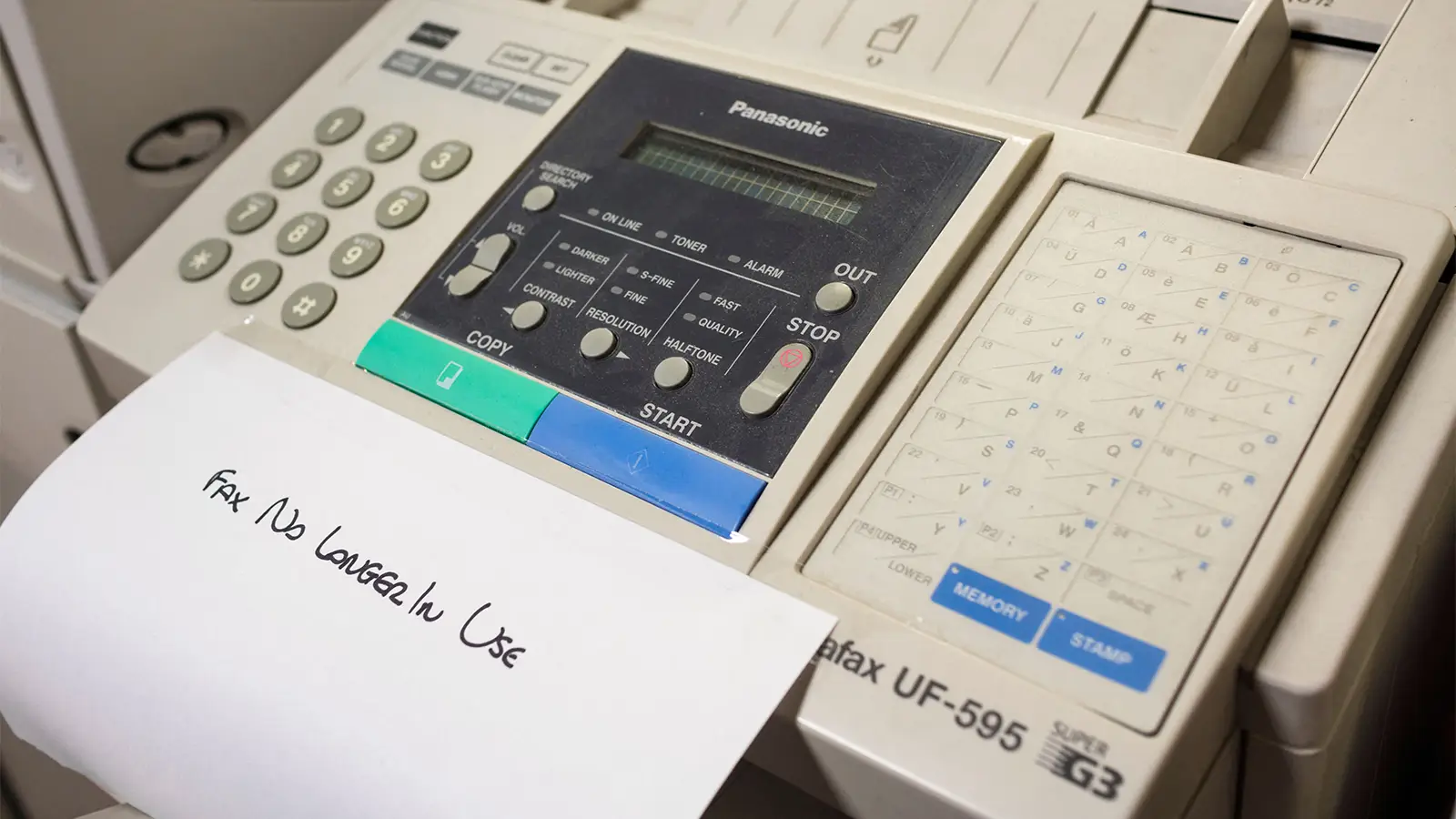
So long, fax machines — we hardly knew ye.
“The 1980s called, and they want their fax machines back,” Mehmet Oz, MD, MBA, administrator of CMS, said in a press release announcing a final rule from the agency that establishes national standards for the electronic exchange of clinical documentation used to support healthcare claims. “The futuristic medical breakthroughs we’ve achieved, like augmented reality glasses that give surgeons x-ray vision, shouldn’t have to coexist with administrative systems that often lag decades behind. This new rule will modernize American healthcare by standardizing electronic claims attachments and enabling secure electronic signatures. Because every minute providers save on paperwork is another minute they can spend caring for patients.”
The rule officially takes effect on May 26 but has a 2-year timeline for implementation. The standards will apply to Health Insurance Portability and Accountability Act (HIPAA)-covered entities, including Medicare, Medicaid, and private health plans; healthcare clearinghouses; and healthcare providers that conduct electronic transactions.
“Historically, providers have relied on outdated manual methods to submit additional claims-related documentation requested by health plans, including medical records, x-rays, clinical notes, telemedicine visit documentation, and laboratory results — all of which cause delays and unnecessary costs,” the release noted. “The standards finalized today establish a consistent, easy-to-use electronic framework for transmitting this documentation, improving efficiency across the entire healthcare system.” Implementing the standards will save the healthcare system about $781 million annually, CMS said.
One type of transaction not included in the new standards is prior authorization requests. “The Department of Health and Human Services (HHS) will continue evaluating alternative standards for prior authorization attachments currently being tested by the industry,” the agency said in a fact sheet.
In general, physician practice and health information technology (IT) groups were pleased with the final rule. “WEDI [the Workgroup for Electronic Data Interchange] applauds the release of the final rule establishing a national standard for attachments and digital signatures,” WEDI Executive Director Rob Tennant said in an email. “This landmark regulation is expected to significantly streamline the exchange of data between providers and payers in support of a submitted healthcare claim. The standard permits the provider to send data to the payer in multiple formats, reducing the current dependence on manual processes such as faxes.”
The Medical Group Management Association (MGMA) also praised the rule. “MGMA views this long-awaited final rule as a positive step toward reducing administrative burden for medical groups,” Anders Gilberg, MGMA’s senior vice president for government affairs, said in an email. “By establishing national standards for electronic claims attachments, HHS is finally moving the industry away from outdated, manual processes that involve paper and faxing toward more efficient, standardized, and digital exchange.”
As for the projected savings, “actual savings will depend on implementation and adoption across providers, health plans, clearinghouses, and vendors,” he said. “The extent of savings will depend on many factors such as how well standards are implemented and adopted across stakeholders, including EHR [electronic health record] vendors and health plans.” And although the 2-year implementation timeline “provides a meaningful implementation window” for practices, Gilberg cautioned that additional federal guidance, flexibility, and testing opportunities “will be important for successful adoption, particularly for smaller, underresourced, and independent practices.”
Gilberg said it was “notable” that prior authorization standards were not included in the final rule, adding that “MGMA looks forward to continued collaboration with HHS and industry stakeholders to ensure prior authorization workflows are electronic and addressed in a standards-based manner that truly reduces burden for providers.”
There may be movement on the prior authorization front eventually, though, according to Tennant, of WEDI. He explained that in 2024, CMS issued a final rule that established a new process for conducting prior authorizations using a technology known as an application programming interface (API). “However, that rule does not cover commercial health plans,” Tennant said, noting that it’s possible that CMS will issue a rule at some point allowing APIs to come into wider use.
Source link : https://www.medpagetoday.com/practicemanagement/reimbursement/120451
Author :
Publish date : 2026-03-23 20:57:00
Copyright for syndicated content belongs to the linked Source.