
Medieval castle walls were once pierced with narrow slits that allowed archers to shoot outward toward attackers while remaining shielded. These came to be known as loopholes. Today, we often use the term to refer to tactical openings in an otherwise solid legal structure.
The FDA’s “generally recognized as safe” (GRAS) loophole is no such thing. Since its inception, it has functioned less like a narrow slit and more like a wrecking ball, leaving the castle of American food regulation largely in rubble.
The Origin of GRAS
GRAS was formalized in the 1958 Food Additives Amendment to spare well-known, long-used ingredients (e.g., sugar, salt, yeast, vinegar) from the burden of premarket review, which FDA was responsible for. At the time, our food system was rapidly industrializing, and longer supply chains, concentrated markets, and shelf-stable grocery items meant a significant increase in novel chemicals being added to the food supply. Ingredients used during food processing — captured under the definition “food additive” — required government oversight to ensure the health of the population. The GRAS loophole exempted some ingredients from this definition.
In theory, and at the time, it made sense. It prevented FDA from having to spend time and money to determine, for example, that the yeast added to industrially-produced bread was safe. But it was not just the FDA who could determine that an ingredient was GRAS. Through a formal petition process, manufacturers could submit their own safety data on an ingredient to the FDA, who would then publish the notice in the Federal Register and review all submitted data.
In 1997, after deciding this process was unduly burdensome, the FDA replaced this petition process with a voluntary notification program under which manufacturers could inform the agency of their own GRAS determination — or simply not bother. But the loophole is even bigger than that: If the FDA determines that a company’s GRAS self-determination is insufficient, the company can ignore the response and sell the product anyway. If the company never notifies the FDA of a new ingredient, the agency has no mechanism to intervene, no knowledge the substance exists, and little power to stop it until people get sick.
Current estimates suggest that hundreds of substances have been determined GRAS by manufacturers without FDA oversight. Companies that do choose to conduct GRAS determinations openly mostly rely on review panels with significant financial conflicts of interest, and recent evidence found that seven panel members alone occupied almost half of all available panel positions.
Righting the Wrongs of GRAS
This loophole in our food system has caused and continues to cause significant health impacts. For decades, consumer rights organizations and legal scholars have argued that common ingredients like sugar and salt should not be GRAS when added to foods at concentrations high enough to cause chronic diseases and premature mortality. This is not without precedent: in 2015, partially hydrogenated oils (the main source of harmful trans fats) were removed from the GRAS list. More recent examples, including adverse health events and deaths associated with the addition of caffeine to alcoholic beverages (Four Loko, anyone?), may have been avoided if the FDA had premarket authority to limit these ingredients.
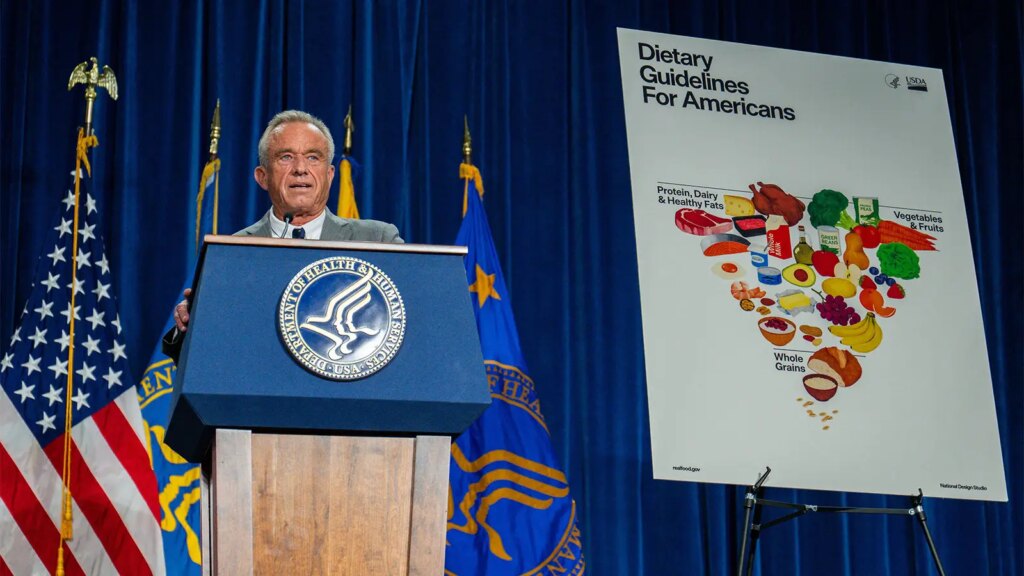
With an eye toward improving the food supply and eliminating unhealthy food additives, HHS Secretary Robert F. Kennedy Jr. has directed FDA to find ways to close the GRAS loophole — including requiring companies to publicly notify FDA of new ingredients in their products and show them the relevant data. The push to close this loophole is supported by a broad coalition of researchers, advocates, and former FDA officials, but hurdles abound.
This is not the first time the loophole has been a target for reform. In 2016, the FDA finalized a rule that formally established the voluntary notification procedure, but missed the opportunity to make it mandatory. Individual states have used their own legal authority to ban ingredients long prohibited from other country’s food systems, like brominated vegetable oil, with the federal government later following suit. Meanwhile, members of Congress have introduced legislation to significantly narrow the GRAS loophole and redesign our food system to focus on premarket authorization and improved safety protocol. Yet, no such changes have come to fruition.
So, what is stopping Secretary Kennedy from GRAS reform? What keeps the castle walls of the American food system in such disrepair?
One factor is that large food and beverage companies strongly oppose tighter regulations on ingredients and additives. Closing the GRAS loophole may be better for our health, but it’s just not good business. As I have previously written, there is a fundamental tension at the heart of Kennedy’s agenda that has yet to be resolved: Make American Healthy Again (MAHA) claims to want more regulation of the food supply, but the Trump administration seems to want less regulation of everything. When those two imperatives meet, the corporations with the most to lose, and the most access to Trump, will likely decide the outcome.
Notice how Kennedy is now pointing towards personal responsibility, rather than broader regulation of ultra-processed foods, as the key lever in improving our diets. This is striking given what remains on the table. HHS could monumentally overhaul our food system by defining certain processed refined carbohydrates as specifically not GRAS, a proposal supported by a thorough report written by former FDA Commissioner David A. Kessler, MD.
There is also an inconvenient arithmetic problem: closing the loophole demands more FDA resources, not fewer. Reviewing thousands of unvetted chemicals in our food supply requires scientists, toxicologists, and money, none of which are in abundant supply at an agency that recently lost $271 million in funding and a significant share of its staff. You cannot fix a regulatory void by making it larger.
Ultimately, cleaning up our food supply will require government intervention to close the GRAS loophole, or, at the very least, tightly regulate it. Only time will tell if our federal leaders can place public health before business interests — I won’t hold my breath as I wait to find out.
Daniel A. Zaltz, PhD, MPH, is a social and behavioral scientist who studies global food policies and their impacts on different groups of people. He is an assistant professor at the University of Ottawa School of Epidemiology and Public Health in Ontario.
Please enable JavaScript to view the comments powered by Disqus.
Source link : https://www.medpagetoday.com/opinion/second-opinions/120726
Author :
Publish date : 2026-04-10 12:44:00
Copyright for syndicated content belongs to the linked Source.