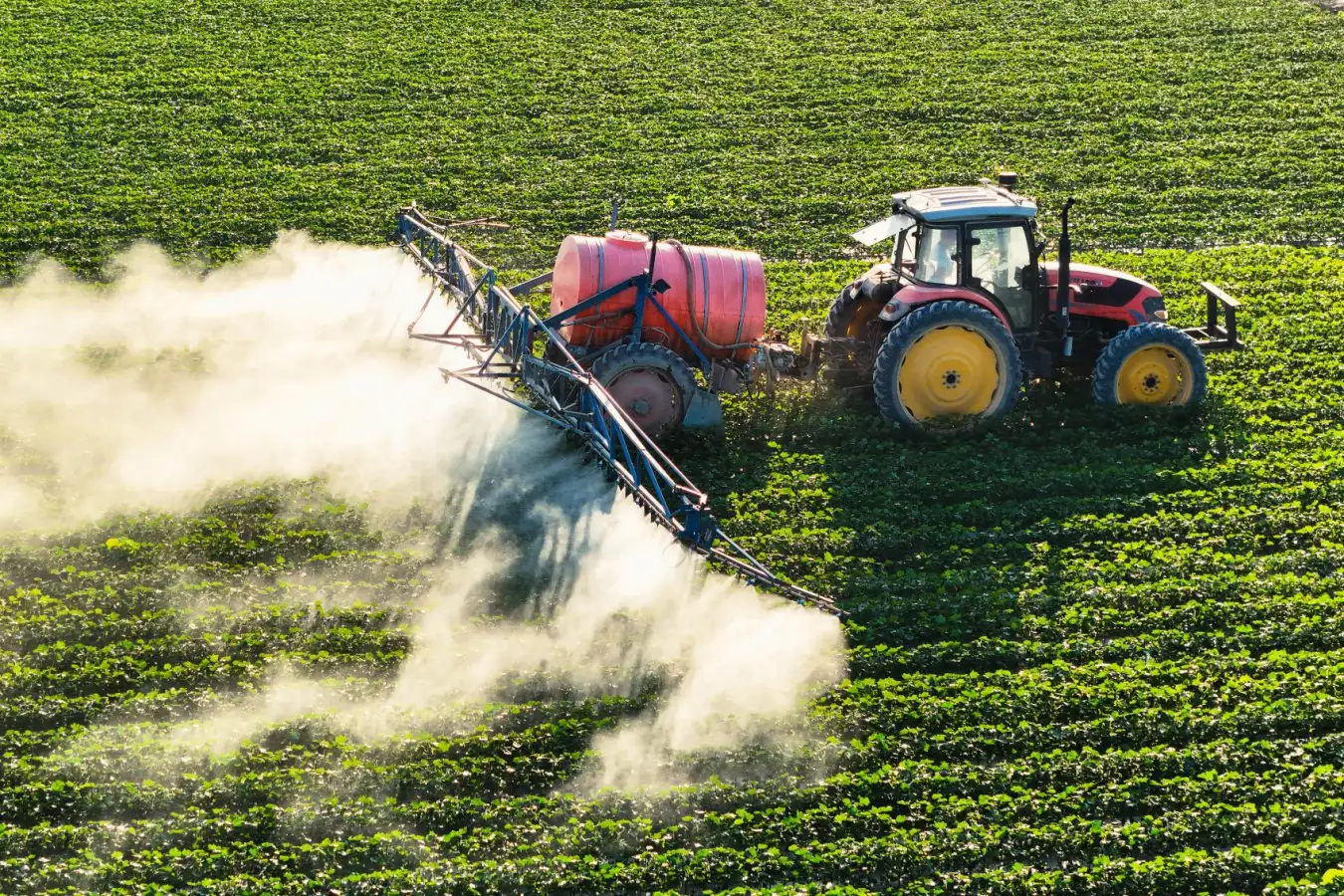
A farmer spraying pesticides on a cotton field
Tao Weiming/VCG via Getty Images
More than 60 years after Rachel Carson warned of the dangers of pesticides in her book Silent Spring, the harm they are doing to wildlife may be greater than ever.
“In more or less all countries, the trend is towards increasing applied toxicity,” says Ralf Schulz at RPTU University Kaiserslautern-Landau in Germany.
The potential harm done by any pesticide depends on both the amount applied and its toxicity, which can vary greatly from species to species. To assess the overall burden of pesticides, Schulz and his colleagues have developed a measure called applied toxicity.
The researchers started by looking at the quantities of 625 pesticides used in 201 countries from 2013 to 2019. The list includes some pesticides used by organic farmers as well as conventional ones.
They then averaged data from regulators in several countries on how toxic each pesticide is to eight broad groups of organisms: aquatic plants, aquatic invertebrates, fish, terrestrial arthropods, pollinators, soil organisms, terrestrial vertebrates and terrestrial plants. This allowed the team to estimate the total applied toxicity per country or per group of organisms.
Globally, the total applied toxicity rose from 2013 to 2019 for six of the eight groups of organisms. For instance, for pollinators it rose 13 per cent, for fish 27 per cent and for terrestrial arthropods, such as insects, crustaceans and spiders, 43 per cent.
“This does not mean that this toxicity necessarily translates into toxic actions on these organisms,” says Schulz. “But it’s at least an indicator that shows you if the pesticides we are using are more or less toxic to pollinators or to fish, or to whatever.”
Many other studies have found that the concentrations of pesticides in various environments, such as rivers, are higher than regulators assessed were possible when approving the pesticides.
“This is not included in this index, but there’s a lot of evidence,” says Schulz. There is a problem with risk assessments greatly underestimating exposure, he says.
The increases in total applied toxicity are due to two things: an increase in the quantities of pesticides being used and the replacement of older pesticides with ones that are even more toxic. In turn, this is mainly due to the evolution of resistant pests. “Resistance is, in my view, something that can only increase if you use chemical pesticides,” says Schulz.
Pesticides called pyrethroids are particularly problematic, especially for fish and aquatic invertebrates, he says, even though they are only supposed to be applied at low levels. Neonicotinoids are another problematic group, especially for pollinators.
There have been calls to ban the herbicide glyphosate, also known as the weedkiller Roundup. Although its toxicity isn’t high, because large quantities of glyphosate are used, it does contribute to the total applied toxicity, says Schulz. A ban could also backfire: the applied toxicity would increase if more toxic herbicides were used instead.
Reducing pesticide usage more widely could have unintended consequences, too. If it reduced the productivity of farms, more farmland would be needed, leading to biodiversity loss if land is cleared.
At a UN biodiversity summit in 2022, countries agreed to reduce the “overall risk” from pesticides by at least half by 2030. Exactly what “risk” means was never defined, says Schulz, but he thinks total applied toxicity would be one way to measure it.
The approach has its limitations, but no measure of overall pesticide use will be perfect, says Roel Vermeulen at Utrecht University in the Netherlands. “Even with uncertainty, the trends it reveals are troubling,” he says. “The world is currently moving away from the UN target rather than toward it. That is bad news for ecosystems and ultimately for human health.”
“Importantly, the study also shows that a relatively small number of highly toxic pesticides drive most of the overall risk, which means there are clear, practical targets where action could have an outsized benefit,” says Vermeulen.
Transforming farming will require a broader societal shift, he says. “Consumers must be willing to accept changes in diets, reduce food waste and pay fair prices that reflect the true environmental costs of production.”
Topics:
Source link : https://www.newscientist.com/article/2514439-the-toxic-burden-of-pesticides-is-growing-all-around-the-world/?utm_campaign=RSS%7CNSNS&utm_source=NSNS&utm_medium=RSS&utm_content=home
Author :
Publish date : 2026-02-05 19:00:00
Copyright for syndicated content belongs to the linked Source.