
Welcome to Culture Clinic, MedPage Today‘s collaboration with Northwell Health to offer a healthcare professional’s take on the latest viral medical topics.
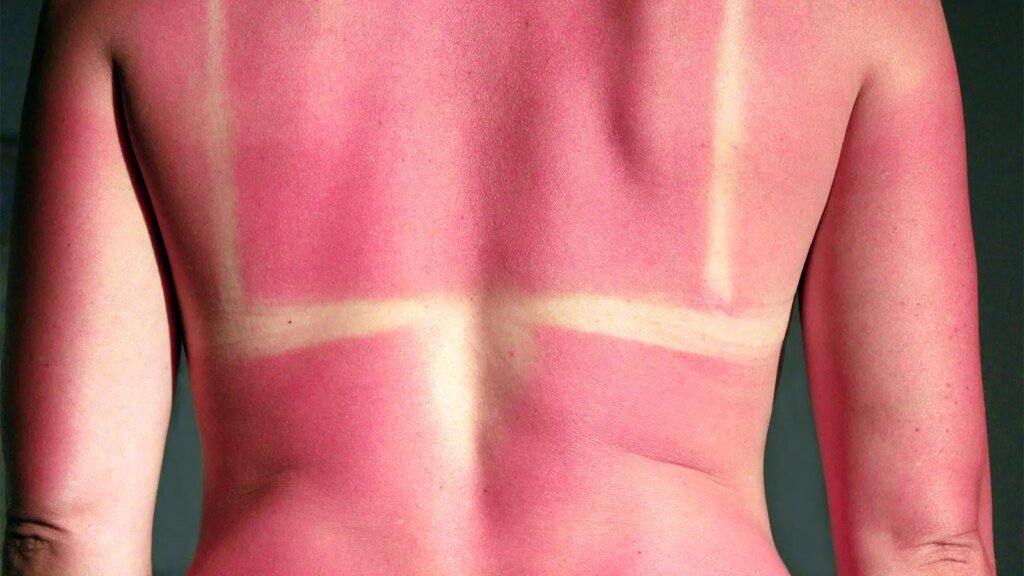
Getting a severe sunburn after a day at the beach is no fun, but people on social media have begun to refer to this as a “life-changing sunburn.”
Some commenters urge people who’ve been burned to a crisp to get their skin checked immediately and warn that one terrible sunburn can be detrimental for the rest of one’s life. Others post about how their “life-changing sunburn” was a wake-up call to take sun protection seriously.
Ross Levy, MD, chair of dermatology at Northwell’s Northern Westchester Hospital in Mount Kisco, New York, told MedPage Today that the term “life-changing sunburn” is a little dramatic and extreme. It’s also not a term appropriate or useful for dermatologists to use with patients. He says a more accurate descriptor of a severe sunburn is that “it can be a skin-changing event.”
The sun emits two types of rays that cause skin damage: ultraviolet A (UVA) and ultraviolet B (UVB). UVA penetrates deep into the skin and contributes to photoaging, while UVB doesn’t go as deep but is largely responsible for sunburns. UV rays also damage DNA, which Levy said “sets off a mutation, which sets off a cascade towards cancer.” The worse a sunburn is, the more DNA damage there is, and therefore more opportunities for mutations that could turn into cancer down the line.
Raman Madan, MD, a dermatologist with Northwell Health in Glen Cove, New York, noted that importantly, the skin has mechanisms to repair damage caused by UV rays. He said that the body identifies damaged DNA and then stops it from replicating. But when there’s more damage, there are more opportunities for the body to miss some. Problems like skin cancer arise when the repair mechanism can’t keep up with the damage.
Despite all the sun damage people take, they get relatively few skin cancers, Levy noted, showing how well the body’s repair mechanism works. But because it takes time for mutations to compound and turn into cancer, this lag makes it difficult to study direct ties between singular burns and later cancer diagnoses.
This lag may also contribute to patients thinking that repeatedly getting sunburns and not wearing sunscreen isn’t serious, especially if they get a bad burn, their skin recovers, and there are no immediate consequences, like cancer. It’s not as simple as one “life-changing sunburn” leading to skin cancer, Levy said; rather, it’s multifactorial.
The amount and frequency of sun exposure is an important consideration, as are genetics that make some people more prone to skin cancers. Skin tone matters, too, since people with darker skin have more melanin, the pigment in cells that absorbs light. While people with darker skin have more built-in sun protection, they still need a boost from sunscreen. Levy compared it to fair-skinned people having built-in SPF 2 and people with darker skin having maybe SPF 15; dermatologists still recommend SPF 30 or higher.
“The more melanin you have, the less UV penetration you have and the less DNA damage that you have,” Madan said. However, melanin is produced by melanocytes, which decrease with age, meaning the sun is going to have a greater effect as you get older.
Madan added that many patients have their own sunburn horror story that take on a mythos: that time they forgot sunscreen while at the beach or fell asleep in a lawn chair. These burns certainly cause damage that can’t be taken back, but the body’s repair mechanisms are at work.
“A severe sunburn is something significant, and it should be taken seriously, but at the same time your body has good, strong repair mechanisms that can heal most of the damage,” Madan said.
Please enable JavaScript to view the comments powered by Disqus.
Source link : https://www.medpagetoday.com/popmedicine/cultureclinic/121476
Author :
Publish date : 2026-05-28 18:51:00
Copyright for syndicated content belongs to the linked Source.