Welcome to Culture Clinic, MedPage Today’s collaboration with Northwell Health to offer a healthcare professional’s take on the latest viral medical topics.
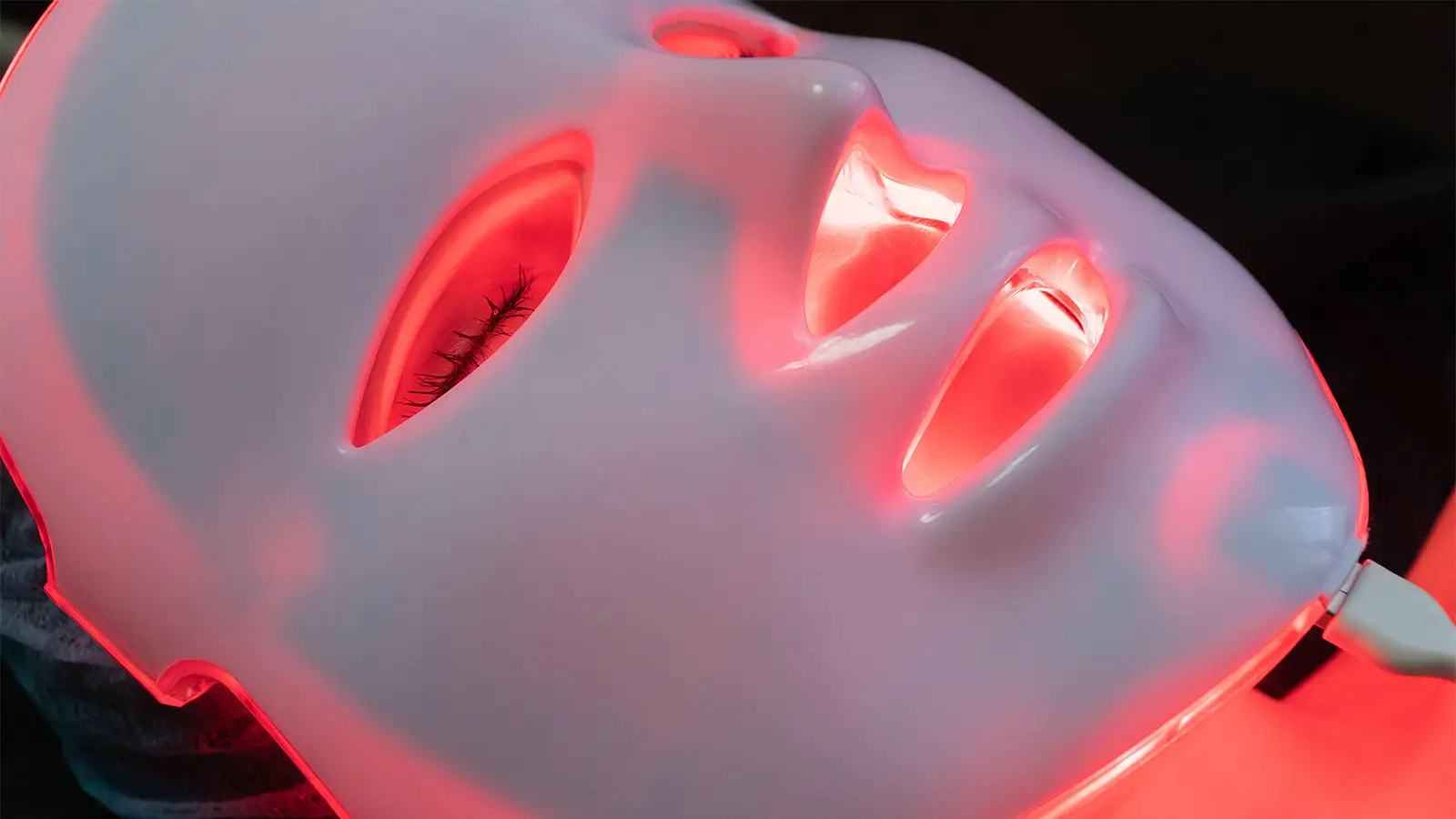
Most at-home skin care trends come in the form of creams and sprays. But on social media, many “skinfluencers” don glowing red masks in hopes of achieving anti-aging and acne-preventing benefits.
Red light therapy, also referred to as photobiomodulation or low-level light therapy, is used to improve skin texture and appearance. While it has been around for decades, the market for at-home devices has proliferated in recent years, with products like full-face masks costing hundreds of dollars.
Raman Madan, MD, a dermatologist with Northwell Health in Glen Cove, New York, told MedPage Today that red light therapy devices may be more hype than helpful.
Madan doesn’t recommend red light therapy to his patients, instead opting for other interventions that target specific issues. If a patient is inquiring about red light therapy for acne, he’ll instead suggest treatments with more concrete benefits, like tretinoin or medications.
“I think that sometimes the benefits of red light therapy are overstated,” Madan said. “Sometimes patients who are coming in for red light therapy might have some unrealistic expectations.”
That’s not surprising considering skin care companies make bold claims about red light therapy improving skin texture and tone, and many dermatologists recommend expensive red light therapy products on their social media pages. Madan said these doctors may be sponsored by the companies that make red light therapy masks or may offer red light therapy in their offices, and thus may be motivated to share the positives online.
In addition, many patients perceive red light therapy as safe and noninvasive, which it is, and marketing of the devices often targets insecurities like aging and acne. Furthermore, if a patient has spent hundreds on a device they hope will benefit their skin, their perception of benefit may be skewed to the positive.
While there is research backing the benefits of red light therapy, Madan said the results are “very, very modest” at best, and that the companies that make red light therapy devices sponsor many of the studies, which should raise a certain level of skepticism.
The way that red light therapy theoretically works is by emitting wavelengths that stimulate photobiomodulation, Madan explained. The wavelengths get absorbed by mitochondria, which then release adenosine triphosphate and activate fibroblasts and keratinocytes, cells that help with repairing the skin. Collagen is then built up by those skin-repairing cells, which improves skin elasticity.
It takes time for red light therapy to show any benefit — at least 3 to 6 months — and Madan said that consistent use is key. Whether in the dermatologist’s office or at home, red light therapy should be used for about 10 minutes several times a week.
Madan noted that most patients use at-home devices, since you have to use it frequently, though the quality of at-home masks varies and the equipment that dermatologists use can be slightly more powerful. If a patient is going to buy a mask, Madan recommended they look for devices that emit wavelengths of 660 nanometers and 850 nanometers, which have the most research behind them.
“You can expect a little bit of a modest benefit, but it’s not something that I would recommend as sole treatment,” Madan said. “At the end of the day, I don’t think you’ll have any miracles from it.”
Source link : https://www.medpagetoday.com/popmedicine/cultureclinic/120805
Author :
Publish date : 2026-04-15 21:07:00
Copyright for syndicated content belongs to the linked Source.