


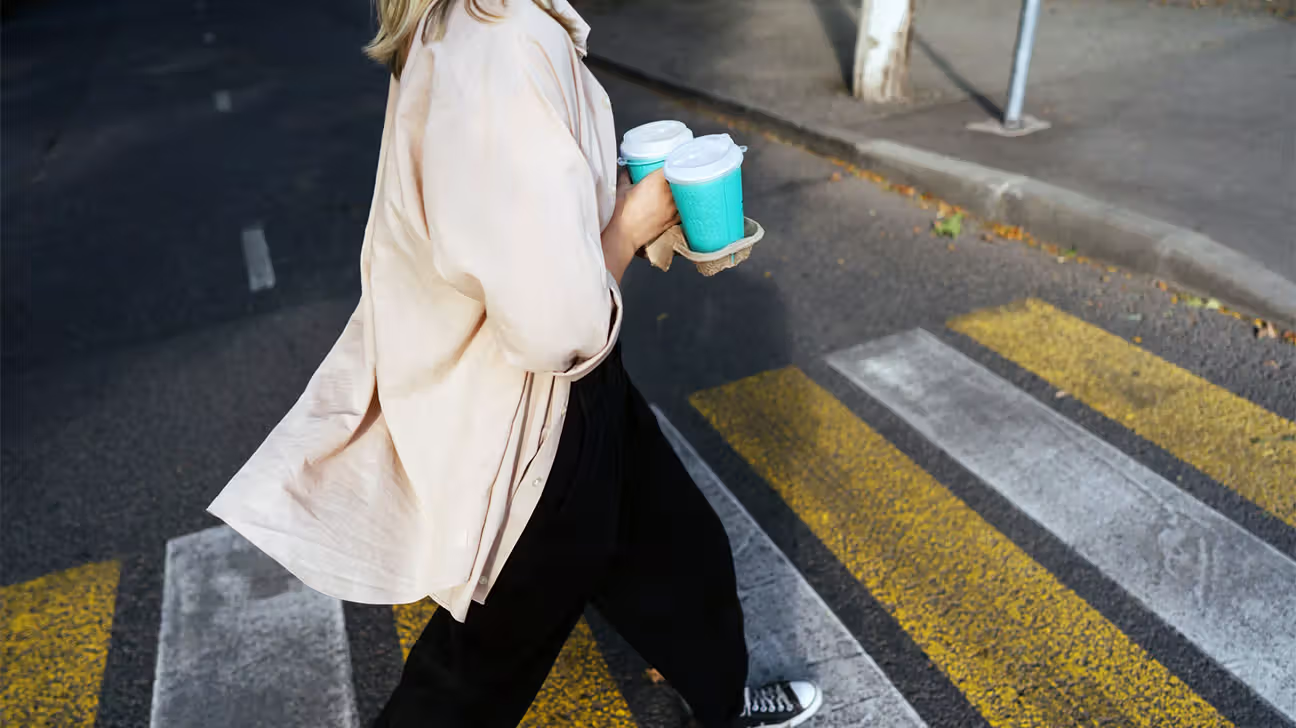
- A new study found that heat influences the amount of microplastics released from disposable cups.
- The type of cup can also affect how much microplastic is leached into a beverage.
- Cups made of stainless steel or ceramic are your safest options.
- If you must use a disposable cup, paper cups coated with PHA are generally a safe option.
Every day, millions of people enjoy their coffee, tea, or other beverages from disposable cups, often without a second thought about what might be lurking in their drink.
However, research published in the Journal of Hazardous Materials: Plastics has revealed a surprising concern: these cups can release tiny plastic particles, known as microplastics, into the beverages they hold, especially when exposed to hot liquids.
Microplastics, which are fragments smaller than 5 millimeters, are increasingly recognized as a public health concern because they can be ingested or inhaled by humans, accumulate in organs like the lungs or digestive tract, and potentially cause inflammation or other health issues.
The researchers further found that even paper cups lined with polyethylene can release microplastics, albeit in lesser amounts than fully plastic cups.
Per the authors, this implies that your choice of cup material could help reduce your exposure.
The researchers caution, however, that the issue requires further study, as other factors, such as particle size, shape, and chemical surface properties, may also influence health risks.
To learn more about the issue, the researchers took a two-pronged approach.
They first analyzed data from 30 previous studies, compiling 237 observations related to microplastic release from various plastic products. This analysis focused on factors such as water temperature and soaking time in relation to microplastic release.
Secondly, the research team conducted a case study comparing two common types of disposable cups: pure polyethylene (PE) cups and paper cups lined with a polyethylene coating.
Their experiments involved filling the cups with deionized water at two temperatures: cold (5°C/41°F) and hot (60°C/140°F). Steps were taken to prevent contamination as well. After 30 minutes, the water was filtered to collect any microplastics that leached into it.
Tools such as scanning electron microscopes and atomic force microscopes were used to examine the size and surface features of the microplastics and the cups.
Additionally, the team used Fourier Transform Infrared (FTIR) spectroscopy to identify the chemical composition and to detect changes in the cups’ materials after exposure to water at different temperatures.
The review of studies confirmed a clear pattern: as water temperature increases, so does the release of microplastics from plastic products.
Polymers like polyethylene (PE), polypropylene (PP), polystyrene (PS), and polyethylene terephthalate (PET) all showed significant increases in microplastic shedding when soaked in hotter water. However, this effect varied widely — from hundreds to millions of particles — depending on the type of plastic.
The researchers also noted that the time the cups were soaked in water did not significantly impact the number of microplastics released. Whether the water sat in the container for a minute or several hours, temperature remained the dominant factor influencing microplastic release.
The case study revealed that PE cups released more microplastics than PE-coated paper cups under both cold and hot conditions. Specifically, when the water temperature increased from 5°C (41°F) to 60°C (140°F), microplastic release from PE cups rose by 32.7%. The PE-coated paper cups, however, did not show this temperature-dependent increase.
Microscopic analysis showed that the surface of PE cups became rougher and more irregular after exposure to hot water, likely due to physical degradation, which may have led to greater shedding of microplastics. In contrast, the paper cups with PE lining had smoother surfaces and less surface damage, which likely contributed to their lower microplastic release.
The researchers estimated that someone drinking 300 milliliters of coffee daily from PE cups could ingest around 363,000 microplastic particles per year. Using PE-coated paper cups could reduce this intake to about 244,000 particles annually.
Chemical analyses confirmed that while temperature affected the physical structure of the cups, it caused only minor changes in the chemical composition of the materials. The authors say this suggests that the cups remain chemically stable, but physical wear and surface roughness are key factors in microplastic release.
Lauren Gropper, the CEO and Founder of Repurpose and a sustainability expert, told Healthline that the best option for reducing your intake of microplastics is to avoid using disposable cups made of traditional plastic or petroleum-based plastic, since these give off the highest amount of microplastics. Gropper wasn’t involved in the study.
“When you put hot coffee in a plastic cup, the heat causes the cup to shed microplastics that end up in your coffee and your bloodstream,” she said. “The safest and most sustainable option is always to use a reusable cup that is made from stainless steel or ceramics.”
Gropper explained that these materials are inert and won’t react with a hot liquid or release toxins into your hot beverage.
Leah Ford, Director of Marketing at CJ Biomaterials and an expert on compostable materials, added that if you must use a disposable cup, opt for paper cups that are lined with a compostable biopolymer like polyhydroxyalkanoate (PHA). Ford wasn’t involved in the study.
“Compostable biopolymers like PHA are designed specifically so they won’t create persistent microplastics,” she said.
Ford went on to explain that PHA is made by fermenting plant sugars and is seen as a food source for common microorganisms. It can undergo biodegradation in compost, soil, and marine environments.
“Additionally, PHA is bioabsorbable by the human body and commonly used for in vitro medical devices and sutures,” she said.
This organization tests products to ensure they are compostable and biodegradable. They also test for toxicity and per- and polyfluoroalkyl substances (PFAS), she said, making these safer and better for the environment.
Source link : https://www.healthline.com/health-news/to-go-coffee-cups-release-microplastics-study
Author :
Publish date : 2026-01-26 07:00:00
Copyright for syndicated content belongs to the linked Source.