


When Eli Susman arrived at a Buddhist retreat, he expected to spend most of his time there in deep meditation. After all, the Plum Village Monastery to the east of Bordeaux, France, had been established by Thich Nhat Hanh, sometimes known as the “father of mindfulness”. With a newcomer’s enthusiasm, he decided to test how long he could spend in silent contemplation, embarking on a mammoth 3-hour session.
Afterwards, he proudly told one of the monks. “It was almost like I expected a shiny badge for my efforts,” recalls Susman. Instead, the monk simply smiled brightly. “Three hours?” he asked Susman. “How about three breaths? That’s all you need to tune in to the present moment.”
Susman’s curiosity was piqued, and during his psychology PhD at the University of California, Berkeley, he set out to investigate whether such a brief period of contemplation could really reset someone’s thinking and bring about a meaningful change in their mental state.
The short answer is yes. According to a growing body of research from teams around the world, those who complete extraordinarily brief exercises – lasting as little as 20 seconds a day – report feeling peace and joy that lingers long after the exercise ends. By breaking ruminative thought cycles and calming the physiological stress response, these micropractices (also known as microacts) may enhance our physical health, too.
In addition to the brief breathwork suggested by the monk at Plum Village, these evidence-based interventions include brief writing exercises and self-compassion methods cultivating gratitude, awe and a sense of purpose.
Susman has written a book on the subject, Micropractice, due to be published next year. The term is sure to become one of 2026’s biggest buzzwords, but in the meantime, there are already plenty of strategies to bring a little calm to your holidays this year.
A little goes a long way
Susman’s findings build on decades of research on interventions inspired by spiritual practices from both Eastern and Western religions. These include contemplative habits such as mindfulness meditation, mind-body exercises such as qigong – a Chinese practice that combines deep breathing and gentle movements –and yoga, and acts of self-reflection such as gratitude journaling. Research finds that all of these bolster our mental health and reduce the risk of conditions like depression and anxiety.
What is much less clear, however, is the “dose” that is necessary to have a positive effect, with some studies suggesting you can have too much of a good thing. One analysis by Willoughby Britton, a professor in psychiatry and human behaviour at Brown University in Rhode Island, and her colleagues found that people who meditate for just 5 to 10 minutes, two or three times a week, tend to sleep better than those who practice for more than 30 minutes a day, five days a week. That may be because meditation pushes the brain into a state of engaged alertness that makes it harder to drop off at night if we practice it for too long each day.
The stress-busting effects of short versus long mindfulness practice were directly compared in a 2021 study by Sarah Strohmaier and her colleagues at Canterbury Christ Church University in the UK. Participants were asked to take part in four sessions over two weeks. One group was told to meditate for 5 minutes each time, while a second group was given 20-minute sessions and a third group listened to an audiobook. This last group acted as the control against which the other two interventions could be compared.
At the end of the two-week period, both meditation groups reported fewer symptoms of anxiety and depression than those who had listened to the audiobook. Crucially, however, there were also differences between the two meditation groups, with the people who did the shorter sessions reporting less stress than those who did the longer meditations.
“
Brief interventions may be especially useful in our most stressful periods
“
One explanation is the difficulty of the task: the participants in the longer sessions found it harder to prevent their minds from wandering for a sustained period, which could have generated a sense of failure. Those in the shorter sessions, in contrast, tended to be pleasantly surprised by their experience. One participant told the researchers they had always thought that you need lots of time to dedicate to mindfulness, and it therefore seemed too challenging to even start, but the experiment showed that just 5 minutes can help. The individual reported feeling more relaxed at the end of the session and carried that with them throughout the rest of their day.
Brief interventions may be especially useful in our most stressful periods, as health psychologist Andreas Schwerdtfeger and his colleagues at the University of Graz in Austria demonstrated earlier this year.
The team first hooked up participants to portable monitors recording their heart rate variability (HRV), a measure of the momentary fluctuations between heartbeats, which can indicate our physiological stress levels. In general, high HRV demonstrates greater relaxation, as the heart responds moment by moment to the body’s demands, while low HRV suggests the body is preparing to face a threat with a fight, flight or freeze response. Over the following few days, the participants received various alerts reminding them to focus on their breathing for 1 minute at a time.
Despite their short duration, pauses proved to be surprisingly effective at calming the mind and the body, as shown in self-reported questionnaires taken immediately after the mindful minute, as well as in the HRV recordings. Crucially, this was most evident when the participants were already feeling overwhelmed. “It decreased stress and increased feelings of safety,” says Schwerdtfeger. He calls it a “just-in-time adaptive intervention” – you roll it out when you most need it.
Self-compassion solution
Susman could have chosen to continue this focus on mindfulness while designing his own micropractice, were it not for a question posed by his PhD advisor: what does the world need most right now? He settled on self-compassion, an important aspect of Buddhist thinking that has been gaining huge interest in psychology circles over the past two decades. It involves three main components: acting with kindness rather than criticism towards our flaws or mistakes; recognising that suffering is a part of the human condition and so connects us to other people; and mindfully observing our negative feelings without judgement.
Various experiments have shown that we can cultivate this gentler way of thinking about ourselves through meditations that focus on self-compassion’s core elements. Like the mindfulness interventions, however, these programmes often require serious commitment.
Inspired by his experience at the Plum Village Monastery, Susman wondered whether it might be possible to change our thinking in the space of a few short breaths. To do so, he and his colleagues recruited 135 participants and showed them a 20-second video that told viewers to think of a recent event that had upset them, such as a mistake or failure. “Send kindness and warmth to yourself by bringing one hand to your belly and the other to your chest with the energy of giving yourself a hug,” the video stated. “And you’re invited to ask yourself: ‘How can I be a friend to myself in this?’”


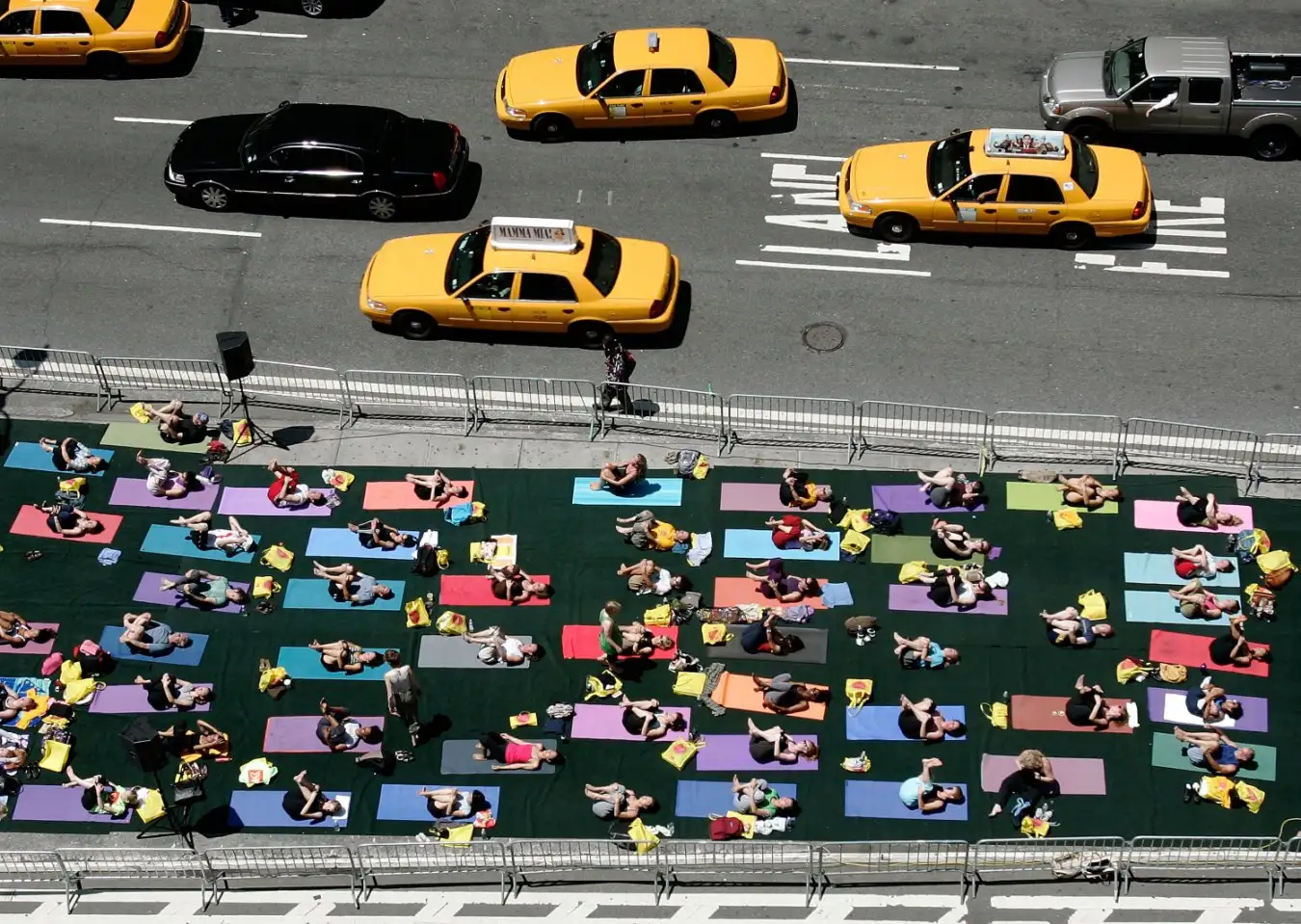
Taking a few minutes to be mindful can make a big difference
Randy Faris/Getty Images
Half the participants were instructed to practice this just once a day for a month, while those in a control group were instead encouraged to practice a sequence of finger-tapping exercises for 20 seconds a day. As often happens in month-long interventions, some participants dropped out and didn’t see any benefits. But for those who committed to it regularly, the micropractice resulted in significantly less stress, compared with those doing the finger-tapping.
It shouldn’t be a surprise that daily repetition was necessary for the micropractice to take, says Susman. He points to a recent analysis of data from the popular app Headspace, which found that the frequency of practice was far more important than the length of sessions when it came to reducing stress. “Consistency beats duration when it comes to predicting better outcomes,” he says.
Susman compares it to tending to a plant: “Giving it a little bit of water each day is going to be a lot more effective than just dousing it in water once a month.” That makes it all the more important to choose activities that you enjoy. “The best practice is going to be the one you actually do,” he says.
The Big Joy Project
If mindfulness and self-compassion don’t appeal, there are plenty of other options. The Greater Good Science Center at the University of California, Berkeley, offers a host of online resources detailing interventions that can improve our well-being, many of which take only a few minutes to complete.
A few years ago, Emiliana Simon-Thomas and her colleagues at the Greater Good Science Center created the “Big Joy Project”, gathering the most accessible interventions requiring the least time commitment, which they called “microacts”. These included a short exercise in perspective-taking, in which participants had to think of an upsetting event and three positive things that came out of it; writing a list of things that made them feel grateful; watching a short awe-inspiring nature video; and spending a few moments reflecting on their values.
“We branded them as ‘microacts’ so that people wouldn’t feel like it was a big burden or obligation, but that they could do it in their busy day,” says Simon-Thomas. The website tasked visitors with practising one microact daily over the span of a week, with questionnaires measuring their well-being at the start and end of the seven-day period.
The project was promoted through the screening and marketing of the film Mission: JOY, about the friendship between the 14th Dalai Lama and Archbishop Desmond Tutu. Between 2022 and 2024, 17,598 people took part, providing a huge dataset for Simon-Thomas and her colleagues to analyse. The results, published this year, demonstrated just how powerful these microacts could be. Those who took part reported less stress and greater overall well-being compared with their baseline at the start of the project. They were more likely to agree with the statements “I feel that the things that I do in my life are worthwhile” and “I feel satisfied with my life as a whole”.
Such microacts might seem like a luxury for people who are already living cushy lives, rather than interventions that could help people living in truly difficult circumstances. Yet Simon-Thomas and her colleagues found that the biggest changes could be seen among people from traditionally disadvantaged groups, such as those facing financial distress.
Even so, researchers are wary of presenting their interventions as some kind of panacea. “Brushing your teeth wouldn’t [replace] the dentist,” says Susman. “And micropractices shouldn’t replace therapy or medications.”
Nor should they replace longer contemplative practices, he says. Regular bouts of 20- or 40-minute meditation may be better at producing long-term brain changes associated with enhanced emotional regulation. And on some occasions – such as when you are at a Buddhist retreat – a 3-hour session may just help you reach some kind of spiritual epiphany.
The aim of these micropractices is simply to bring a little peace and joy into the rest of our lives, whenever you most need to break up the runaway thoughts that so frequently derail our health and happiness.
David Robson is the author of The Laws of Connection: 13 social strategies that will transform your life, out now in paperback.
Topics:
Source link : https://www.newscientist.com/article/2502370-too-busy-to-meditate-microdosing-mindfulness-has-big-health-benefits/?utm_campaign=RSS%7CNSNS&utm_source=NSNS&utm_medium=RSS&utm_content=home
Author :
Publish date : 2025-12-08 13:00:00
Copyright for syndicated content belongs to the linked Source.