[ad_1]
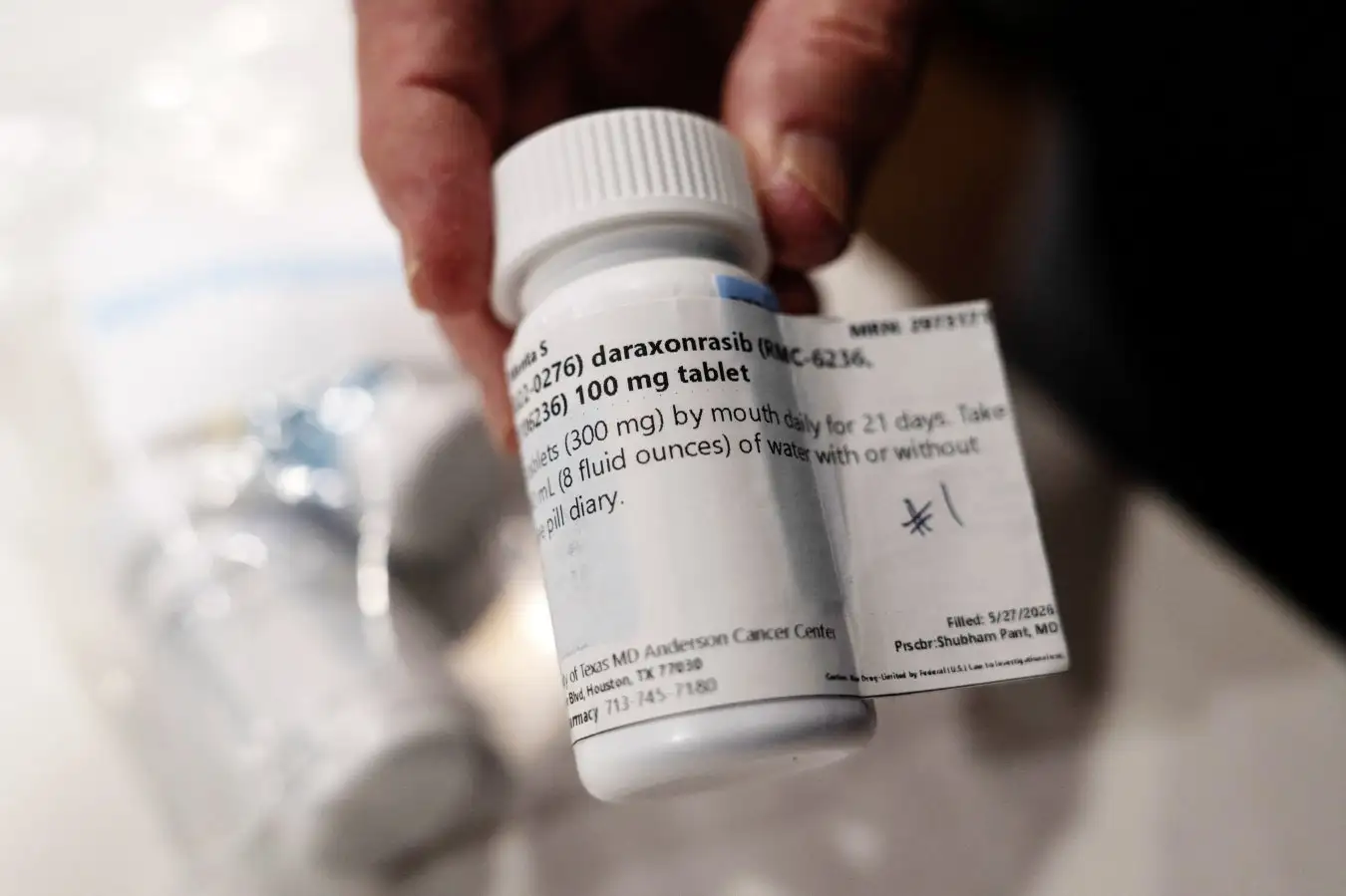
The drug daraxonrasib is being put forward to treat people with advanced pancreatic cancer in clinics
REUTERS/Danielle Villasana
A daily pill doubles the survival time of people with pancreatic cancer, one of the most aggressive and difficult-to-treat forms of the condition, even after they have stopped responding to chemotherapy. What’s more, the convenient pill has fewer side effects than standard chemotherapy.
“It’s a transformative treatment,” says Pilar Acedo at University College London, who wasn’t involved in the research. “For decades, [survival outcomes] haven’t changed for pancreatic cancer. [The new treatment] gives you double the amount of time to enjoy your life, be with your family and do things that you would like to do.”
About 70 per cent of people with pancreatic cancer are diagnosed at an advanced stage. A combination of no routine screening and vague symptoms, like a sore back, means that the condition is usually spotted when it has spread elsewhere. Standard treatment involves chemotherapy, but even then, most people only survive for about three to six months, on average. “The disease is really aggressive and difficult to treat,” says Acedo.
More than 90 per cent of pancreatic cancers are driven by mutations in the KRAS gene, which encodes for a protein known as K-Ras. When the gene is mutated, K-Ras gets stuck in a state that drives cancer cells to divide uncontrollably.
Eileen O’Reilly at Memorial Sloan Kettering Cancer Center in New York and her colleagues wondered if a drug called daraxonrasib, which binds to the protein, could dampen its signals and slow the growth of cancer cells.
So the team recruited 500 people with metastatic pancreatic cancer from the US, Europe and Asia, all of whom had stopped responding to an initial round of chemotherapy. They were assigned to two groups: the first took daraxonrasib every day and the second continued to receive standard chemotherapy infusions.
The researchers – who presented the results at the American Society of Clinical Oncology meeting in Chicago on 31 May – found that the participants in the daraxonrasib group went on to survive for 13.2 months, on average, compared with 6.7 months in the chemotherapy group. “It’s fantastic news,” says Acedo. The treatment is the first in decades to improve survival outcomes among patients with advanced pancreatic cancer, she says.
What’s more, only 1 per cent of the participants in the daraxonrasib group stopped taking the drug due to side effects, such as rash, whereas 11 per cent stopped chemotherapy due to adverse events like fatigue. “A daily pill is also much easier to take than chemotherapy, which involves frequent hospital visits and is invasive,” says Acedo.
The team has submitted the findings to the US Food and Drug Administration, and hopes to get the drug approved for use in people with metastatic pancreatic cancer who have had chemotherapy in the coming months, says O’Reilly.
But it is still far from a cure, says Acedo. “It’s a few extra months, which is really promising, but it’s still not years and they’re still dying of the disease,” says Acedo. Nevertheless, further studies may reveal that combining daraxonrasib with other experimental drugs or chemotherapy could lead to even better outcomes, she says.
The researchers are exploring this in ongoing trials, says O’Reilly. They are also looking at whether daraxonrasib could be used as a first-line therapy in untreated patients, she says.
Topics:
[ad_2]
Source link : https://www.newscientist.com/article/2528738-transformative-pancreatic-cancer-drug-doubles-survival-time/?utm_campaign=RSS%7CNSNS&utm_source=NSNS&utm_medium=RSS&utm_content=home
Author :
Publish date : 2026-06-01 18:11:00
Copyright for syndicated content belongs to the linked Source.