- A new trend known as wellness stacking involves combining small self-care habits into a single, intentional routine.
- Experts say this approach supports mental health and habit-building.
- Research indicates that associating new habits with existing cues enhances follow-through and promotes long-term habit formation.
- While effective, wellness stacking works best when kept realistic and flexible. Trying to add too much at once can lead to overwhelm.
When you’re busy, taking care of yourself often falls to the bottom of the to-do list. But a new viral social media trend promises to help you make self-care a habit.
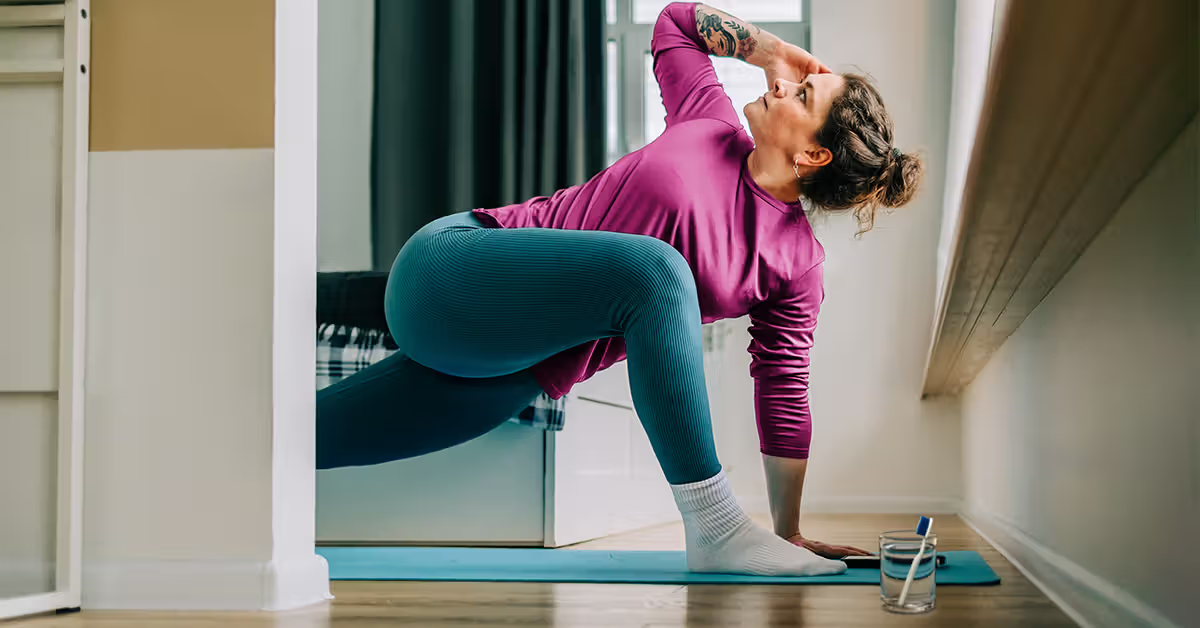
Known as “wellness stacking,” the premise is simple: pair several small and easy self-care practices together and complete them in one intentional block of time.
Instead of treating wellness as a long list of separate tasks you have to squeeze into your day, wellness stacking bundles them into a short, manageable routine.
It’s about using existing good habits to promote new healthy habits. In short? Taking something you’re already doing and adding another feel-good action on top.
In a video series, TikTok user @hummusbirrd experimented with different wellness stacks. Combinations included walking while listening to an audiobook, journaling under a red panel light, and wearing vision therapy glasses and teeth whitening strips while lying on a PEMF mat.
So, is this an effective and realistic way to make self-care a valuable part of your day?
As far as wellness trends on social media go, this one seems relatively sensible and grounded.
“From a mental-health perspective, wellness stacking is one of the more sustainable trends online because it centers on small, realistic habits rather than extreme routines,” Andrea Gleim, PsyD, a psychologist and founder of Mindfully Mine Counseling Center, told Healthline.
“It gives us those small wins throughout the day that actually build momentum,” she explained.
Gleim said pairing simple behaviors together aligns with what we already know in psychology: that small, consistent actions are far more effective than trying to overhaul your life all at once.
“When done intentionally, wellness stacking can reduce decision fatigue, increase follow-through, and create a sense of structure that genuinely supports emotional well-being,” she noted.
Wellness stacking uses what some experts have described as “habit cueing.”
“This is where one behavior naturally leads into the next, making the routine feel more predictable and easier to keep up with,” Gleim explained.
“It also reduces cognitive load by removing that constant ‘What should I do next?’ decision-making that can stop people from following through,” she continued.
On a neurological level, wellness stacking taps into the brain’s reward system.
“Those small habits create small wins, which boost motivation and reinforce the behavior over time,” Gleim said.
“Our brains love patterns, and wellness stacking turns self-care into a simple, repeatable rhythm instead of a long list of disconnected tasks.”
Wellness stacking certainly seems to be worth the effort.
A
Both cue types worked, which suggests habit-cueing (the core of wellness stacking) is effective.
Meanwhile, a meta-analysis found that activity-scheduling and activation techniques increase well-being and reduce adverse mental health symptoms.
“Today, people are busier than ever with work, family, and social obligations. Wellness stacking offers the ability to stop, be mindful, and ground yourself, promoting emotional regulation and mental wellness,” said Victoria Romanyuk, a therapist at Serenium Therapy and Wellness.
“This, in turn, reduces levels of stress, anxiety, and impulsivity, allowing better control of one’s own behaviors,” Romanyuk told Healthline.
Wellness Stacking can also create a feeling of accomplishment. “Psychologically, it builds momentum like starting with one small, attainable habit increases the likelihood that someone will follow through with the next,” Gleim noted.
“These small, repeated actions strengthen self-efficacy, the belief in one’s ability to succeed or accomplish a task, which is strongly linked to better emotional regulation, higher self-esteem, and overall well-being,” she continued.
Emotionally, Gleim noted that wellness stacking can also create a sense of grounding and predictability, which can help reduce stress and overwhelm in daily life.
It’s important to be aware of your limitations.
While wellness stacking can be beneficial for your mental health, attempting to change too much of your routine at once can be overwhelming.
“As with anything new, we have to be mindful and set up realistic expectations,” Romanyuk said.
It’s important to consider what tasks feel manageable and realistic for you, as well as where they might fit in your day.
“You’ll need to consider what time of day will work best for you to practice wellness stacking,” Romanyuk pointed out.
Wellness stacking in the morning, right before work, for example, could be counterproductive.
Getting started is about building momentum. One of Gleim’s top tips is to start your day with intention.
“How you begin your day sets the tone for your nervous system. A sunrise alarm clock can ease you into the morning without the cortisol spike that comes from a harsh, disruptive alarm. Pair that with 30 seconds as soon as you get out of bed to gently wake up your body,” she suggested.
The trick is to anchor a new habit to something you already do.
“Habit cueing makes routines much easier to maintain. For example, take three deep breaths while your coffee is brewing or right after brushing your teeth. Attaching a new behavior to an existing one removes the guesswork,” Gleim advised.
To make a new habit stick, you can also use sensory cues.
“A specific playlist, scent, or designated spot in your home can signal to your brain that it’s time to transition into your wellness moment. These kinds of sensory anchors help the habit feel familiar and grounded,” Gleim explained.
One important mindset shift is recognizing that wellness is about support, not perfection.
“It’s easy to fall into the idea that ‘more is better,’ but sustainable wellness is rooted in consistency and self-compassion, not intensity or flawless follow-through,” Gleim pointed out.
“If someone starts feeling anxious when they miss a habit, loses flexibility, or treats the routine like a rigid checklist, that’s a sign the practice is moving toward perfectionism instead of support.”
The goal is to build small, reliable systems that help you feel more grounded, regulated, and cared for.
Source link : https://www.healthline.com/health-news/wellness-stacking-self-care-trend-healthy-habits
Author :
Publish date : 2026-01-02 08:00:00
Copyright for syndicated content belongs to the linked Source.