A magnet could help us divert asteroids away from Earth
TimothyOLeary/Getty Images
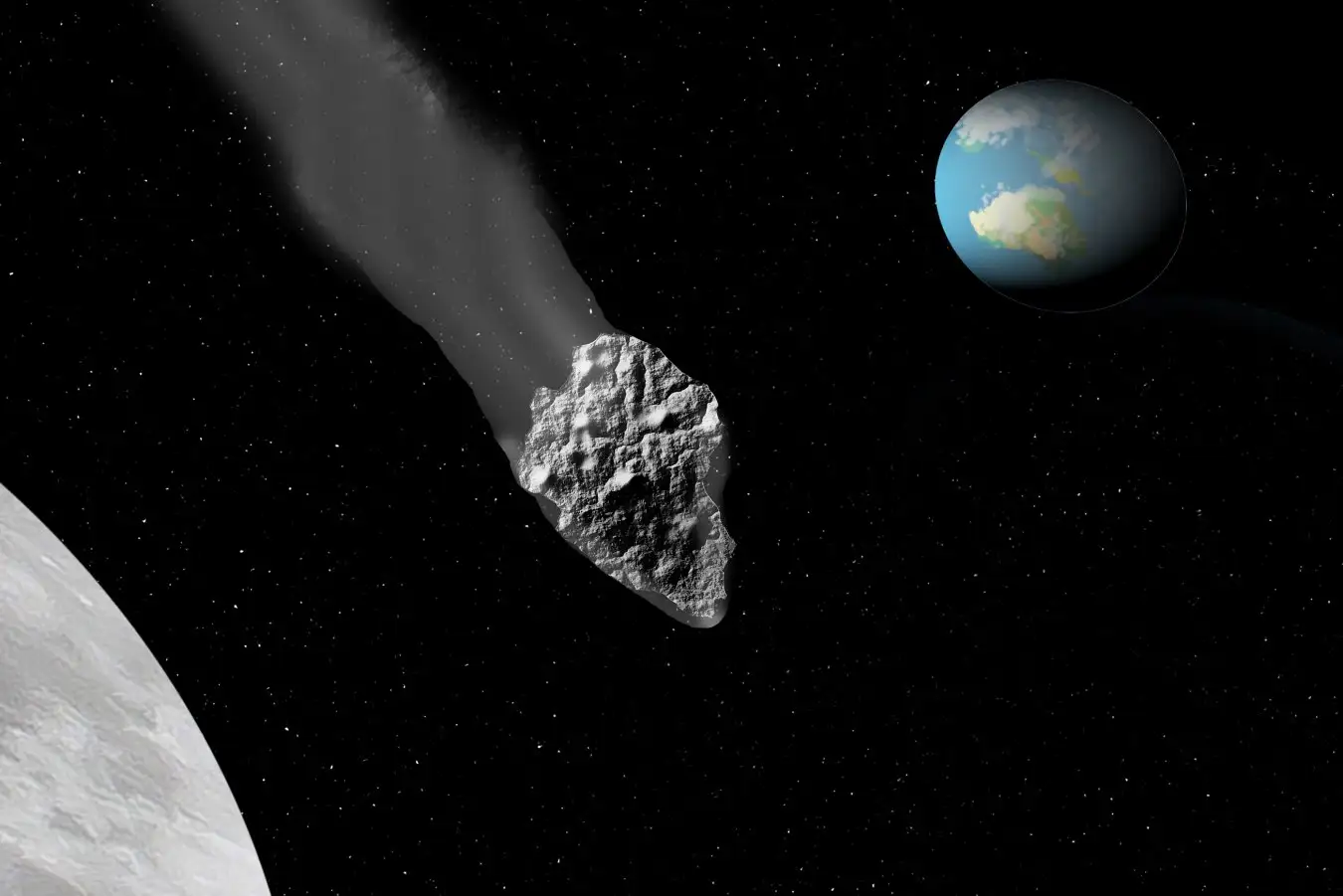
We could deflect potentially hazardous asteroids by using an enormous magnet to gently pull them apart. This idea avoids some of the pitfalls of the more traditional kinetic impactor method, which involves smashing something into an asteroid to move it, but it has yet to be tested, so we can’t be sure it would work.
The idea is called non-contact orbital velocity adjustment, or NOVA, and Gunther Kletetschka at the University of Alaska Fairbanks presented it at the Lunar and Planetary Science Conference in Texas on 17 March.
In his calculations, he applied the NOVA concept to an asteroid called 2024 YR4, which briefly seemed like it might be on a trajectory to hit Earth or the moon in 2032, although further observations showed that it will pass safely by. The asteroid is small, less than 70 metres across, so it would present a relatively simple target to shift.
The spacecraft itself would consist of a large magnet made from a coil of superconducting wire, about 20 metres in diameter, powered by a nuclear fission reactor. Small boosters would control its orbit around the asteroid, keeping it about 10 to 15 metres from the rock, so the magnet could act on the iron within the asteroid.
If the asteroid were one large chunk of iron, the magnet could simply pull it off track, but most asteroids aren’t single huge rocks, but agglomerations of many smaller rocks only barely held together by gravity, called rubble piles.
“Because we have this rubble pile-like structure with essentially zero tensile strength, we cannot efficiently push on the whole body because it’s like pushing on one boat among many boats on the ocean,” said Kletetschka in his talk. A kinetic impactor would run the risk of breaking the asteroid apart, leaving us to deal with many fragments raining down on Earth.
Instead, an orbiting NOVA spacecraft would slowly pull rocks from the rubble pile and capture them in a magnetic trap at the centre of its coil. Each fragment collected would increase both the mass and the magnetic field of the spacecraft, making the next fragment easier to extract.
Essentially, it would slowly shrink the asteroid and move it, while turning the spacecraft into a second asteroid that, crucially, we could control. To deflect 2024 YR4 entirely, Kletetschka calculated that it would take at least 170 days of continuous operations.
“This electromagnetic deflection is plausible, but we have critical uncertainties,” he said. For one, we don’t know exactly how much iron is in 2024 YR4, although an educated guess based on comparisons with other asteroids suggests it would be enough. For another, manoeuvring a spacecraft so close to an asteroid for such an extended period of time hasn’t been done before and would be difficult.
However, Kletetschka said, adding a tool to our planetary defence toolbelt couldn’t be a bad thing, especially as it would have essentially zero risk of worsening the problem.
Topics:
Source link : https://www.newscientist.com/article/2520960-we-could-protect-earth-from-dangerous-asteroids-using-a-huge-magnet/?utm_campaign=RSS%7CNSNS&utm_source=NSNS&utm_medium=RSS&utm_content=home
Author :
Publish date : 2026-03-27 11:00:00
Copyright for syndicated content belongs to the linked Source.