
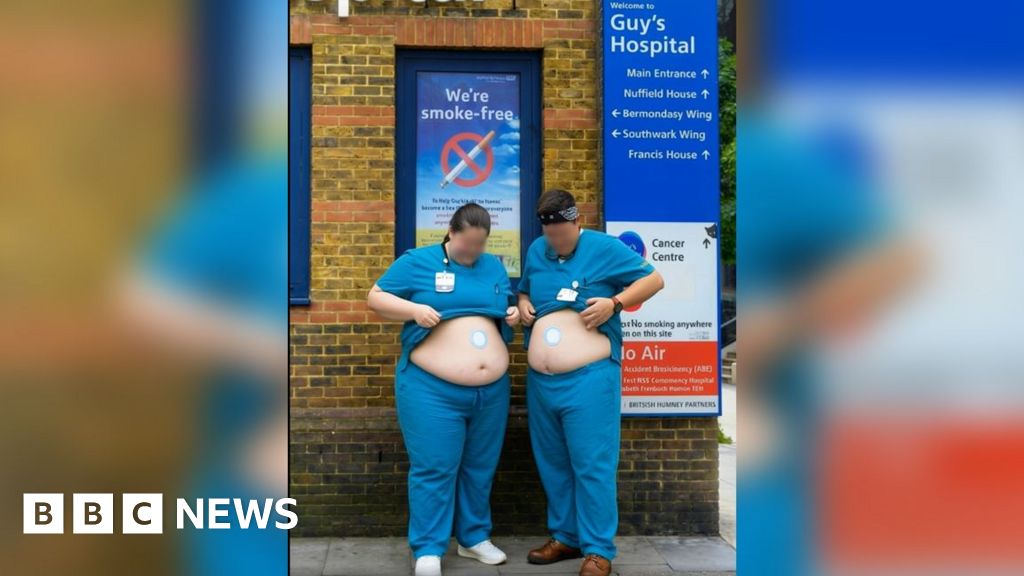



A hospital trust in south London has issued an alert after fraudulent videos were circulated online claiming its staff endorsed weight loss products.
Guy’s and St Thomas’ NHS Foundation Trust said that the videos, found on social media platforms like Facebook and TikTok, “falsely claim a number of our clinicians are using and endorsing these products”.
The videos, which show doctors applying weight loss patches to their bodies and losing weight over a period of time, appear to be AI-generated, the Trust said, and do not show doctors who work there.
The BBC has approached the company and a doctor claiming to be behind the products, but has had no response.
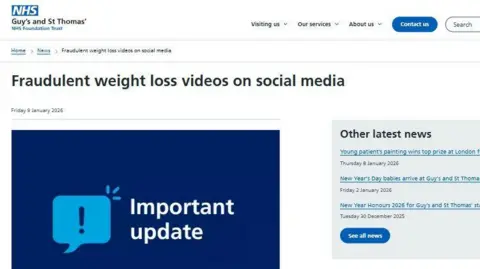
Speaking to the BBC Dr Daghni Rajasingam, deputy chief medical officer at the Trust, said staff were “actively working” to try and get the videos taken down.
“They are fraudulent and they’re misleading,” Rajasingam said.
“NHS clinicians would never endorse or promote commercial products such as this.”
The doctor urged the public to seek health advice on weight loss from “trusted NHS sources”.
“We have to be aware that AI-generated images can be very good,” she added.

Graham Barrow, a financial crime expert and presenter of The Dark Money Files podcast, told the BBC the adverts themselves, and the social media accounts sharing the content, were all “baloney”.
When asked why the videos were created, Barrow said it came down to money.
“This product that they’re advertising, you can actually buy on reputable online market places,” he said, adding that he believed the consumer might actually receive the product, if ordered, but urged caution.
Barrow went on to say that the product itself was a “natural herbal product”.
“The real scam here is it’s really trying to persuade you to buy a product that may or may not work – I don’t know – but everything they’re representing themselves to be – doctors, successful previous dieters – is absolute garbage.”
Barrow, who advises companies on financial crime and its various guises, said: “If there’s a chance to make money out of something, scammers will be the first in the queue to do it – and a big thing like these weight loss drugs is too good an opportunity to miss.”
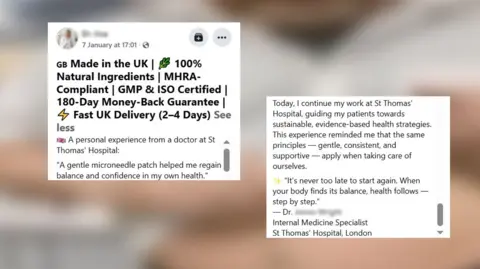
He said he had used online tools to investigate the Facebook profile page of one of the so-called doctors sharing the weight loss adverts.
Using an image search, he was able to discover the profile photo of the doctor originated back to a woman shown in a Romanian bank advert.
Barrow said the advert also claimed that the weight loss patches were “made in the UK”, but said the package held up in the video “clearly has the French flag”.
He said another indication that “things didn’t add up”, was that the 1,000 followers to the doctor’s Facebook profile page were entirely from Vietnam. He said clues like this should help people spot fake accounts.
“The point is, the people selling this stuff are trying to bypass your rational response, they want you to really want to buy this stuff because you want to lose weight and it’s so easy when that emotion takes you over to stop thinking clearly and just think ‘oh yeah this is for me’, and then spend your money,” Barrow said.
He urged people to do “basic checks” on products before making any purchases.
Guy’s and St Thomas’ NHS Foundation Trust said they hoped that anyone finding the videos online would report them to the social media platforms where they were being shared.
Additional reporting by Lotta Haegg
Source link : https://www.bbc.com/news/articles/c3dm1yy0k8po?at_medium=RSS&at_campaign=rss
Author :
Publish date : 2026-01-15 06:00:00
Copyright for syndicated content belongs to the linked Source.