[ad_1]
Long before it was first identified in 1976, Ebola disease, the mysterious illness capable of causing fever, vomiting, and bleeding, struck fear into the hearts of those who encountered it. And reasonably so — Ebola has a terrifyingly high fatality rate (ranging from 30-90%), causes physically agonizing symptoms, and until recently had no proven vaccine or treatment.
Today, the world is once again carefully watching Ebola. On May 17, the World Health Organization declared an outbreak of the Bundibugyo virus (one of four viruses that cause Ebola disease) in Uganda and the Democratic Republic of Congo a public health emergency of international concern. As of this writing, more than 130 deaths and 500 suspected and confirmed cases have occurred, including one confirmed case in an American doctor. There are no approved vaccines or treatments for this Ebola strain, and CDC has issued an alert that American health systems should prepare for the possibility of infected travelers.
In 2014, amidst the largest Ebola outbreak ever recorded, my organization briefly hospitalized a patient whom we believed might have Ebola. This individual had a credible exposure history and presented with typical symptoms, so he was treated as an Ebola patient-under-investigation (PUI). I learned a lot from his hospitalization, and from the many challenging aspects of his care delivery. The protocols for donning and doffing personal protective equipment (PPE), for instance, were complicated and required strict adherence. The amount of material waste generated by this single patient was extraordinary. But perhaps the most challenging — albeit understandable — hurdle was overcoming the anxiety of the healthcare workers caring for someone potentially infected with a highly contagious, highly virulent virus.
What I discovered is that the key to addressing clinicians’ fears and creating a safe environment for excellent clinical care was honest education and robust training. Here is what I learned.
Identify and Isolate
In general, when preparing healthcare workers to treat any complicated, highly infectious disease, it’s helpful to have a relatively straightforward checklist or algorithm to implement. In Ebola preparedness, this algorithm is a three-legged stool known as Identify-Isolate-Inform. The idea is to quickly identify Ebola patients and then isolate them from others while escalating the situation.
Identifying potential Ebola patients usually involves an assessment of travel history and symptoms at a health system’s entry point. For hospitals, this is typically during triage in the emergency department; in outpatient settings, it may be at the facility’s entrance or check-in location. Clinicians should stay vigilant.
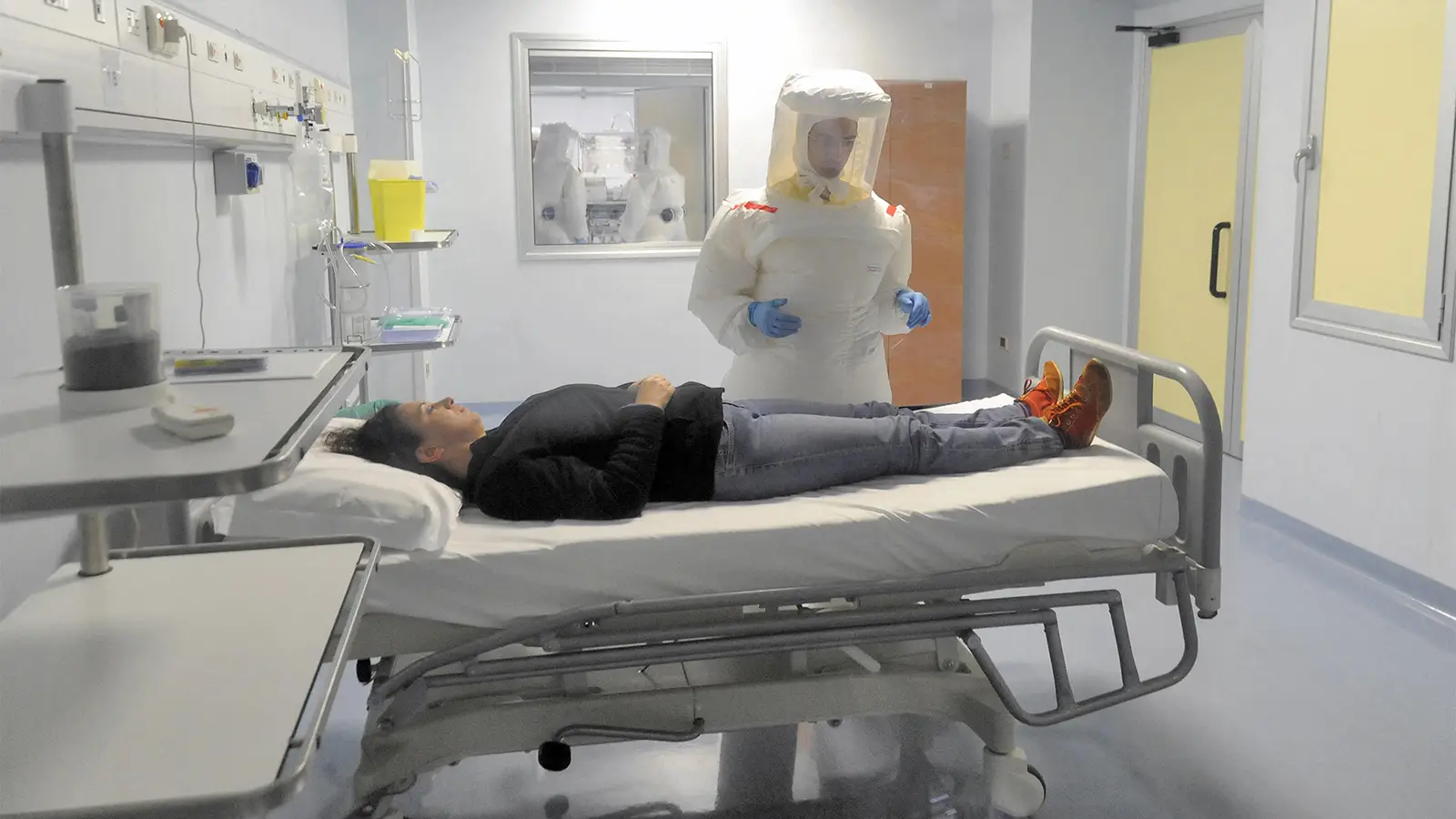
Once identified, a suspected patient should be immediately isolated in a single room with a closed door. In my organization, if the patient appears well and is able to ambulate, we recommend that a clinician don Tier 1 PPE (more on this later) and maintain 3 feet of distance while escorting the patient. For sicker patients, especially those unable to walk or with vomiting, we advise full Tier 3 PPE. Once roomed, all further contact with the patient should include Tier 3 PPE.
All Hands On Deck
An Ebola PUI is an all-hands-on-deck situation. Once the patient is isolated, the third step is to inform the relevant state and federal health departments. A patient ultimately confirmed positive for Ebola disease will need transfer to a state or regional designated treatment center, which requires meticulous coordination.
The other individuals who need to be informed are your local infection prevention and infectious diseases experts, who will serve as an invaluable resource in answering questions about treatment, and your hospital administration, who will have to cope with the inevitable media frenzy.
My advice is to post your facility’s Identify-Isolate-Inform protocol in an easily accessible location, along with relevant phone numbers. I can state from experience that little is as frustrating as scrambling to find that protocol in the middle of an Ebola alert.
Know Your Equipment
In my experience, the most anxiety-inducing aspect of Ebola preparedness is the PPE. Multiple donning and doffing checklists have been published, and while they’re all effective, they have at least a dozen steps. Furthermore, there are multiple degrees of PPE, such as Tier 1 (gloves, surgical mask, and fluid-impermeable gown) and up to Tier 3 (Tyvek suit with hood and integrated boots, surgical boots, nitrile gloves, surgical gown and apron, and a powered air-purifying respirator [PAPR]). This PPE can be further divided into dry/suspect and wet/confirmed PPE — all of which must be meticulously incorporated into Ebola protocols or the clinician risks a breach and exposure to the pathogen. Like I said, anxiety-inducing.
One way to address this issue is by designating certain clinicians as your local PPE “experts” — nurses and doctors who’ve trained in donning and doffing and feel comfortable both wearing the PPE and treating a patient in it. In my organization, we formed a PPE-trained strike team capable of deploying to hospitals (of note, this took months to fully establish). In a pinch, it’s also possible to conduct just-in-time training, which may be worthwhile right now.
Regardless of the specific strategy, it’s crucial to build redundancy into PPE training. It generally takes several rounds of training before clinicians feel they’ve achieved competency, and a more confident clinician means less trepidation and fewer mistakes. Some protocols recommend adding a trained observer for additional redundancy.
It’s also worth noting that Ebola PPE requires equipment not routinely used in clinical care. Once, when responding to an Ebola PUI in one of our hospitals, I found all sorts of equipment deficiencies: PAPRs that weren’t charged or had the wrong hoods, suits without integrated boots, and none of the tape needed to secure the suit’s wrists. With a rapidly expanding outbreak in Africa, now is a good time to check your facility’s Ebola equipment.
It Takes a Village
For me, one of the most surprising aspects of caring for an Ebola PUI is how many healthcare workers it takes. Tier 3 PPE is hot, heavy, and physically exhausting, and you can’t eat or use the restroom while you’re in it. Organizations should plan on relieving bedside clinicians after no more than 4 hours in Tier 3 PPE. It’s also cumbersome: it may take two or three clinicians in Tier 3 PPE to complete a bedside task typically accomplished by just one. This adds up to a small army of people required to treat an Ebola PUI.
Fear Is the Enemy
Finally, healthcare workers need accurate information about Ebola. For instance, healthcare workers who worry about bringing the virus home to their families should know there is no asymptomatic transmission. They should also know that while healthcare workers have been infected, transmission occurred when infection control precautions weren’t strictly followed. And finally, healthcare workers should be made to feel confident that their organization has planned for contingencies, such as monitoring and sick leave policies for clinicians who experience a breach. Attention to psychosocial and mental health needs of clinicians caring for suspected Ebola patients is paramount.
Back in 2014, it was a huge relief when our PUI tested negative for Ebola disease. We subsequently used the experience to examine and fine-tune our overall Ebola preparedness. While the risk of Ebola spread to the U.S. is currently low, our nation’s ability to detect and deter novel pathogens has been dealt multiple blows in the past year. As I opined a year ago, every American healthcare organization should understand how to manage a patient with Ebola disease. We should use the time we currently have to train our clinicians and address their concerns. If there comes a day when we must use those protocols, we want them confident and ready.
[ad_2]
Source link : https://www.medpagetoday.com/opinion/calamities/121412
Author :
Publish date : 2026-05-22 16:00:00
Copyright for syndicated content belongs to the linked Source.