
[ad_1]
On Thursday, the World Health Organization (WHO) said its advisory groups had identified some potential therapies and vaccines to test for Ebola, but recommended they be used exclusively in clinical trials to ensure they are safe and effective. Each would require months of development.
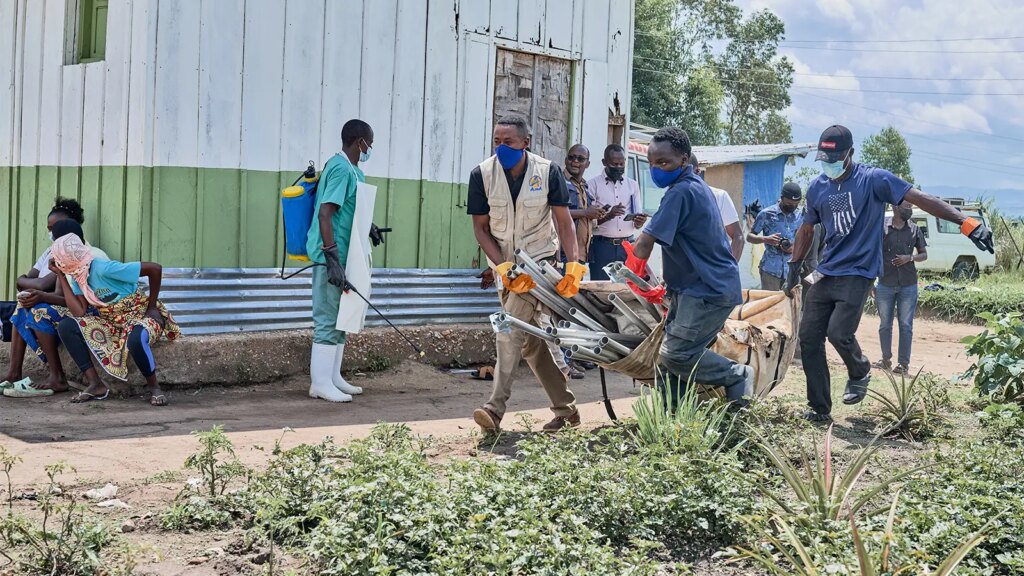
The Bundibugyo virus causing the outbreak in Congo suspected of killing more than 200 people is less common than others that cause Ebola disease, which is complicating the response because there are no specific treatments or vaccines.
The Treatments That Should Be Prioritized
WHO’s independent experts recommended prioritizing three therapies for clinical trials: antibody therapies from Mapp Biopharmaceutical and Regeneron and Gilead Sciences’ antiviral drug remdesivir (Veklury).
Mapp’s antibody treatment was made for a different Ebola relative, the Sudan virus, but it might be usable against Bundibugyo. Regeneron’s treatment is a component of Inmazeb (consisting of atoltivimab, maftivimab, and odesivimab), which was approved by U.S. regulators in 2020 for the Ebola virus.
Remdesivir was approved in 2020 as a COVID-19 treatment.
WHO also said an experimental antiviral drug called obeldesivir should be studied for protecting people exposed to Ebola victims. The Gilead drug, which is still in mid-stage clinical trials, should be evaluated to see if it prevents close contacts from developing Ebola disease, the agency said.
Possible Vaccines to Test
The most promising vaccine candidates include:
- A vaccine similar to Merck’s Ervebo vaccine, which targets the Ebola virus — not the Bundibugyo virus causing the current outbreak. A Bundibugyo-specific version using the same vaccine platform is being developed by the International AIDS Vaccine Initiative. It would likely need at least 7 months before it could be tested in a clinical trial, WHO said.
- A vaccine built on the same platform as the Oxford University/AstraZeneca COVID-19 vaccine. India’s Serum Institute is making doses, which could become available within 2 to 3 months for a clinical trial, but WHO officials say more animal testing is needed to ensure it can be used against the Bundibugyo virus.
Bundibugyo virus has caused two other outbreaks, all in the same region of the Congo River basin, said Tom Ksiazek, PhD, a University of Texas Medical Branch virologist and veterinarian. He directed the CDC’s Special Pathogens Branch, which first identified the virus in 2007.
Other viruses that cause Ebola disease are the Ebola virus (sometimes called the Zaire virus), the Sudan virus, and the Taï Forest virus, which is not known to cause large outbreaks.
From the few outbreaks health experts have seen, Bundibugyo might be slightly less deadly than Ebola virus or Sudan virus.
“I think a 30%-plus mortality rate is still quite scary, but it’s hard to say with a lot of precision because we don’t have a lot of experience,” said Celine Gounder, MD, an infectious disease specialist and epidemiologist who treated patients in West Africa during the 2014-2016 Ebola epidemic.
Please enable JavaScript to view the comments powered by Disqus.
[ad_2]
Source link : https://www.medpagetoday.com/infectiousdisease/ebola/121487
Author :
Publish date : 2026-05-29 15:25:00
Copyright for syndicated content belongs to the linked Source.