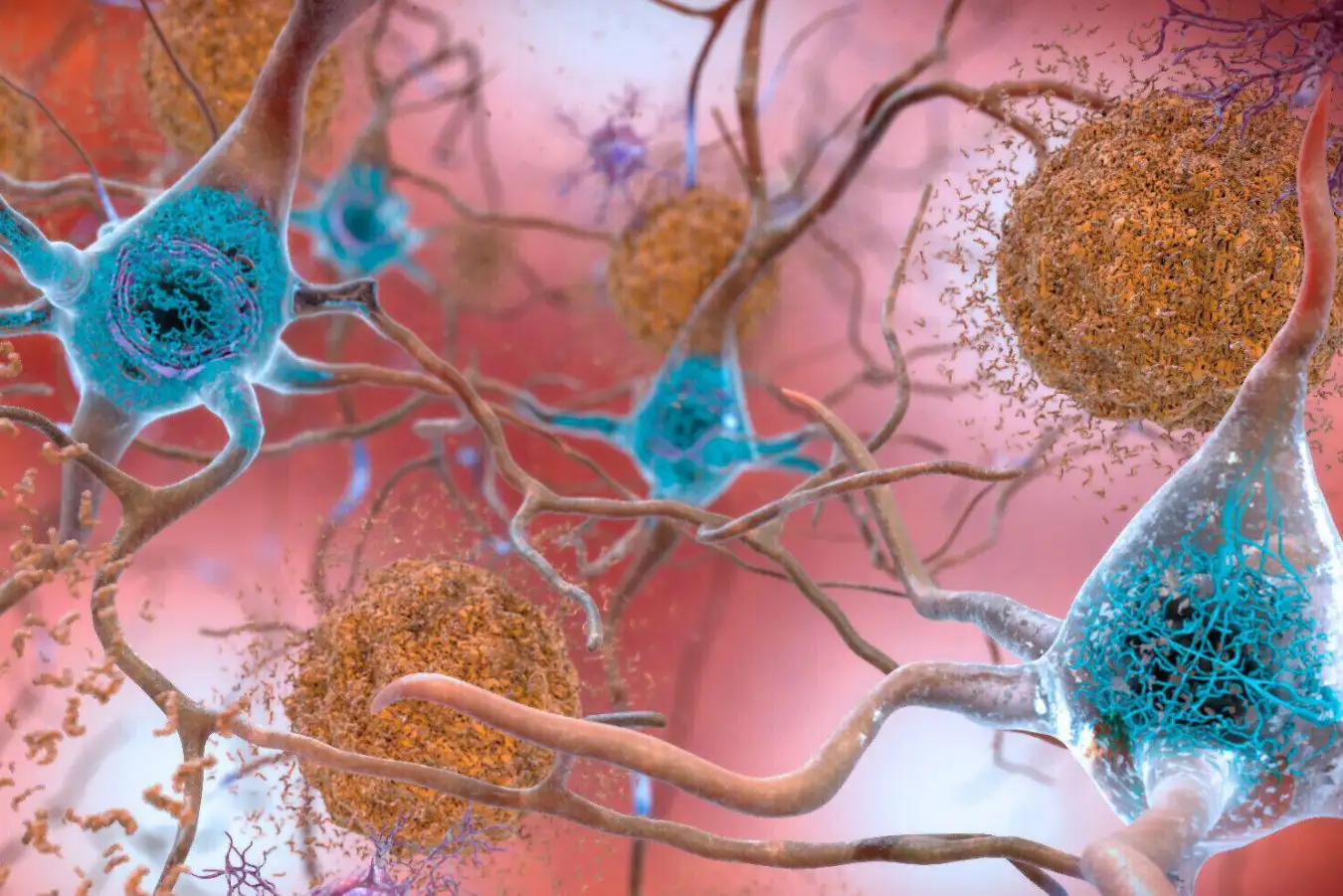
The plaques and tangles associated with Alzheimer’s disease usually cause devastating symptoms, but some people seem to be resilient to them
Associated Press / Alamy
Some people develop Alzheimer’s-related brain changes without experiencing symptoms of the disease, such as memory loss. We don’t know exactly why this occurs, but two recent studies are inching us closer towards an answer, with scientists revealing that these people have unusual changes in their brain that may shield them from cognitive decline.
In Alzheimer’s disease, clumps of misfolded proteins known as amyloid plaques and tau tangles build up in the brain, which is widely thought to drive cognitive decline. But not everyone with these hallmarks experiences symptoms – a phenomenon known as resilience. In 2022, Henne Holstege at Amsterdam University Medical Center in the Netherlands and her colleagues found that some centenarians maintain good cognition despite these plaques and tangles.
Now, she and her colleagues have conducted another study to better understand why that is. The team analysed the brains of 190 deceased individuals, 88 of whom had been diagnosed with Alzheimer’s and 53 of whom showed no signs of the condition when they died, aged between 50 and 99. The remaining 49 participants were centenarians who didn’t have Alzheimer’s or any other type of dementia, though 18 showed signs of cognitive impairment on a test taken in the year before their death.
The researchers focused on a brain region called the middle temporal gyrus, which is one of the first areas where amyloid plaques and tau tangles co-occur in Alzheimer’s. They found that a group of 18 of the centenarians – eight of whom showed no cognitive impairments – had amyloid plaque levels comparable to those seen in people with an Alzheimer’s diagnosis, yet their tau levels were similar to those who died aged 50 to 99 without the condition. This suggests that preventing tau build-up is key for Alzheimer’s resilience, says Holstege.
However, amyloid plaques are still associated with cognitive decline. Holstege believes this is because they set the stage for tau to accumulate in the brain, driving Alzheimer’s symptoms. Nevertheless, it is possible to have amyloid plaques and never develop significant tau tangles. “Without amyloid, we don’t see tau spreading,” she says.
The researchers found further evidence of this when they examined nearly 3500 proteins in the group’s brains. Only five of these proteins were significantly associated with the abundance of amyloid plaques, yet nearly 670 were associated with the abundance of tau tangles. Many of these 670 proteins play roles in cell growth, communication and metabolism, including the breakdown of waste products. “Some things change [in the brain] with amyloid, but everything changes with tau,” says Holstege.
When the researchers zeroed in on tau in the 18 centenarians with elevated amyloid plaques, they discovered that 13 of them had substantial tau spreading, with tangles appearing throughout the middle temporal gyrus. Although this pattern of spread resembles that seen in Alzheimer’s, the overall amount of tau in these individuals remained low.
That distinction is crucial, says Holstege. Alzheimer’s disease is partly diagnosed based on how widely tau has spread throughout the brain, but these findings suggest it is the build-up of tau, not its spread, that drives cognitive decline. “We should really understand that spreading does not necessarily mean abundance,” says Holstege.
In the second study, Katherine Prater at the University of Washington in Seattle and her colleagues analysed the brains of 33 deceased people: 10 had been diagnosed with Alzheimer’s, 10 had no signs of the condition and 13 were considered resilient. Most of these individuals were over 80 years of age when they died, and all of them had completed a cognitive assessment less than a year before death.
In line with the previous study, the team found tau spreading, but not accumulating, in the brains of those with Alzheimer’s resilience. It isn’t clear how that can happen, but Prater believes part of the answer may lie in microglia. These are immune cells that are specialised to the brain and play a crucial role in regulating inflammation – which runs rampant in Alzheimer’s – maintaining neurons and clearing away debris, including plaques and tangles.
Previous research shows microglia become dysfunctional in Alzheimer’s disease, potentially contributing to neurodegeneration. The team couldn’t analyse microglia “because they’re pretty rare in the brain compared with other cells”, says Holstege. “But clearly they are involved.”
Prater and her colleagues also genetically analysed their cohort’s microglia, specifically those in the dorsolateral prefrontal cortex. This brain region is critical for managing complex tasks, such as planning, decision-making and problem-solving. It also shrinks and becomes impaired in Alzheimer’s disease.
The researchers found that microglia from the resilient individuals showed increased activity in genes involved with transporting messenger RNA, the genetic instructions for making proteins, compared with those from the participants with Alzheimer’s. This suggests that the cells are actively ferrying these instructions to where proteins are made. Activity along these genes in resilient individuals was on par with that seen in people without Alzheimer’s disease, suggesting that this is one of the processes that goes awry in the condition.
“If that process gets interrupted, we know that is really bad for cells,” says Prater, who presented these findings at a meeting of the Society for Neuroscience in San Diego, California, last year. But we don’t yet know how that may relate to Alzheimer’s resilience, she says.
Microglia from resilient individuals also displayed decreased activity in genes involved with metabolising energy, compared with those in Alzheimer’s. This activity was akin to that seen in people without the condition, indicating that microglia use more energy in Alzheimer’s, potentially because they are more inflammatory, says Prater. That makes sense given that brain inflammation disrupts connections between neurons and contributes to cell death.
“Both these studies suggest that the human brain has ways of mitigating tau burden,” says Prater. Understanding how it does that could lead to new treatments that might prevent Alzheimer’s, rather than just slow its onset and progression. “We are certainly not close to a therapeutic yet, but I think that biology is showing us there is hope [and] there is promise,” she says.
Topics:
- brain/
- Alzheimer’s disease
Source link : https://www.newscientist.com/article/2512903-why-people-can-have-alzheimers-related-brain-damage-but-no-symptoms/?utm_campaign=RSS%7CNSNS&utm_source=NSNS&utm_medium=RSS&utm_content=home
Author :
Publish date : 2026-01-30 15:00:00
Copyright for syndicated content belongs to the linked Source.