
[ad_1]
Welcome to Culture Clinic, MedPage Today‘s collaboration with Northwell Health to offer a healthcare professional’s take on the latest viral medical topics.
In the hit TV show “Ted Lasso,” there was an ongoing joke that the grumpy soccer legend Roy Kent — who was supposed to be in his late 30s or early 40s — was past his prime.
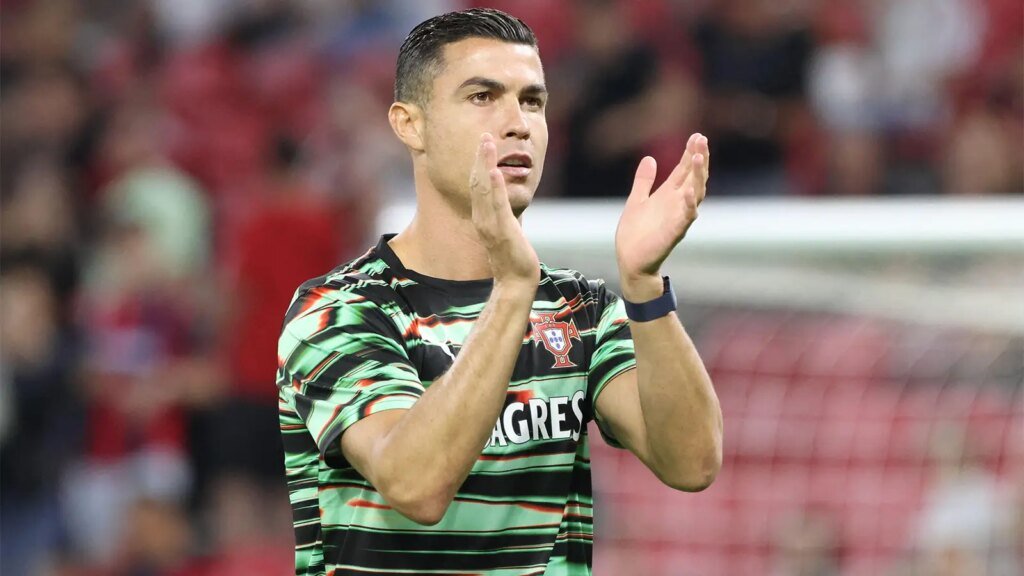
By these standards, Cristiano Ronaldo (41, Portugal) and Lionel Messi (about to turn 39, Argentina) are old. But the two superstars are still kicking it in the 2026 FIFA World Cup — and they’re not the only “old” professional footballers playing in the tournament.
There are at least seven other players who are at least 40. Most are goalkeepers: Josimar Jose Evora Dias, better known as Vozinha (40, Cape Verde); Guillermo Ochoa (40, Mexico); Manuel Neuer (40, Germany); Fernando Muslera (40, Uruguay); and Craig Gordon (43, Scotland). Playing in other positions are Luka Modrić (40, Croatia) and Edin Džeko (40, Bosnia and Herzegovina). In other professional leagues, like in Japan and Ukraine, there are players nearing 60.
Advances in training and recovery are major factors enabling professional athletes to continue playing into middle age, said Sami Rifat, MD, director of sport and exercise medicine at the Cleveland Clinic, who has also worked with the Premier League in England. And it’s a trend not confined to the soccer (or football) pitch.
“We’re seeing athletes getting older and older and staying successful longer and longer,” Rifat told MedPage Today. Training insights and strategies are only getting better, he noted, and in 20 years, athletes will be even better off than they are now.
When it comes to strength conditioning, Rifat said experts have refined protocols to improve elasticity. For more mature athletes, there’s a focus on tissue resilience since tissue can become stiffer with age, which increases the risk for muscle and tendon injuries. To offset this natural decline in elasticity, there’s been a shift towards focusing on an athlete’s mobility and capacity to handle physical stress, he added. For footballers, a trainer may target muscle groups, like the hamstring or adductor, which are commonly injured in the sport.
Avoiding career-altering injuries is obviously another important factor in the length of an athlete’s career. For soccer specifically, each position puts a different kind of strain on the body. Goalies might crash on the ground more from making huge leaps to stop their opponents from scoring while other players have to run miles per game and may face more lower extremity injuries. Plus, there’s the athlete’s individual play style and how aggressive it is. These factors all influence what’s included in an individual athlete’s strength and recovery training strategy.
Brian DeVeaux, DPT, senior sports clinical specialist at Northwell Sports Therapy and Rehabilitation Services and team physical therapist at Hofstra University in Hempstead, New York, said that “your strength is your foundation and it helps build injury resiliency.”
He noted that men lose calf strength and power with age, so trainers will focus on building muscle there as needed. They’ll also work with athletes to increase their base capacity for physical and psychological stress as well as the specific skills required by their sport, like sprinting or flexibility. This training cycle extends across the year, with plenty of time built in to meet long-term goals and design an athlete’s lifestyle to support their career.
“Lifestyle and recovery are king and really help influence performance,” DeVeaux said. Getting adequate sleep and rest should not be undervalued, he added.
Not to mention elite athletes have access to the best treatments, training, and nutrition. They have a whole machine behind them invested in their well-being and ability to perform at their best, and most elite athletes have been taking their health and fitness seriously for their whole career. Rifat noted that most high-level athletes “have a very precise individualized fueling strategy that not only supports their performance, but their recovery and minimizes inflammation.”
But it’s also about skill — after all, players like Messi and Ronaldo aren’t considered GOATs (greatest of all time) just because they’ve been around for a while. Rifat noted that with experience, they learn to play smarter, which helps them to minimize unnecessary strain and injury.
“They take care of themselves, they have a good lifestyle, they maintain a consistent training regimen preparing their bodies for their sport, plus have a huge technical and experienced background on top of it,” DeVeaux said. “When you get those things together, that’s greatness.”
Please enable JavaScript to view the comments powered by Disqus.
[ad_2]
Source link : https://www.medpagetoday.com/popmedicine/cultureclinic/121823
Author :
Publish date : 2026-06-17 21:28:00
Copyright for syndicated content belongs to the linked Source.