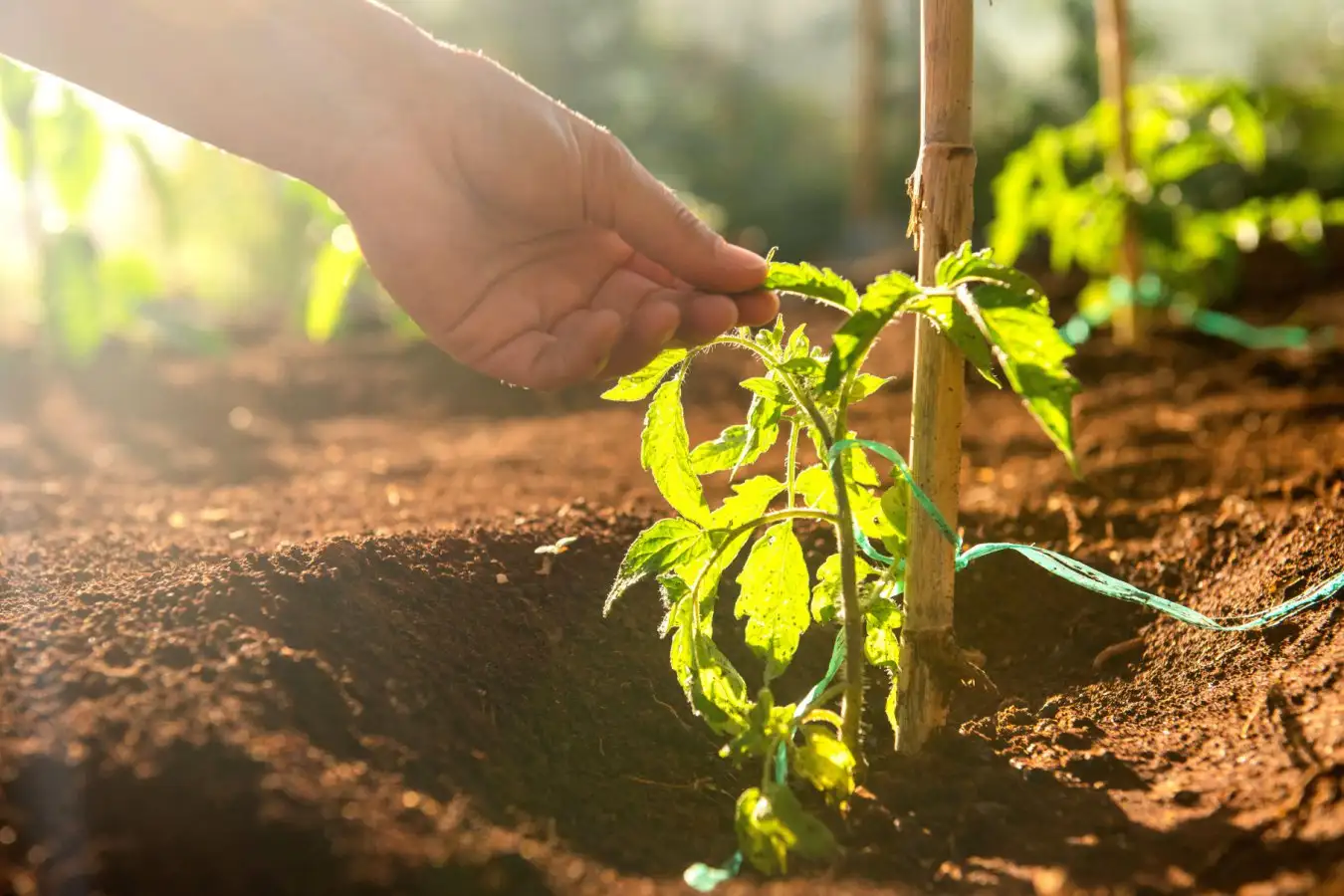
If your windowsills are anything like mine, they are filling up with the first batches of seed sowings for the year ahead. The challenge is that seedlings raised in the cosseted environment of the great indoors are notoriously prone to growing long and leggy, often collapsing just a few weeks after sprouting. But could a colourful old-school technique help keep our gardening hopes for 2026 alive and well? Here’s the science behind why stroking your plants isn’t quite as mad as it sounds.
Plant propagation is often a balancing act. Starting tender seedlings under glass, away from temperature extremes, harsh wind and the constant threat of pests and diseases, greatly boosts their early survival. Yet this lack of environmental stress can have unintended consequences. Etiolation – where plants grow tall but fragile – is a common issue for indoor plants, including those in commercial nurseries. Once outdoors, these specimens are far more likely to physically collapse. With billions of dollars at stake worldwide, it’s no surprise that commercial growers have spent decades searching for effective, scalable solutions.
Chemical growth regulators are one answer, helping produce sturdier, more compact plants. However, many of these substances aren’t available to home gardeners. Fortunately, research has shown that mechanical stimulation – simply rubbing, shaking or stroking seedlings – is also remarkably effective at reducing etiolation. This is all down to a phenomenon called thigmomorphogenesis, where plants alter their growth patterns in response to forces such as touch, wind, rain or vibration, by growing thicker stems, more supportive tissues and an overall shorter, stockier stature. Although scientists are still unravelling exactly how plants sense and translate these signals at the cellular level, numerous studies demonstrate that mechanically stimulated seedlings are not only structurally sturdier, but also more resilient to threats like pests and drought.
This has been demonstrated across a range of popular garden species, from tomatoes and lettuce to petunias and marigolds. Experiments using fans, vibrating benches or even a sheet of paper brushed across the foliage have shown these interventions can reduce excessive stem elongation by 20 to 50 per cent.
But here’s the best part: while commercial producers have been using machines to deliver this kind of physical stimulus since the 1970s, it is easy to replicate at home. Trials have shown that gently stroking seedlings as little as 10 times, just once a day, is enough to trigger the effect. You can do this with an old envelope, a soft feather duster or even your hands. Not a bad payback for the 10 seconds a day it will take, and all backed by solid science.
These articles are posted each week at
newscientist.com/maker
James Wong is a botanist and science writer, with a particular interest in food crops, conservation and the environment. Trained at the Royal Botanic Gardens, Kew, in London, he shares his tiny flat with more than 500 houseplants. You can follow him on X and Instagram @botanygeek
Source link : https://www.newscientist.com/article/mg26935760-900-why-stroking-seedlings-can-help-them-grow-big-and-strong/?utm_campaign=RSS%7CNSNS&utm_source=NSNS&utm_medium=RSS&utm_content=home
Author :
Publish date : 2025-12-30 18:00:00
Copyright for syndicated content belongs to the linked Source.