[ad_1]
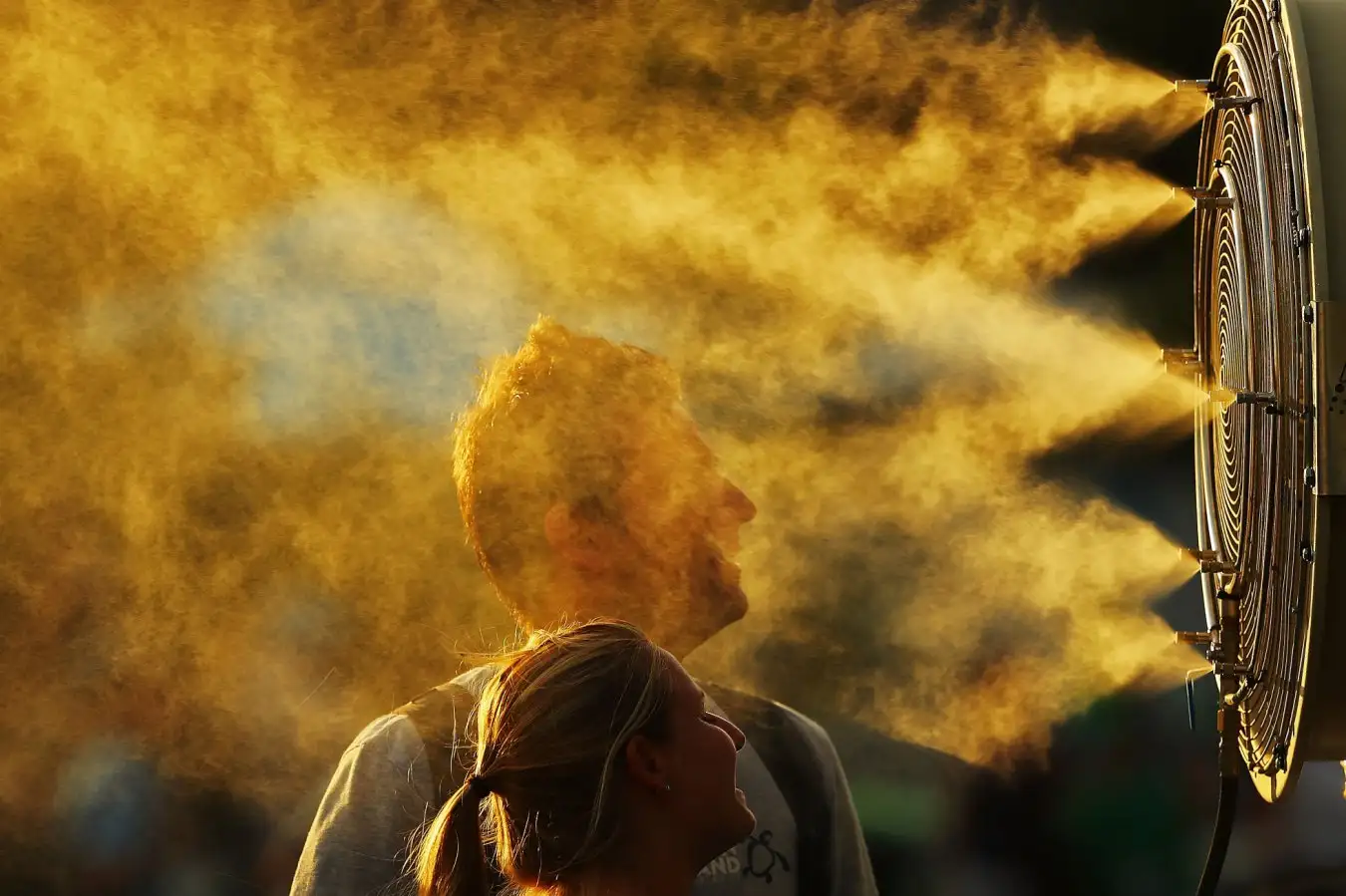
Fans don’t always cool you down
Scott Barbour/Getty Images
With Europe in the grip of a mega heatwave and deaths already being reported, staying cool isn’t just about comfort – for many, it is a matter of life and death. Many people will be relying on fans rather than air conditioning, so it is important to be aware that, as it gets hotter, fans can flip from cooling you to warming you.
But how hot is too hot? The UK government warns fans may not prevent heat-related illnesses above 35°C (95°F), whereas the World Health Organization says the tipping point from cooling to heating occurs at 40°C (104°F). Some studies suggest even lower or higher values. The reality is that there is no simple answer, as several factors are involved.
The key thing to know is that you become less good at sweating as you age, so fans will start to warm you at a lower temperature than is the case for younger people. However, you can compensate for this by spraying yourself with water or wetting your clothes.
The situation would be very simple if we didn’t sweat. Our skin temperature in the shade is typically between 35°C and 37°C (99°F). If the air temperature is lower than our skin temperature, heat is transferred to the air, cooling us, but if it is higher, we gain heat from the air. Moving air over our skin with a fan speeds up this heat transfer, whichever way it is going.
Because of this, in the past, 35°C was often said to be the point at which fans stop cooling us, says George Havenith at Loughborough University in the UK. But this number doesn’t take account of evaporative cooling.
The evaporation of water transfers lots of heat from our skin into the air, cooling us even when air temperatures exceed skin temperatures. But blowing air over our skin with a fan doesn’t necessarily cool us more if it’s too dry or too humid.
When it is very dry, our sweat can evaporate as fast as we produce it. In this situation, turning on a fan won’t help, because evaporation cannot increase any further. Instead, the moving air will just transfer more heat to your skin. For instance, modelling and experiments show that at 15 per cent humidity and 45°C, turning on a fan will almost certainly make you hotter.
But as the humidity rises, evaporation slows because there’s already lots of moisture in the air. Basically, if you are dripping with sweat, you are producing sweat faster than it can evaporate. In these conditions, a fan does help.
For instance, a fan can still cool you at up to 60 per cent humidity and 38°C. As the humidity gets even higher, however, evaporation will slow to a point when a fan stops helping.
“So it depends on the humidity in the air,” says Havenith. “That’s why people often look at what kind of climate you have in different countries.”
The other big factor is age. As we age, our body temperature and skin temperature can fall. It also takes longer for us to start to sweat, and we produce less sweat. This means the temperature at which a fan will start warming us at a given humidity declines as we age.
In this situation, wearing wet clothes or spraying ourselves with water can help. This can also reduce sweating and thus reduce the risk of dehydration.
Many other factors also play a part, such as clothing and whether your body is adapted to high temperatures. The bottom line, however, is that if you live in a building that gets really hot, temperatures during this heatwave could well exceed the level at which fans will help, even if you’re spraying yourself with water.
“At that stage, you probably would have to leave your house and find a cooler place,” says Havenith. “Because it’s a really bad situation.”
Topics:
[ad_2]
Source link : https://www.newscientist.com/article/2531606-you-should-turn-off-fans-when-its-too-hot-but-how-hot-is-too-hot/?utm_campaign=RSS%7CNSNS&utm_source=NSNS&utm_medium=RSS&utm_content=home
Author :
Publish date : 2026-06-23 17:50:00
Copyright for syndicated content belongs to the linked Source.