

[ad_1]

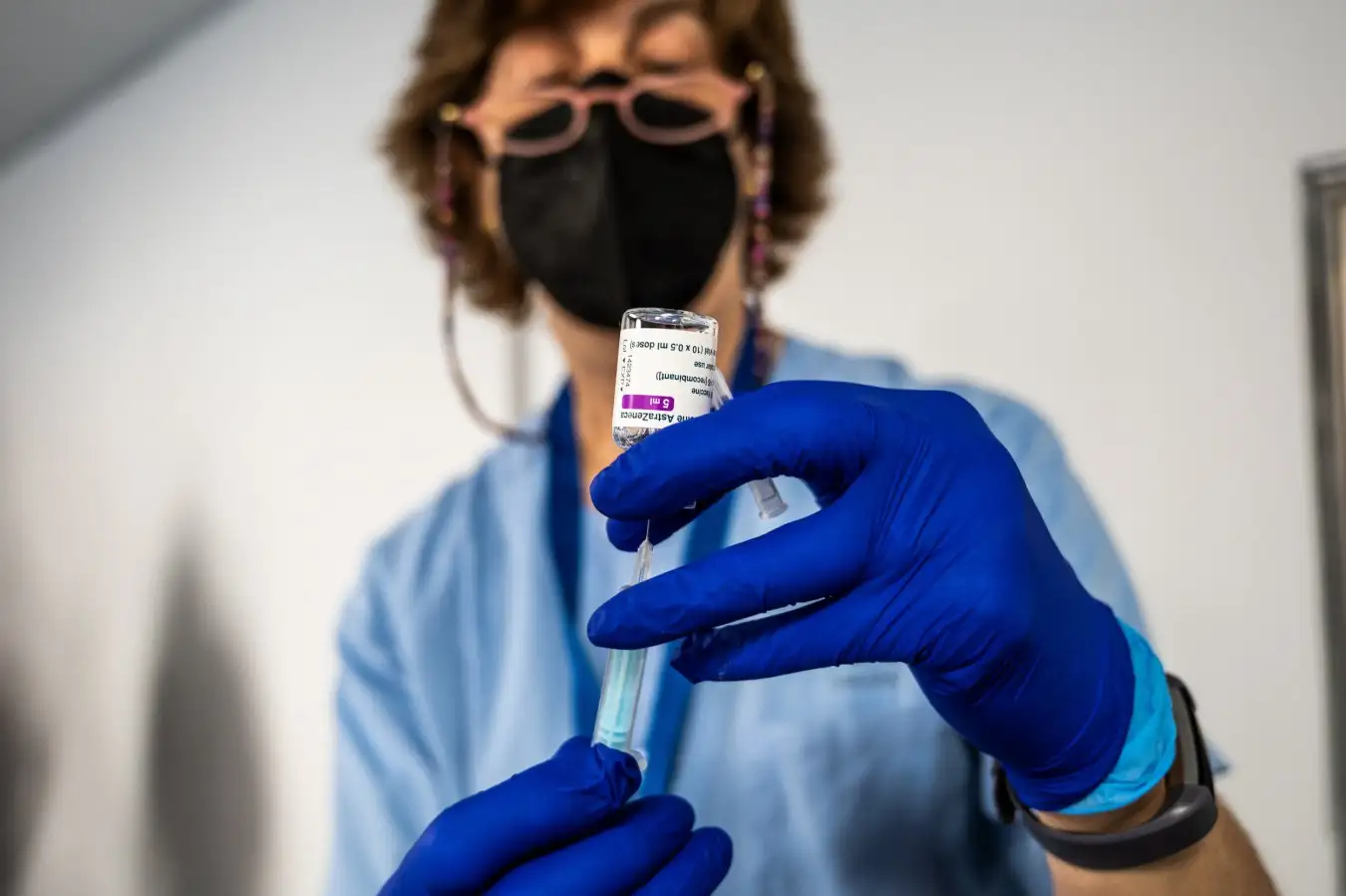
Vaccines can be life-saving, but a woman’s immune response may be affected by her menstrual cycle
Marcos del Mazo/LightRocket via Getty Images
The degree of protection that women get from vaccines may vary depending on when in their menstrual cycle they receive them. The concept of #cyclesynching suggests that women of reproductive age should vary their diet and lifestyle around where they are in their cycle, which isn’t supported by robust research. But evidence is mounting that the fluctuation of hormones that occurs during the menstrual cycle impacts a woman’s immune response, with the latest research suggesting it could affect how soon after being vaccinated against covid-19 they catch the infection.
“For too long, the menstrual cycle has been treated as background noise in health research,” says Poppy Cooper at the London School of Hygiene & Tropical Medicine. “This work is part of a growing shift in that thinking and a recognition that the menstrual cycle has impacts beyond reproductive health.”
Soon after the covid-19 vaccines were rolled out in 2021, reports emerged of women claiming they were making their periods heavier and causing them to start earlier. A later study found that if these changes do occur, they tend to be small and temporary.
Now, Cooper and her colleagues have flipped this around, investigating the menstrual cycle’s impact on vaccine outcomes. The team analysed data from 1474 women in the US, the UK, Canada and Australia who used the Clue period-tracking app in 2021. These women also self-reported their vaccine outcomes via an in-app survey.
Eight-two of the women reported catching covid-19 after having a vaccine, mostly either Pfizer or Moderna. These breakthrough infections happened 35 days earlier among those vaccinated during the luteal phase of their cycle – when the hormone progesterone is high, and the egg makes its journey to the uterus – than among those vaccinated during the follicular phase – when oestrogen is high, the uterus lining thickens and an egg-containing follicle within one of the ovaries matures.
This may be because these hormones affect immune cell responses to vaccines, with a 2022 meta-analysis finding that many immune-related proteins, such as antibodies, are lower in the luteal phase. “Progesterone’s job, biologically, is to prepare the body to tolerate a potential pregnancy,” says Julia Craggs, a doctor who specialises in women’s health. “One way it does that is by turning down some of the more aggressive parts of the immune system, like T cell activity. That isn’t necessarily what you want at the precise moment you are trying to train the immune system to recognise a vaccine antigen [a substance that triggers the immune system to mount a response].”
There are drawbacks to the study, including relatively few covid-19 infections being reported, which weren’t confirmed by a PCR test. The researchers, some of whom work for Clue, also didn’t account for the other two stages of the menstrual cycle: menses, or a period, and ovulation. What’s more, the study’s observational nature doesn’t establish that the menstrual cycle directly causes these effects.
Nevertheless, Craggs says it raises awareness of how sex hormones influence a woman’s physiology. “This study treats the menstrual cycle as a variable that matters rather than a confounding variable to simply control away,” says Craggs. “We may be sitting on a significant source of unexplained variation in how women respond to treatment and we have simply never looked in that direction.” A recent study suggests that fluctuating oestrogen levels during the menstrual cycle alter how drugs enter women’s brains.
Cooper stresses that vaccines are important for protecting against infections and ill health, regardless of when in the menstrual cycle they are given, but she also wants it to be more routinely accounted for in medicine. “I’d love to see the same question asked across other vaccines and medical interventions,” says Cooper, who is now investigating whether hormonal contraceptives affect vaccine outcomes.
Topics:
[ad_2]
Source link : https://www.newscientist.com/article/2532245-your-menstrual-cycle-may-affect-how-well-vaccines-work/?utm_campaign=RSS%7CNSNS&utm_source=NSNS&utm_medium=RSS&utm_content=home
Author :
Publish date : 2026-06-29 14:42:00
Copyright for syndicated content belongs to the linked Source.