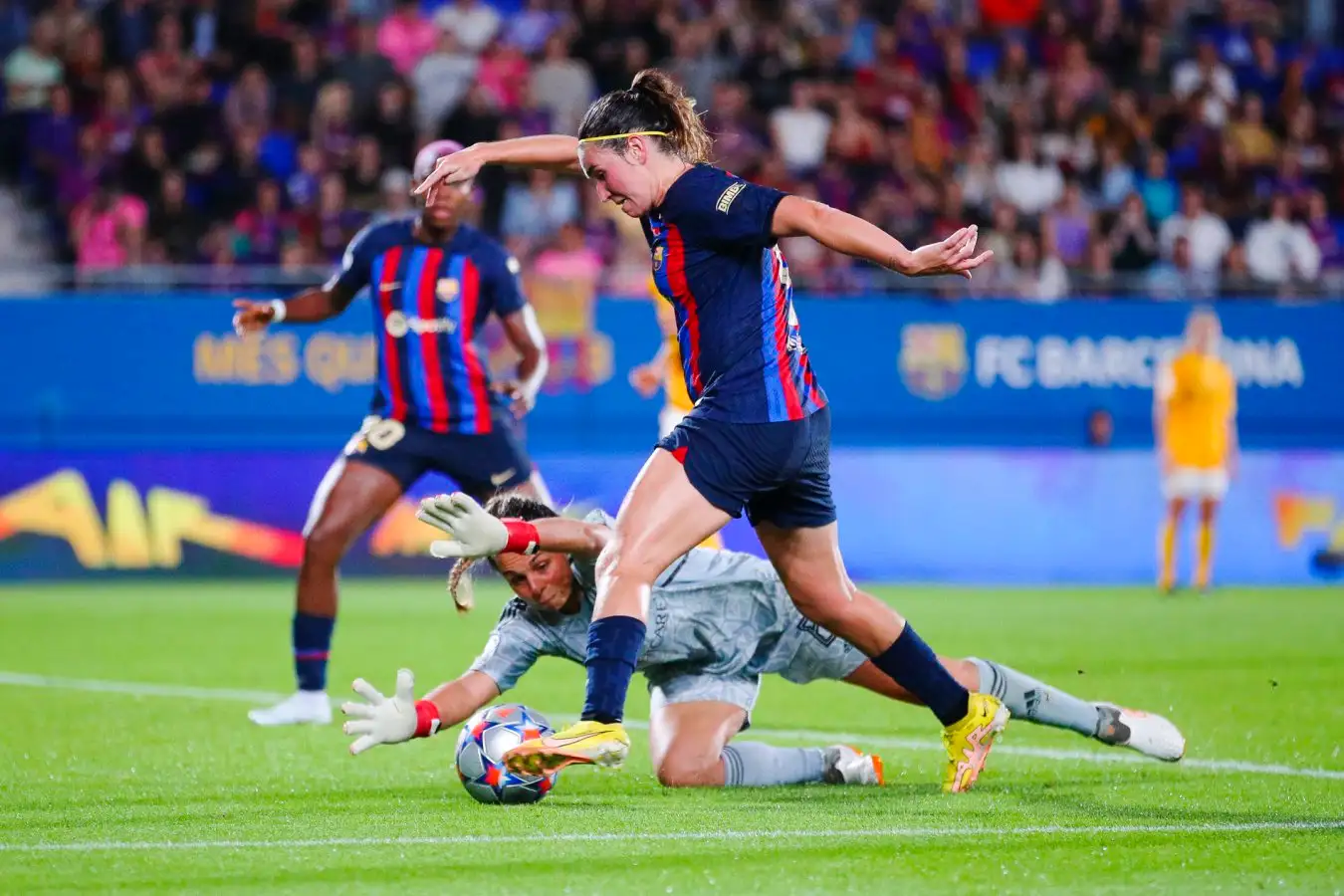
Goal! Scientists have studied players in the FC Barcelona women’s team
Eric Alonso/Getty Images
The idea that we should make lifestyle adjustments depending on where we are in our menstrual cycle is gaining traction online, as well as in scientific circles. Now, researchers have found that athletes who obtain a sports injury while on their period seem to take longer to recover from it than at other times in their cycle.
#cyclesyncing is tagged in thousands of social media posts that promote altering diet and physical activity levels around the different stages of the menstrual cycle, to adjust for the hormonal changes that occur. The evidence supporting such dietary changes is weak, and while exercise-related studies on this subject are more robust, their results have also been mixed. Nevertheless, rugby teams in the US and England already adjust training around their team members’ cycles.
To try to better understand this, Eva Ferrer and her colleagues at Hospital Sant Joan de Déu in Barcelona followed 33 professional football players from the FC Barcelona women’s team across four seasons between 2019 and 2023.
As part of their normal training regimen, the women self-reported the days when they were on their period. Any injuries that occurred over the seasons were categorised in terms of severity by a doctor using a standard scale.
The researchers found that although the women didn’t obtain more injuries while they were on their period, the ones they did get during this time appeared to be more severe. For instance, soft tissue injuries sustained during this time resulted in more than three times the number of days of training lost compared with when such injuries occurred at other times.
This may be because oestrogen levels are low during a period. This hormone is linked to muscle recovery and repair. “The combination of low estrogen, possible iron loss, more intense symptoms [such as cramps] and greater fatigue could contribute to a worse prognosis for injuries at this stage,” says Ferrer.
However, Stuart Phillips at McMaster University in Canada points out that we don’t fully understand oestrogen’s role in muscle repair. “The ethos is that estrogen is protective and reparative [for muscles], but the majority of that comes from animal studies and not human trials,” he says. The study also didn’t measure the women’s iron levels or potential confounding factors, such as fatigue.
Ferrer accepts that few injuries occurred overall, with 69 taking place on non-bleeding days and just 11 while bleeding. “A small number of very serious injuries can skew the overall impression if the sample size and confidence intervals are not taken into account,” she says. We also don’t know whether the results apply to those who exercise or do sport more casually, rather than at a professional level, says Ferrer.
She hopes the picture will become clearer with further research, which could lead to bespoke exercise recommendations at different times in the cycle. “The most responsible approach is that decisions regarding training load and type during menstruation should be individualised,” says Ferrer, “taking into account each player’s symptoms and relying on objective data (internal and external load, injury history, well-being, etc.), while research continues to incorporate hormonal measurements, iron markers, sleep patterns, nutrition and other variables that can help refine recommendations.”
Topics:
Source link : https://www.newscientist.com/article/2508607-your-period-may-make-sport-injuries-more-severe/?utm_campaign=RSS%7CNSNS&utm_source=NSNS&utm_medium=RSS&utm_content=home
Author :
Publish date : 2025-12-16 05:00:00
Copyright for syndicated content belongs to the linked Source.