Minuscule marsupial newborns that weigh less than a grain of rice have been filmed crawling towards their mother’s pouch for the first time.
Unlike placental mammals, which give birth to much more developed babies, marsupials are born after extremely short gestation periods and must move to a pouch where they attach to a teat and continue to grow.
For many of Australia’s rare and small marsupials, this process remains a mystery – even for those species that are kept in captive colonies, says Brandon Menzies at the University of Melbourne, Australia.
Menzies and his colleagues maintain a large population of hundreds of fat-tailed dunnarts (Sminthopsis crassicaudata), which are considered to be one of the closest relatives of the extinct Tasmanian tiger (Thylacinus cynocephalus). In collaboration with the firm Colossal Biosciences, they hope to one day bring back the Tasmanian tiger, or something resembling it, by gene-editing dunnarts.
However, even though the colony was established decades ago and the fertility of the females is closely monitored, no one has ever observed the birth of any pouch young or how they travel to attach to the mother’s teats.
Menzies says this is because there is no pregnancy test for the species, they are nocturnal and give birth overnight, and the dash to the pouch is estimated to take only half a minute for each batch of neonates over the 12 to 24 hours when groups of young are born.
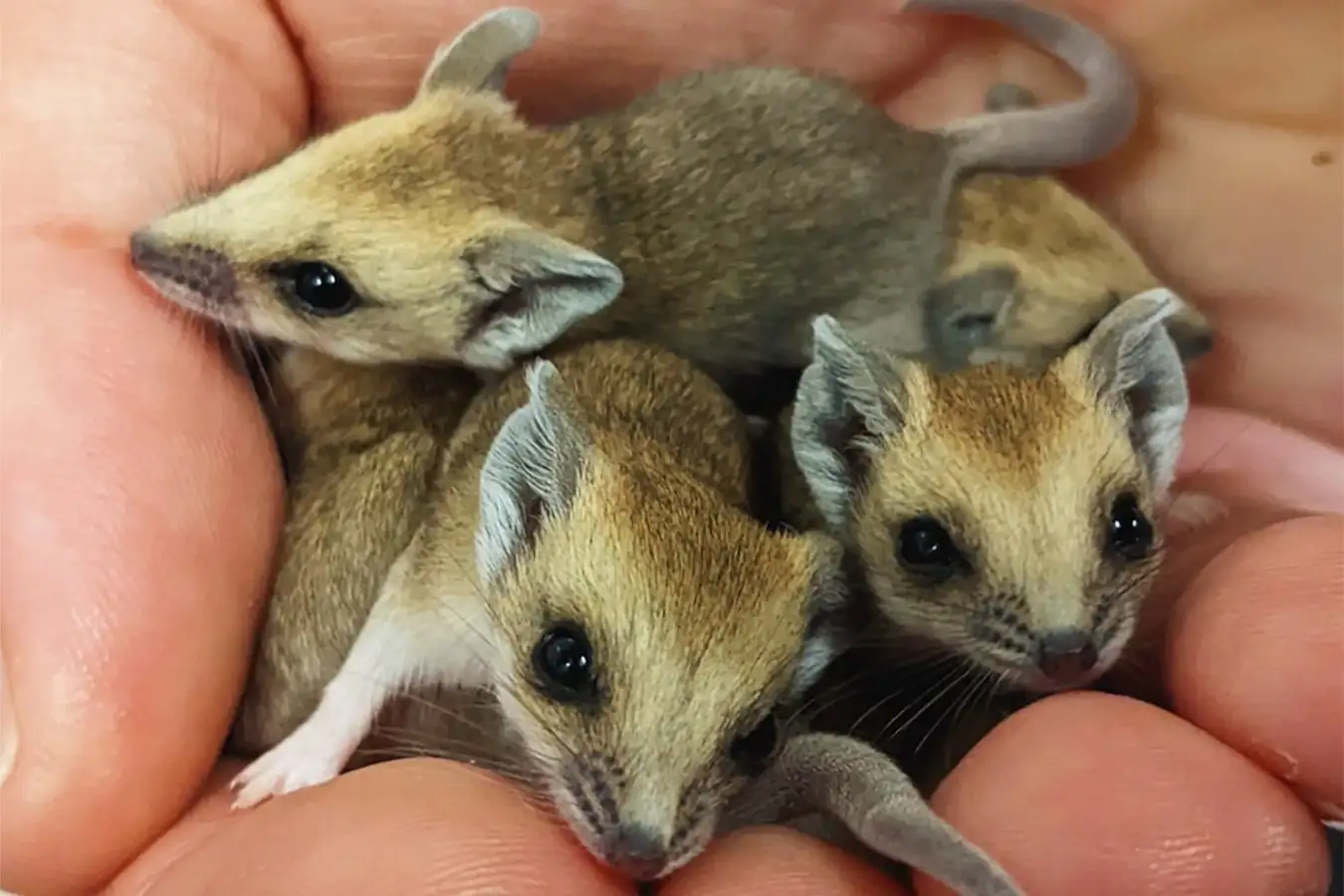
Adult fat-tailed dunnarts
Emily Scicluna
But in 2024, a member of the team noticed blood in one of the enclosures. When the female dunnart was turned upside down and examined, the researchers saw tiny neonates, which weigh only 5 milligrams, making their way towards their mother’s pouch.
“We just saw the pouch young sort of waving their arms and crawling and wriggling,” says Menzies. “It’s very much a freestyle-swimming type of crawl, or a commando crawl.”
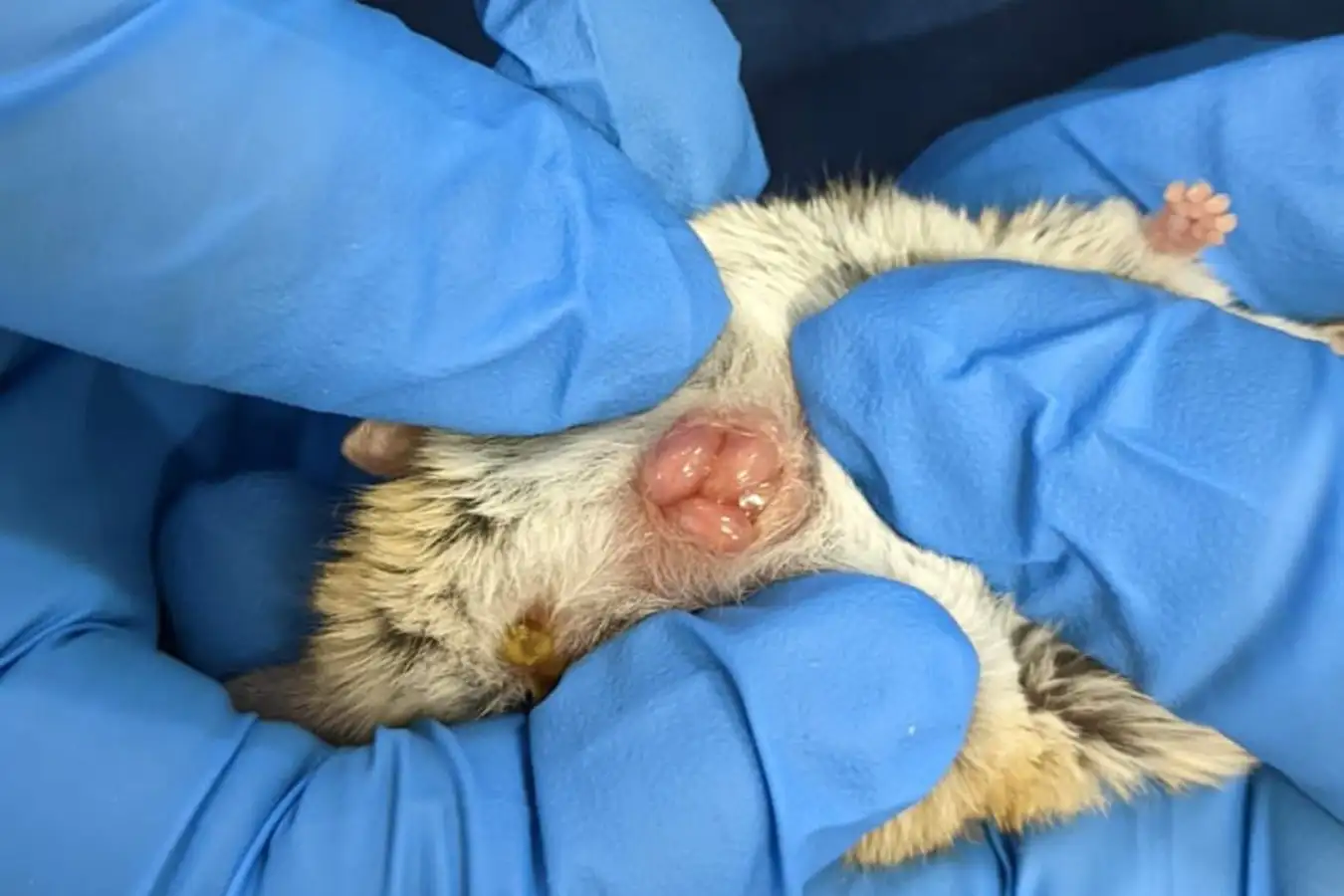
Young dunnarts in their mother’s pouch
Emily Scicluna
Realising this was a moment no one had ever captured before, Menzies managed to film 22 seconds of footage before returning the mother to her enclosure the right way up, as gravity is thought to be one of the key cues the young use to navigate.
The researchers estimate that the young were making arm movements at the rate of about 120 per minute.
The crawl to the teat is just the first test of survival: being a young marsupial is a brutal business, as many species give birth to more babies than the number of teats available. Fat-tailed dunnarts can gestate up to 17 young, but can only feed 10 – a less competitive attrition rate compared with that of Tasmanian devils, which give birth to up to 30 young and have only four teats.
Menzies says it is phenomenal that after only 14 days of gestation, the fat-tailed dunnarts can give birth to young that can move their arms and navigate to find a teat – which is why, until now, it was thought that the babies were so small that they must have been squirted directly into the pouch.
“The fact that they can crawl on their own to the pouch highlights the species’ incredible developmental capacity,” he says. “Only 10 days earlier, they were just a zygote made up of a few cells.”

Fossil hunting in the Australian outback
Join this extraordinary adventure through the heart of Australia’s fossil frontier. Once a shallow inland sea millions of years ago, eastern Australia is now a hotspot for fossils. Over 13 unforgettable days, you’ll travel deep into the outback, tracing the footsteps of prehistoric giants and uncovering the secrets of Earth’s ancient history.
Topics:
Source link : https://www.newscientist.com/article/2514915-newborn-marsupials-seen-crawling-to-mothers-pouch-for-the-first-time/?utm_campaign=RSS%7CNSNS&utm_source=NSNS&utm_medium=RSS&utm_content=home
Author :
Publish date : 2026-02-11 00:01:00
Copyright for syndicated content belongs to the linked Source.