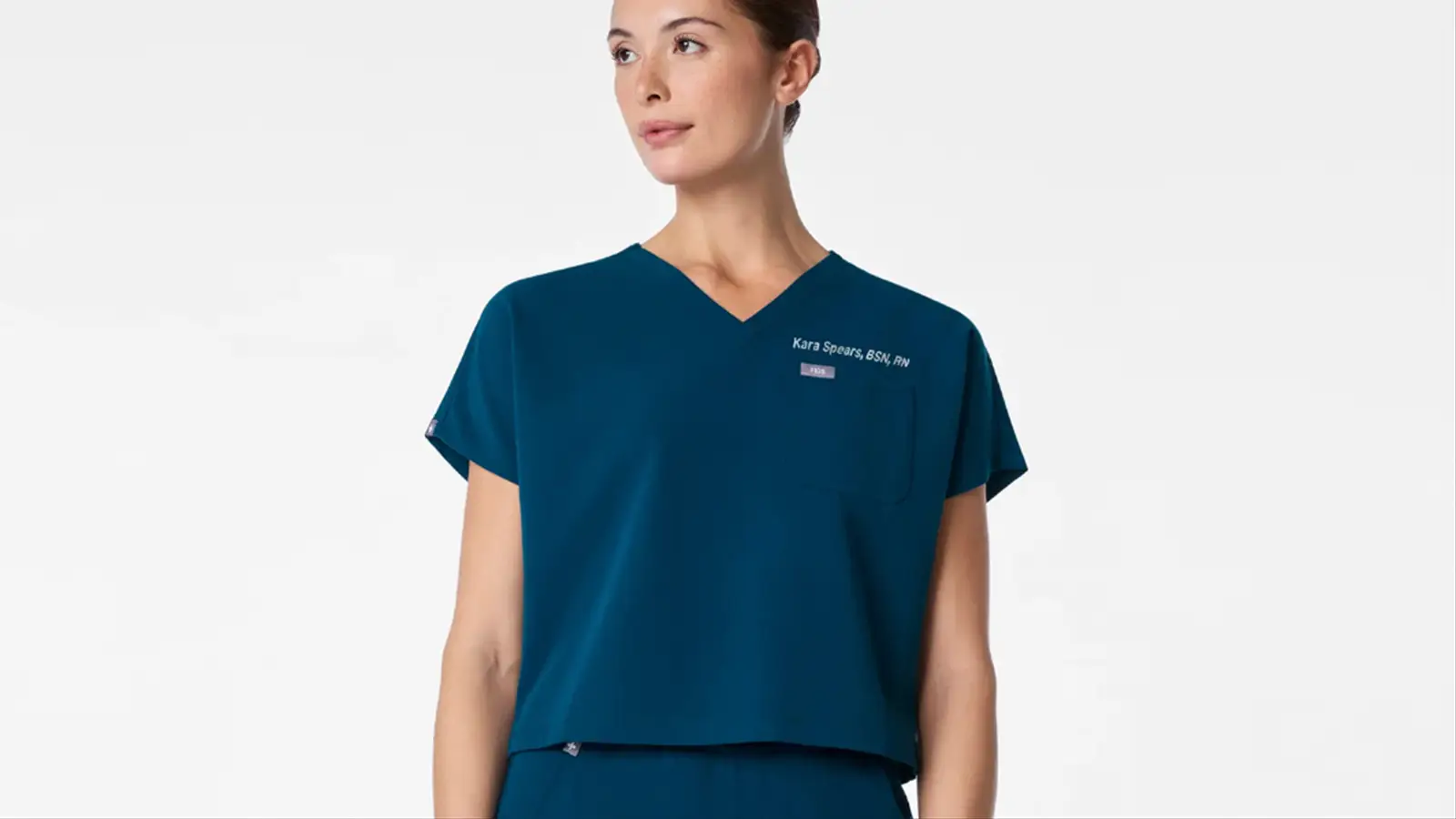
In an industry built on trust, precision, and professionalism, even subtle shifts in appearance can signal larger cultural changes. The recent online buzz around FIGS’ new cropped scrub top is one such flashpoint — not because a few inches of fabric will determine clinical outcomes, but because what healthcare professionals wear has always communicated something deeper about authority, seriousness, and respect for patients.
FIGS seemingly built its identity on modernizing medical apparel. Tailored silhouettes, performance fabrics, and Instagram-ready campaigns transformed scrubs from shapeless uniforms into lifestyle wear. For many in healthcare, this shift was practical and overdue. Comfortable, well-fitting scrubs matter during 12-hour shifts.
But the introduction of a cropped scrub top has pushed that evolution into more contested territory. It appears to suggest that healthcare attire is no longer merely functional — it is increasingly fashion-forward.
From Uniform to Aesthetic
Walk through many hospitals today and you’ll notice another transformation: long acrylic nails tapping across keyboards, dramatic lash extensions framing tired eyes, meticulously contoured makeup paired with athleisure-style scrubs. The aesthetic of healthcare is changing. And none of these trends are inherently immoral – personal grooming choices are expressions of identity. Yet, in healthcare, appearance is not purely personal, it is relational. Patients in gowns, IVs in place, awaiting biopsy results, are acutely aware of the people standing over them.
These choices can, in some cases, impact care. Infection control guidelines have long cautioned against artificial nails because of documented bacterial colonization risks. Many institutions restrict them for precisely that reason. Excessive jewelry or adornments can interfere with glove integrity and sterile technique. These standards were never about suppressing individuality; they were about minimizing preventable risk. But beyond safety, there is symbolism.
The Psychology of Professionalism
Patients routinely equate conservative dress with competence. Attire influences perceived credibility, trustworthiness, and authority. White coats, minimal accessories, and clean, practical uniforms send a subtle but powerful signal: I am here for your care.
When cropped tops, dramatic lashes, and influencer-ready styling enter that space, the signal can blur. It is not that a cropped scrub top prevents clinical excellence (you could presumably perform CPR just as well with your belly hanging out), or that lash extensions cannot be worn by a highly skilled doctor or nurse. It is that the aesthetic shift risks reframing healthcare from a solemn profession into an arena for curated self-presentation. It makes it more about the nurse or doctor, and less about the patient.
The Rise of Social Media
Healthcare has always demanded restraint. The uniform was meant to neutralize ego, not amplify it. The rise of TikTok and Instagram has reshaped professional identity. Clinicians now cultivate personal brands, document shifts, and model scrubs for thousands of followers. In that ecosystem, appearance has become currency. A cropped scrub top is content. A dramatic before-and-after lash set is content. A perfectly styled “night shift ready” video is content.
But medicine is not content. Yet, concerningly, the line between the two is thinning. The spirit of HIPAA is privacy, not performance. Over the last few years, there has been a dramatic increase in content being filmed at work. In one case, a group of nurses at Emory University Hospital Midtown were fired after filming TikTok videos inside the hospital. And in another instance, several healthcare staff members were placed on leave after posting a video on TikTok showing them mocking discharge left from patients who underwent pap smears.
Critics may argue that discomfort with cropped scrubs, acrylic nails, or lash extensions reflects outdated thinking. Norms evolve. Women physicians once faced criticism for wearing pants. Visible tattoos were once taboo. Many of those restrictions were rooted in bias and deserved revision. But professionalism is not synonymous with rigidity, nor is it synonymous with limitless self-expression. It exists to protect the patient’s sense of safety.
Healthcare workers deserve comfort, individuality, and dignity. But patients deserve an environment that feels sterile, focused, and centered entirely on their vulnerability, not on aesthetic trends. The issue is not one brand or one product. It is the cumulative message sent when fashion begins to eclipse function, when infection-control guidelines are bent for aesthetic preference, when the clinical uniform becomes another extension of influencer culture.
A cropped scrub top will not dismantle medicine. Lash extensions will not compromise public health. But culture rarely shifts through dramatic revolutions. It shifts through subtle normalization. Healthcare does not need to return to stiff collars and severity. It does, however, need to remember that professionalism is not an aesthetic relic. It is part of the promise made to every patient who walks through the door.
Caroline Rubin is a BSN student in the honors program at the Nell Hodgson Woodruff School of Nursing at Emory University in Atlanta. She also works in a pharmacy as a registered pharmacy technician. The views expressed are the author’s and do not reflect those of any institutions with which she is affiliated.
Source link : https://www.medpagetoday.com/opinion/second-opinions/120178
Author :
Publish date : 2026-03-08 16:00:00
Copyright for syndicated content belongs to the linked Source.