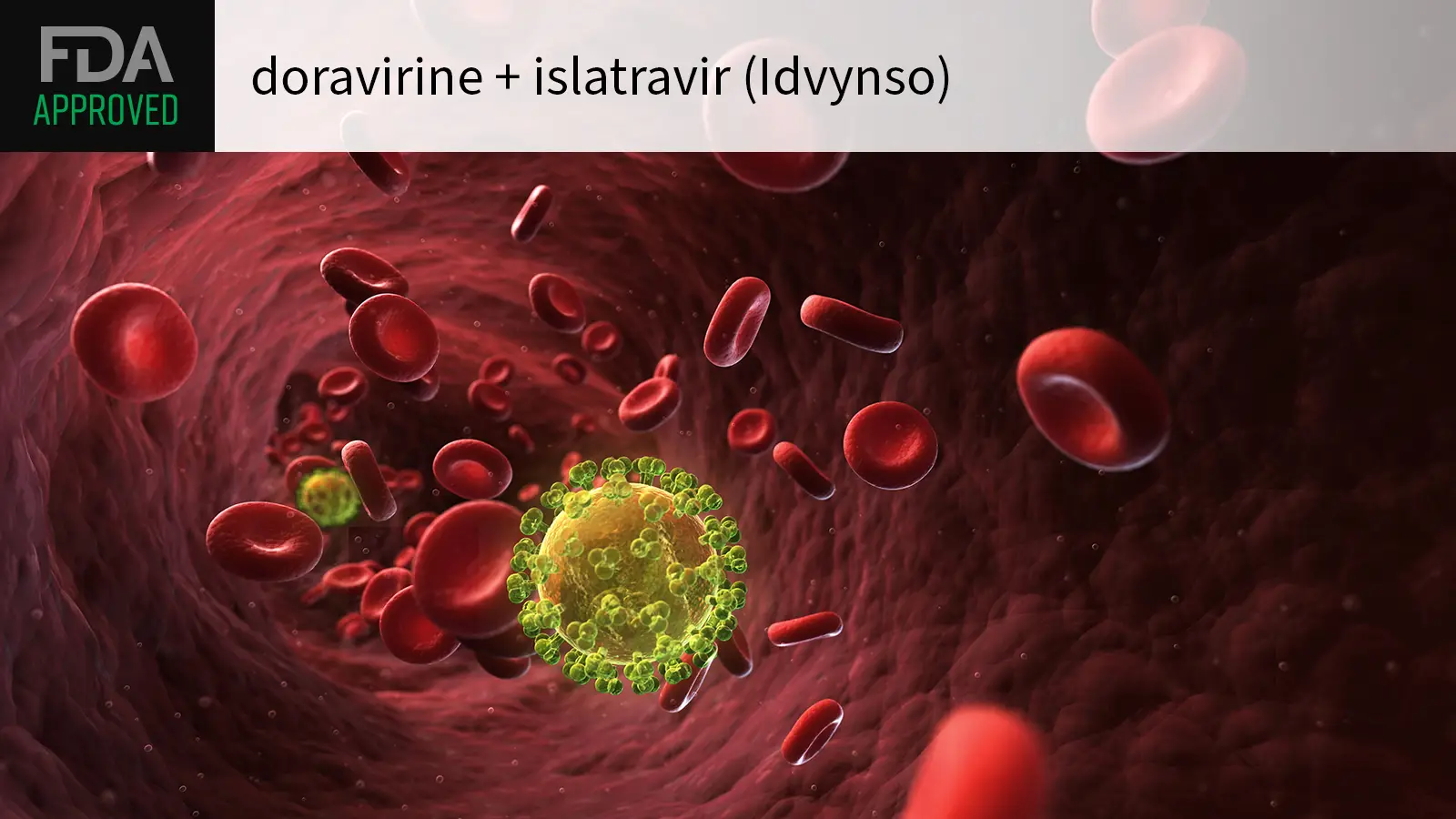
The FDA approved islatravir-doravirine (Idvynso) as a standalone, single-tablet regimen for treating HIV in virologically suppressed adults, Merck announced on Tuesday.
Approval stipulates use of the oral combination in patients with HIV-1 who are virologically suppressed on stable antiretroviral therapy (ART), have no history of virologic treatment failure, and have no known substitutions associated with doravirine resistance. Co-administration with other ART medications is not recommended.
Two- and three-drug regimens with second-generation integrase strand transfer inhibitors (INSTIs), such as bictegravir, are standard in initial HIV therapy. However, some patients face INSTI resistance issues and contraindications.
In two phase III trials, switching to the INSTI-free single-tablet islatravir-doravirine therapy was just as effective at maintaining viral suppression as bictegravir/emtricitabine/tenofovir alafenamide fumarate (BIC/FTC/TAF; Biktarvy) or a previous ART regimen for virologically suppressed HIV-1 patients.
“Idvynso is the first non-INSTI, tenofovir-free, two-drug regimen to demonstrate noninferior efficacy to standard oral antiretroviral regimens, including Biktarvy,” investigator Amy Colson, MD, director of research at Community Resource Initiative in Boston, said in a statement. “This makes Idvynso a potential alternative for people with virologically suppressed HIV who may need to switch their treatment.”
Islatravir is a nucleoside analog reverse transcriptase inhibitor that blocks HIV-1 replication by multiple mechanisms. Doravirine is a non-nucleoside reverse transcriptase inhibitor that binds to and blocks HIV reverse transcriptase; the drug was first approved in 2018 under the brand name Pifeltro.
In the two trials, 1.4% to 1.5% of patients switching to islatravir-doravirine lost viral suppression (≥50 copies/mL of HIV-1 RNA) at 48 weeks compared with 0.6% and 4.9% of those who took BIC/FTC/TAF or remained on a previous ART regimen, respectively. Islatravir-doravirine users had minimal weight changes from baseline in both trials.
Common adverse events reported in the islatravir-doravirine arms of the trials included diarrhea (1-3%), dizziness (1-2%), fatigue (1-2%), abdominal distension (1-2%), headache (1-2%), and increased weight (<1% to 2%). Merck also noted a single case of severe immune thrombocytopenia that started a month after treatment initiation but resolved after stopping therapy.
Islatravir is the anchor medicine in other investigational two-drug combinations being developed as potential once-weekly treatments for HIV.
Warnings and precautions in the labeling notes severe skin reactions, including Stevens-Johnson syndrome/toxic epidermal necrolysis, and drug rash with eosinophilia and systemic symptoms.
Islatravir-doravirine is contraindicated with strong CYP3A enzyme inducers or the ART drugs lamivudine and emtricitabine.
Source link : https://www.medpagetoday.com/infectiousdisease/hivaids/120895
Author :
Publish date : 2026-04-21 21:42:00
Copyright for syndicated content belongs to the linked Source.