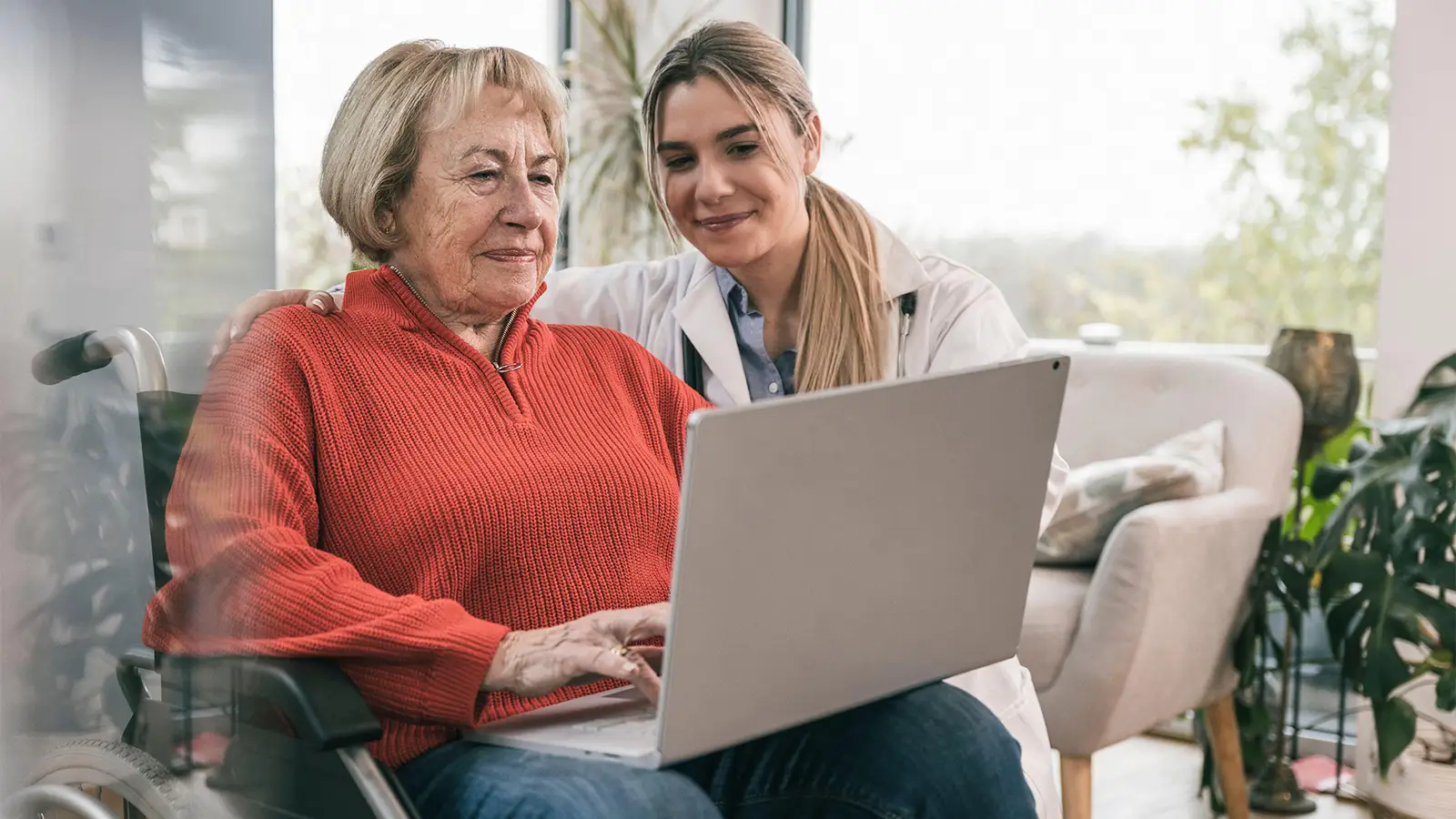
Over the past few years, some dedicated physicians and other emergency department team members have created a new program.
It’s called Community Teleparamedicine. (I understand from the physician who created the program that he himself coined the word “teleparamedicine”.) The program addresses patients sent home from the hospital, an outpatient clinic, or the emergency department in a tenuous state, who may not be sick enough to stay in the hospital or the emergency department, but may be just a little bit too sick to stay at home without some additional help.
The program sends a dedicated team of paramedics to the patient’s home, where they do a series of assessments. The team checks on patient progress with acute problems and with chronic conditions that have had new treatment plans initiated in the emergency department, outpatient clinic, or on the inpatient wards. They make sure patients are taking medicines as prescribed and that they have adequate care at home. The team also addresses so many of the challenging issues our patients face when accessing at-home care for complex medical problems.
The paramedics livestream the visit with one of the emergency department attendings. Together with the patient, and their own home care team — including home health aides, visiting nurses, and family members — the paramedics go over active problems and help overcome challenges that the patient may be facing.
Over the past few years, they’ve done remarkable work, demonstrating incredible patient satisfaction, improved care at home, prevention of readmissions, and so many more powerful metrics of high-quality care. This speaks directly to truly patient-centered care, meeting patients when and where they are — at home and desiring to stay there, most importantly.
Sure, when someone needs to be admitted, they need to be admitted. And if they need to be in a skilled nursing facility or long term care site, then that probably needs to happen. But these days it feels like we need to move to more models where patients can gracefully, safely, and with robust health age in place and continue their care at home.
Right now, if a patient calls up and says that they’ve got some new medical issue, there are numbers and types of issues that we can address through a portal message, through a telephone call, through a video visit, or through an in-person appointment. But far too often, when patients in these situations encounter a provider they don’t know, the default is to go to the emergency department.
In an idealized world, the patients would have access to care that comes to them, that assesses them at home, that can start a new treatment, give some IV fluids, draw some blood, do an EKG, do a physical exam to assess fluid status or progression or improvement of cellulitis, ascertain whether their heart failure, asthma, or COPD exacerbation is really improving with what has been tried thus far, and so much more.
Creating these new touch points is going to be key, and we need to build up the teams taking care of these patients. The program needs more paramedics trained in this skill set, and more emergency department doctors staffing these shifts, checking these patients at home and helping the paramedics safely dispense care and escalate when needed.
I would propose that we involve primary care doctors at every stage of this game. When a patient is getting ready to go home, I would love it if the hospitalists would engage us — the outpatient primary care doctors who know the patients well — and in effect allow us to do a primary care consultation. That would help us know the state of the patient, their progress through the admission, what has been resolved and what has not, what is getting better and what is not, what they’ve tried that has worked and what has failed, and where we need to go from here. When a patient is being discharged from the emergency room, the same process should hold.
And I would love to see us outpatient doctors involved in these Community Teleparamedicine visits, collaborating with the emergency department doctors and the paramedics on site with the patient and their usual home care team, those who are actively involved in the patient’s day-to-day care. Together we can deliver truly patient-centered care, meeting patients where they are, helping them live their best lives.
At some point we may see the introduction of things like virtual reality tools to help us interact with patients at home — the ability to do a remote physical exam without having to send someone to the house, and dramatic improvement in the quantity and quality and types of remote patient monitoring we are able to do. We need to build better, smarter systems that help us monitor our patients, monitor all this data, chart their progress and appreciate when they are starting to slip in the wrong direction, and when things are going well.
The time has come for us to embrace the technology that’s out there, and help it help us address all of the pain points that we and our patients face.
If we can build this all into a robust Community Teleparamedicine program, it can become an amazing new model of taking care of patients, to help keep them at home where we want them to be. And, more importantly, where they want to be.
Source link : https://www.medpagetoday.com/opinion/patientcenteredmedicalhome/121318
Author :
Publish date : 2026-05-18 18:21:00
Copyright for syndicated content belongs to the linked Source.