[ad_1]
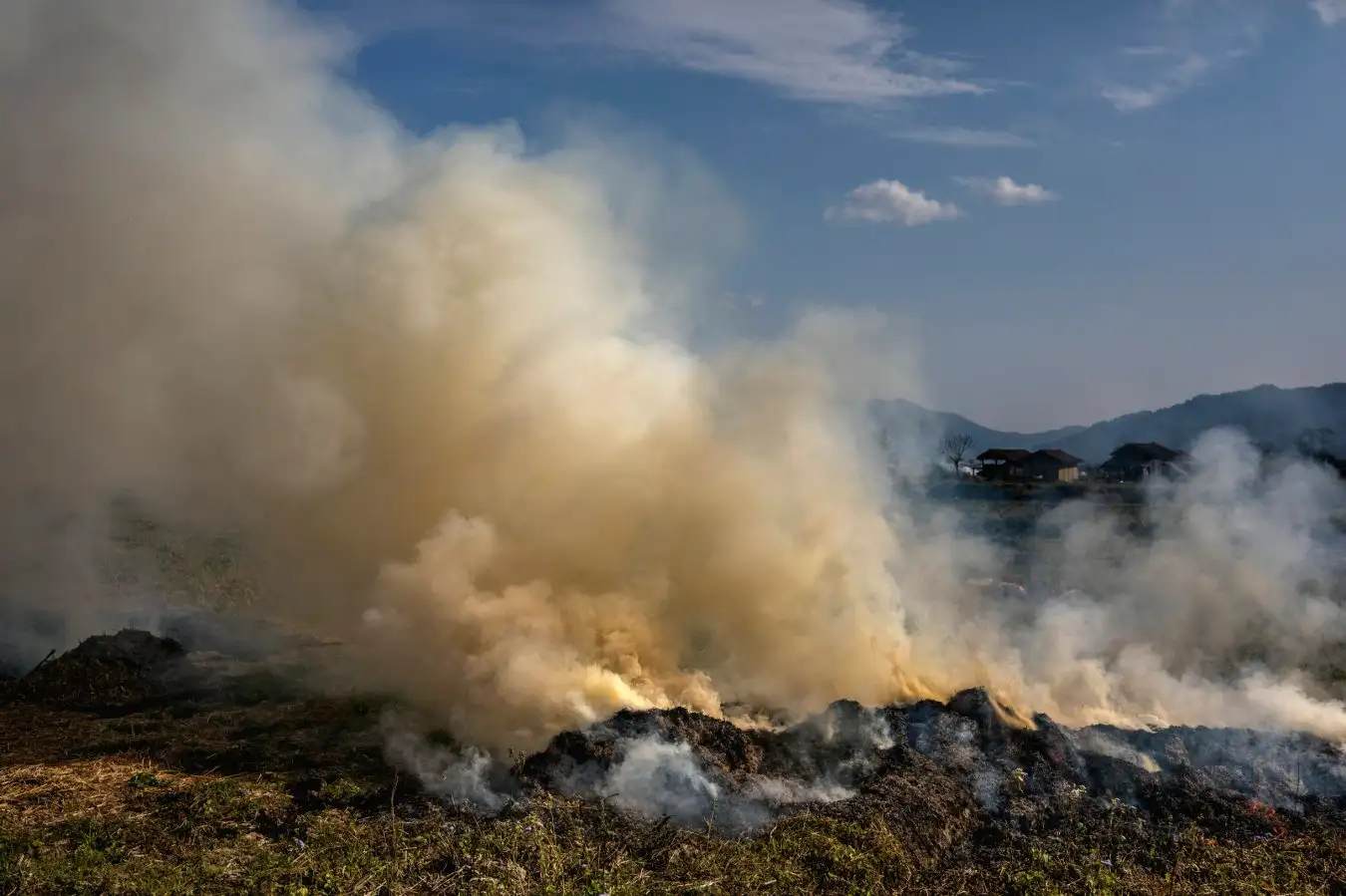
The burning of grasslands and forests for agriculture can release carbon monoxide and black carbon, which contribute to global warming
Jonas Gratzer/Jonas Gratzer
Carbon monoxide and volatile organic compounds don’t just poison the air we breathe. They also fuel chemical reactions in the atmosphere that heat the planet.
Of all the global warming that has happened since the pre-industrial era, about 15 per cent has been caused by emissions other than greenhouse gases, mainly carbon monoxide and VOCs. That is double the contribution of nitrous oxide, the third-most-common greenhouse gas after carbon dioxide and methane.
But few countries include these common “indirect greenhouse gases” in their emissions reduction targets.
“There is a set of forgotten climate pollutants that are strongly contributing to today’s warming and could considerably slow down the rate of warming in the future if we start including them in our climate policies,” says Ilissa Ocko at Spark Climate Solutions, a non-profit organisation based in California, who co-authored a study calling for more attention on these gases.
Carbon monoxide and VOCs, which are released in part by fossil fuel use, react with other compounds in the atmosphere to form ozone. While naturally occurring ozone in the upper stratosphere filters harmful ultraviolet rays, ozone formed in the lower atmosphere traps heat that would otherwise radiate to space.
Indirect greenhouse gases also warm the planet by reacting with hydroxyl radicals, a highly reactive “detergent” that scrubs the atmosphere clean of a wide variety of pollutants, including methane. If more hydroxyl reacts with carbon monoxide and VOCs, then less is available to break down methane, which, in the near-term, traps 80 times more heat than CO2.
Together with black carbon or soot – another pollutant that isn’t included in climate plans and national emissions data – indirect greenhouse gases have caused 0.3°C of warming. A fraction of that has been compensated for by sun-blocking aerosols like sulphur dioxide, and also by nitrogen oxides. The latter make up a group of indirect greenhouse gases that, in some places, may warm Earth by creating low-level ozone, but is thought to have a net cooling effect overall because it generates hydroxyl radicals.
While CO2 lasts for centuries in the atmosphere and methane survives for decades, indirect greenhouse gases break down within hours or, at most, a few years. That means the warming effect of these gases would quickly vanish if their emissions were reduced.
“If we are heading for things like a [climate] tipping point or something like that, then this is the low-hanging fruit to prevent catastrophic change,” says Alex Archibald at the University of Cambridge.
Carbon monoxide is emitted by the incomplete combustion of fossil fuels, largely in appliances like gas boilers and stoves, as well as in older vehicles. Another source is the burning of grasslands and forests for agriculture in places like the Amazon. VOCs include a variety of hydrocarbons that evaporate from fossil fuels or from paint and cleaning solvents.
Air pollution regulations in countries like the UK have reduced indirect greenhouse gases by adopting emissions standards for vehicles, appliances and industry, and limiting the VOC content in paints and varnishes. But many countries have looser rules, and they are focused on reducing exposure at ground level rather than throughout the atmosphere.
In January, the US Environmental Protection Agency issued a regulation that scientists say will weaken controls on emissions of nitrogen oxides by gas power plants.
Countries should start mentioning indirect greenhouse gases in the action plans they submit to the United Nations climate body under the Paris Agreement, and eventually set targets to reduce them, says Ocko.
Otherwise, decarbonisation efforts could perpetuate or even increase some indirect greenhouse gas emissions, according to Alastair Lewis at the University of York, UK.
As the smallest molecule, hydrogen often leaks and is sometimes vented by manufacturers into the atmosphere, where it consumes hydroxyl radicals and forms ozone and water vapour.
If countries achieve their most expansive plans to replace fossil fuels with hydrogen in industrial processes like steel-making and fertiliser manufacture, the venting and leakage of this gas could heat the globe by an additional 0.1°C by 2100, for instance. Burning hydrogen or synthetic aviation fuels in aircraft also produces nitrogen oxides and water vapour.
“If you burn a low-carbon fuel rather than use a battery, it may well be – from your carbon-accounting perspective – there’s no difference, but from an air pollution and indirect [greenhouse gas] point of view, it may be that there’s a big difference,” says Lewis.
Topics:
[ad_2]
Source link : https://www.newscientist.com/article/2530049-forgotten-pollutants-cause-15-per-cent-of-global-warming/?utm_campaign=RSS%7CNSNS&utm_source=NSNS&utm_medium=RSS&utm_content=home
Author :
Publish date : 2026-06-11 19:00:00
Copyright for syndicated content belongs to the linked Source.