[ad_1]
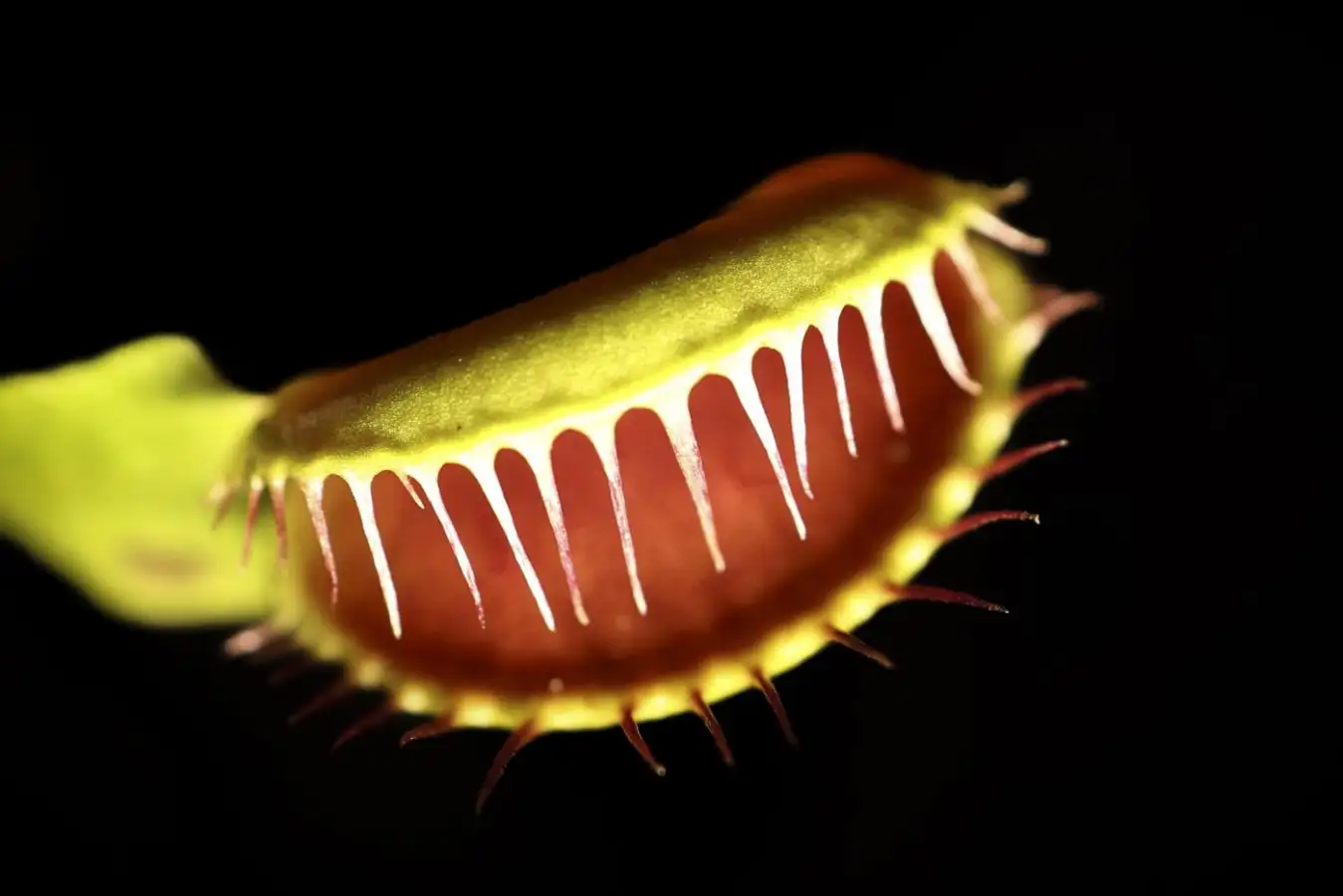
Venus flytraps snap shut to make a meal of insects and spiders
Jeanne Bourdier, Corentin Mollier
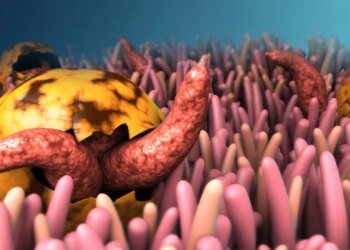
The mystery of how a Venus flytrap closes fast enough to catch insect prey may have been partially solved.
Venus flytraps (Dionaea muscipula) are triggered to snap shut once hairs in their traps are touched twice in short succession. They are known to be able to catch an array of insects, and even small frogs, and yet how they work has eluded scientists since Charles Darwin.
It has been widely thought that the mechanism involves water being pumped from one side of the trap to the other through the tissue. This would cause one side to shrink and the other to swell, generating the curvature needed to close the trap.
To test this hypothesis, Yoël Forterre at Aix-Marseille University in France and his colleagues measured how long it takes for water to move through the trap, both through the individual cells and the plant’s tissue.
It took 30 to 60 seconds for water to move from one side to the other. At this rate, the team concluded that such a mechanism would be too slow, given an insect is typically trapped in less than a second.
Next, they noticed that the trap surface became bumpier after being triggered – a change that they say could only happen with a decrease in cell-wall stiffness. So, they examined whether some kind of softening in the cell wall may be responsible for closing the trap, by using tiny probes to measure the mechanical forces inside the epidermal cells.
“We found that, when the trap is triggered, the cell walls of the outer epidermal layer rapidly soften,” says Forterre.
Once the hairs are triggered, an electric signal and a wave of calcium ions are sent across the leaf. “These signals act as the plant’s equivalent of a nervous signal,” he says. “They allow information about the touch to be transmitted from the trigger hair to distant cells across the trap within a fraction of a second.”
When it receives the signal, the outer surface of the trap quickly becomes mechanically less rigid, releasing the internal stresses stored in the tissue and allowing the pressurised inner cells to expand more on that side. As a result, the outer edges lengthen while the interior surface remains stiff, causing the trap to bend and close.
However, the team is still unsure what molecules trigger the cell walls to undergo such a rapid transformation. “In other words, we understand the beginning of the chain of events, touch sensing, and the end, trap motion, but the molecular link connecting the two remains largely unknown,” says Forterre.
Sergey Shabala at the University of Western Australia, in Perth, says he is not convinced by the team’s proposed mechanism. They have assumed that water would move through the cells consecutively, whereas it could be simultaneous, he says.
He also has doubts that changes in the stiffness of the cell wall could happen quickly, and instead thinks that it would take at least several minutes. “Thus, despite all these elegant measurements using cutting-edge engineering tools, the findings of this work do not explicitly rule out [water movement driving the] mechanism,” says Shabala.
Forterre says the team directly measured the swelling time of pieces of trap tissue, and these measurements show that water transport across the trap is far too slow to account for closure. On the other hand, the loss of stiffness in the cell wall was measured and found to be surprisingly rapid, he says.
Topics:
[ad_2]
Source link : https://www.newscientist.com/article/2530108-have-we-finally-worked-out-how-venus-flytraps-snap-shut/?utm_campaign=RSS%7CNSNS&utm_source=NSNS&utm_medium=RSS&utm_content=home
Author :
Publish date : 2026-06-11 19:00:00
Copyright for syndicated content belongs to the linked Source.