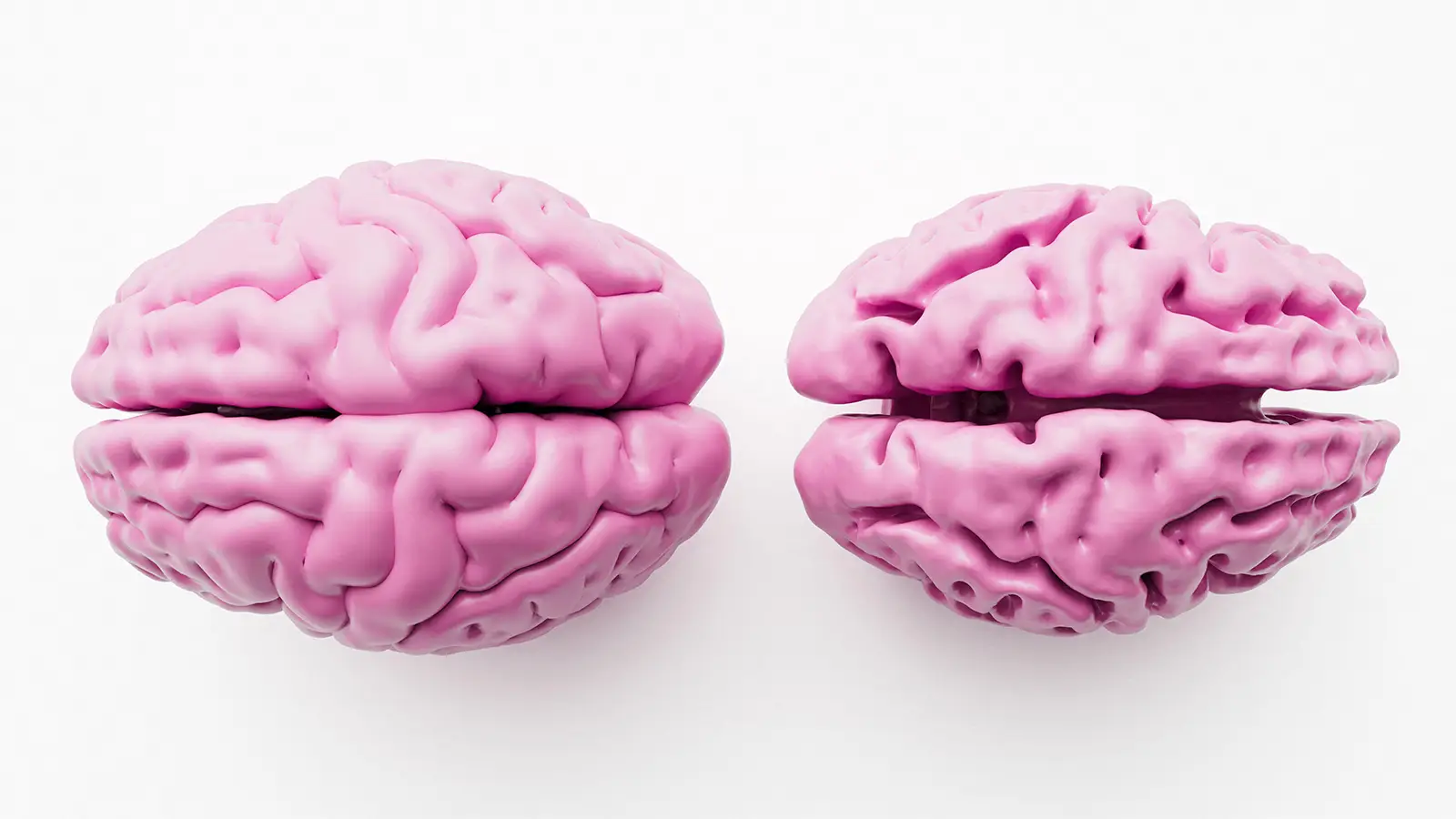
- Preserved global brain structure appeared to buffer cognitive decline in people with Alzheimer’s pathology.
- Younger-appearing brains had weaker links between pathology and poorer outcomes in multiple cognitive domains.
- Other measures of brain reserve or cognitive reserve showed no clear protective cognitive effect.
Greater structural brain integrity appeared to buffer the cognitive consequences of Alzheimer’s disease pathology, cross-sectional data suggested.
The study evaluated two markers of brain reserve — brain-predicted age difference (brain-PAD) and a volumetric Alzheimer’s disease signature — in cognitively unimpaired older adults. Brain-PAD, a marker of overall structural brain health, uses MRI data to determine how much older or younger a brain appears relative to chronological age.
Two markers of cognitive reserve, socioeconomic status and years of education, also were assessed.
Brain-PAD moderated the association between Alzheimer’s pathology and multiple cognitive domains, including episodic memory (β = -0.09), processing speed (β = -0.08), working memory (β = -0.10), and executive function/attentional control (β = -0.08), reported Kelsey Sewell, PhD, of Murdoch University School of Allied Health in Perth, Australia, and co-authors.
“Specifically, the negative association of greater Alzheimer’s disease pathology with poorer cognition was weakest in individuals with younger-appearing brains,” the researchers wrote in Neurology.
A latent socioeconomic status score also appeared to influence the relationship between Alzheimer’s pathology and episodic memory (β = 0.08), but the association did not remain significant after correction for multiple comparisons, Sewell and colleagues noted. Neither years of education nor the volumetric Alzheimer’s signature moderated pathology-cognition associations, they added.
“Our main finding was that maintaining good overall brain health may help reduce the impact of Alzheimer’s‑related changes on cognitive function,” Sewell said in a statement. “Things like exercise, maintaining a healthy diet, sleeping well, and finding new cognitive challenges can help to maintain a healthy brain.”
About 20% to 30% of adults ages 65 to 75 show evidence of Alzheimer’s pathology despite having no measurable cognitive impairment, Sewell and co-authors said. “This phenomenon is often attributed to resilience, a general term describing multiple reserve-related processes that enable the brain to maintain higher levels of cognitive performance and function with aging or disease,” they wrote.
“Within this framework, two key concepts are ‘cognitive reserve’ defined as a property of the brain that allows for cognitive performance better than expected given the degree of brain changes and pathology, and ‘brain reserve’ defined as the neurobiological capacity of the brain at a given point in time,” they stated.
The findings of this study support “the idea that preserved global brain structure reduces vulnerability to cognitive decline in the face of emerging pathology,” noted Maria Carrigan, MSc, and Colin Groot, MSc, both of Amsterdam University Medical Center in the Netherlands, in an accompanying editorial.
“For clinicians, the key message is that preserved global brain health seems to matter even before symptoms emerge,” Carrigan and Groot wrote.
“The study also raises important questions for future research,” the editorialists added. “What biological processes underlie a younger-appearing brain? To what extent is brain-PAD modifiable through interventions targeting physical activity, vascular risk factors, or other lifestyle exposures? In addition, how does brain-PAD interact longitudinally with amyloid and tau accumulation to influence cognitive trajectories?”
Sewell and colleagues examined whether cognitive and brain reserve modified the relationship between Alzheimer’s pathology and cognition in 621 cognitively unimpaired, physically inactive participants in the IGNITE exercise trial in the U.S.
Mean age was 70 years and 71% were women. The mean brain-PAD of the cohort was -4.05, indicating that participants’ brains appeared younger than their chronological age, on average.
Alzheimer’s pathology was assessed using plasma phosphorylated tau (p-tau)-217. A subgroup of 355 participants also underwent tau PET imaging. Brain age was estimated from T1-weighted images.
The researchers noted several limitations. The study was cross-sectional and could not determine causality: while accelerated brain aging might worsen the cognitive effects of Alzheimer’s pathology, it’s also possible that people with more advanced brain ages are more vulnerable to accumulating pathology.
Emerging evidence suggests that p-tau217 may not be entirely specific to Alzheimer’s pathology, they acknowledged. Findings from participants who had tau PET imaging supported the associations seen in the study.
Source link : https://www.medpagetoday.com/neurology/alzheimersdisease/121399
Author :
Publish date : 2026-05-21 18:02:00
Copyright for syndicated content belongs to the linked Source.