Reports about American doctors contracting or being at risk of developing Ebola hearken back to the 2014 outbreak in West Africa, when a patient fell ill on U.S. soil and ultimately sickened two healthcare workers.
On Sept. 28, 2014, Thomas Eric Duncan sought care for fever, vomiting, and diarrhea at Texas Health Presbyterian Hospital in Dallas. A Liberian citizen, he was visiting family in Texas when he became sick.
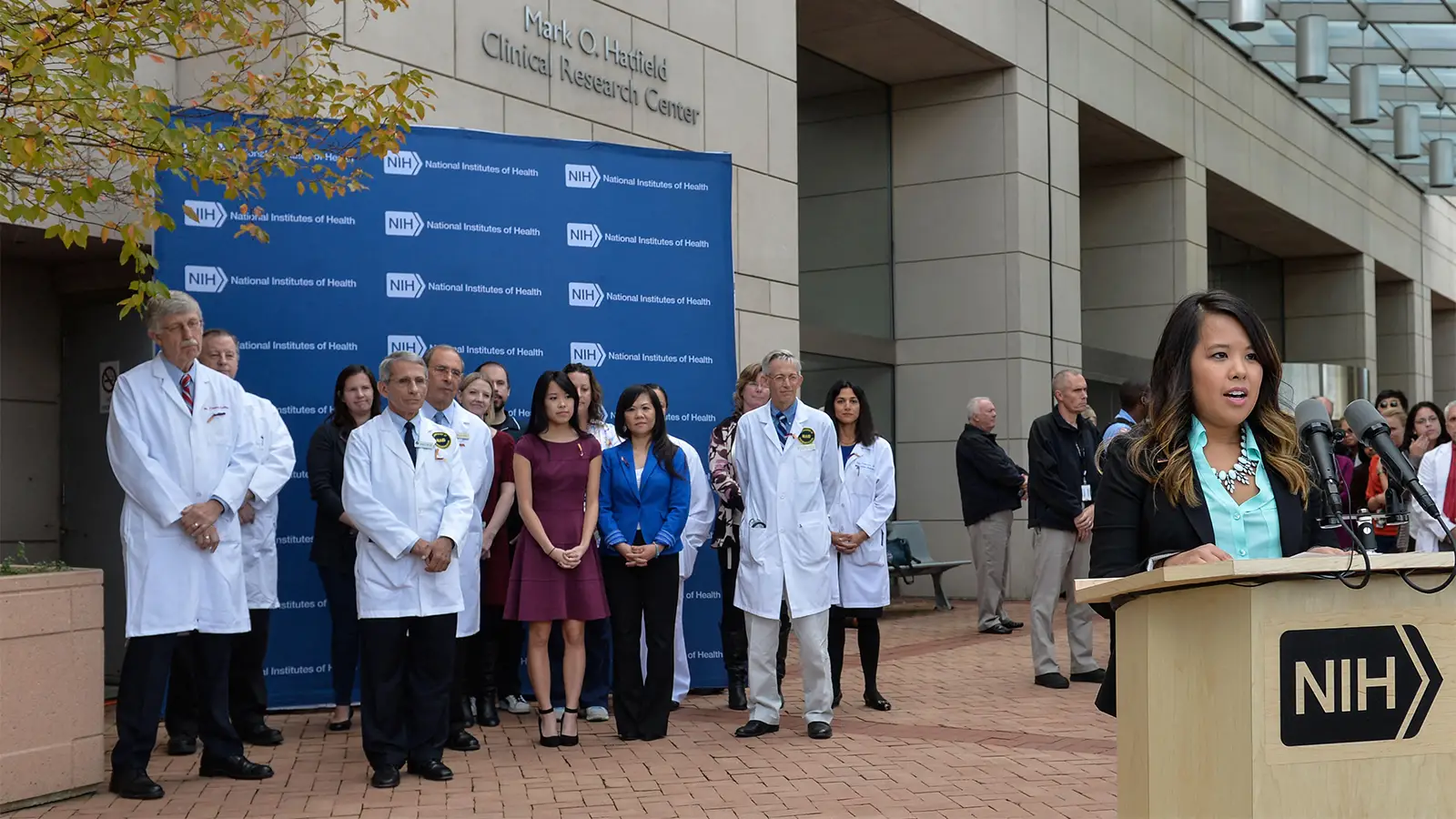
About 2 weeks later, Nina Pham, RN, a nurse who cared for Duncan, tested positive for the virus and was eventually sent to the NIH Clinical Center in Bethesda, Maryland, for care.
Not long afterward, a second nurse who took care of Duncan, Amber Vinson, RN, developed the disease and was transported to Emory University in Atlanta for treatment.
Their infections marked the first known transmission of Ebola in the U.S., according to the CDC.
Both Pham and Vinson recovered within about 2 weeks, but Duncan died of the illness within about a week of presenting to the Dallas hospital.
As Pham and Vinson were recovering, emergency physician Craig Spencer, MD, developed the disease after returning to New York City from Guinea, where he had been treating Ebola patients through Doctors Without Borders.
Spencer was treated at Bellevue Hospital in New York City and recovered within 3 weeks.
Other healthcare workers who took care of patients in West Africa were treated at the NIH, Emory, and the University of Nebraska Medical Center (UNMC). A total of 11 people were treated in the U.S. during that outbreak, according to the CDC.
One of those patients was Kent Brantly, MD, who was the first Ebola patient to be treated at Emory during that outbreak. He arrived on Aug. 2, 2014, and made a full recovery. Martin Salia, MD, who was treated at UNMC after taking care of patients in Sierra Leone, was the second patient in the U.S. to die from the virus after Duncan, in November 2014.
The outbreak in West Africa was first recognized in March 2014, with the hardest hit countries being Guinea, Liberia, and Sierra Leone.
After treating Ebola patients, Emory, UNMC, and Bellevue established a national network for managing high-consequence infectious diseases. While it first focused on Ebola, it’s now called the National Emerging Special Pathogen Training and Education Center (NETEC), and is funded by the Administration for Strategic Preparedness and Response (ASPR).
“When HHS decided that they needed to build more robust structures to care for patients such as those with Ebola, they reached out to us,” Aneesh Mehta, MD, of Emory University and NETEC, told MedPage Today in an interview earlier this month.
NETEC and ASPR also run the National Special Pathogen System, through which hospitals across the country offer varying levels of care during outbreaks.
At the top of that pyramid sit the 13 Level 1 facilities, known as Regional Emerging Special Pathogen Treatment Centers (RESPTCs), followed by some 50 Level 2 facilities that have recently been brought online, Mehta said.
“We work with ASPR as well as other public health agencies when we do have cases, whether they’re in the United States or occurring in American citizens abroad, to be able to bring those patients to these high-level isolation units so that they could be cared for safely,” Mehta said, “while making sure they’re taken care of by healthcare staff that are trained in caring for people with high-consequence infectious diseases.”
During a MedPage Today webinar this week, Tom Frieden, MD, MPH, who was the CDC director during the 2014-2016 Ebola outbreak in West Africa, noted that healthcare providers in the U.S. should be aware of their potential risk.
He cheered on the CDC’s decision to send a Health Alert Network health advisory earlier this week, urging clinicians to assess patients for the risk of viral hemorrhagic fevers.
“For medical professionals … I wouldn’t say you need to be alarmed, but you need to be alert to the risk,” Frieden said. “So, talk about travel history with anyone with a fever, and isolate and use good protective equipment appropriate for Ebola.”
“The general public can be less concerned,” he added, “but the medical professionals need to be more concerned because of the possibility of missing cases, which can result in severe and potentially fatal infections.”
Source link : https://www.medpagetoday.com/infectiousdisease/ebola/121402
Author :
Publish date : 2026-05-21 19:17:00
Copyright for syndicated content belongs to the linked Source.