[ad_1]
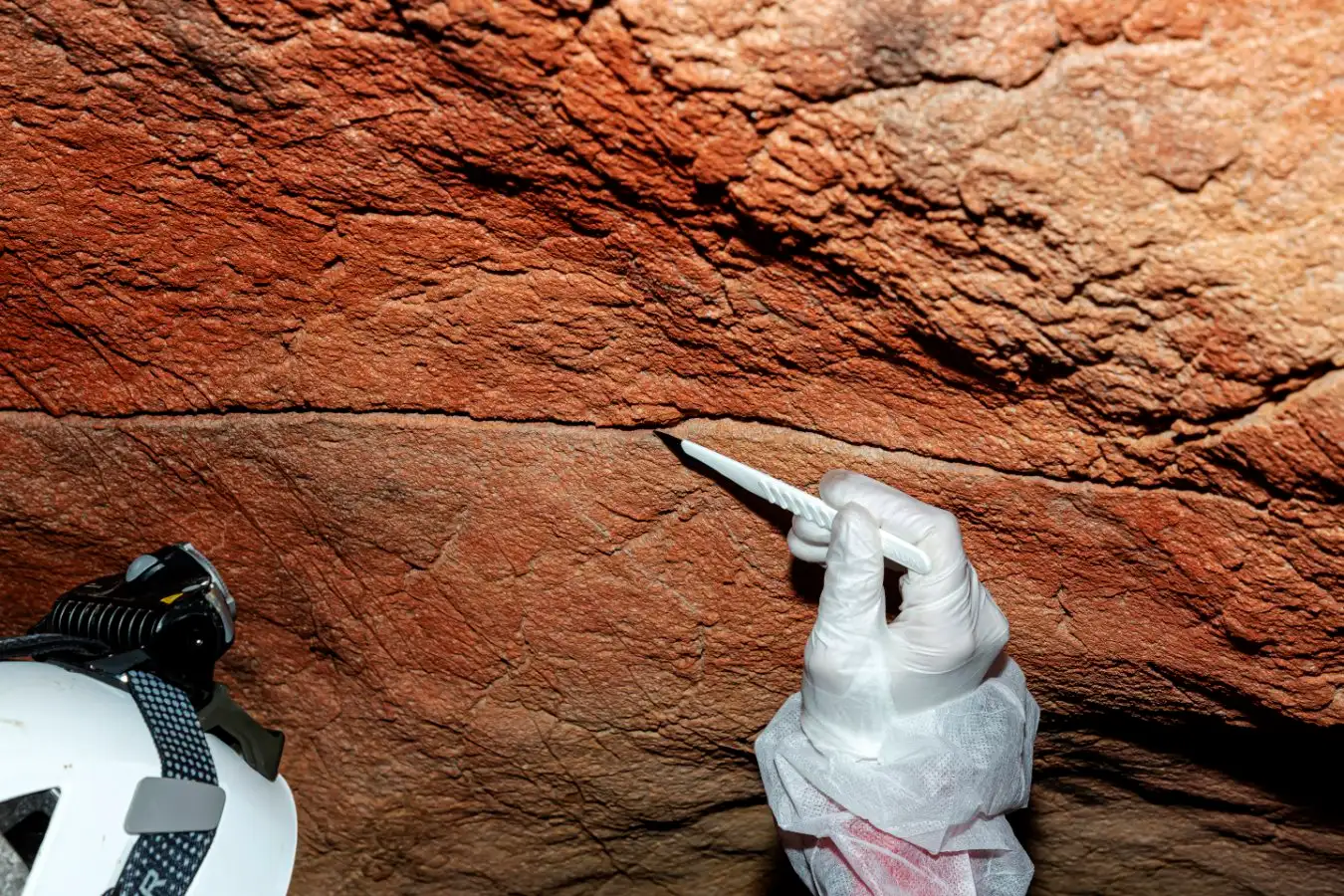
A sample is collected from a rock art figure in Tebellín, Spain
ABAMIA ARKEOS-ALBERTO MARTÍNEZ VILLA
Ancient human DNA can survive on cave walls and rock art for thousands of years, a study of caves in Spain and Portugal has found. This opens up new ways to understand prehistoric humans and answer questions about whether Neanderthals painted on cave walls too.
“It’s the start of a new era,” says Genevieve von Petzinger at University of the Witwatersrand, Johannesburg, South Africa. “This gives us the potential to meet the actual artists, the individual who did this art. It’s extraordinary.”
Between 2022 and 2025, a team of researchers from the First Art project, which focuses on dating the earliest cave art, took samples from 11 caves around Spain and Portugal containing rock art – mainly graphic images such as triangles, dots and hand stencils made using red ochre paint, which are thought to be the oldest forms of cave drawings. The researchers took tiny shavings of paint or removed a layer of calcite mineral that forms on cave walls by precipitation from water.
Cave art is often created by spitting paint, or applied using hands and fingers, so the researchers tested whether any DNA from the artists had been preserved. We have known for a decade that ancient human DNA can be preserved in the sediment on cave floors, but this genetic material had never previously been discovered on the walls.
This has now changed, with the discovery of ancient human DNA in some red markings in the Escoural Cave in Portugal that resemble a semicolon.
“That was a happy surprise,” says Alba Bossoms Mesa at the Max Planck Institute for Evolutionary Anthropology in Leipzig, Germany. This is the first time ancient human DNA has been found on cave walls. However, we can’t yet be certain that the DNA is from the person who created the art, she says. “It could be from someone who touched the art later, or from someone who just sneezed.”
However, this opens the door to one day being able to identify the people who made the drawings. “It is as though the cave walls have become the pages of a blank book that, little by little, we will be able to fill with new discoveries,” says Hipólito Collado Giraldo, an archaeologist at the regional government of Extremadura, Spain.
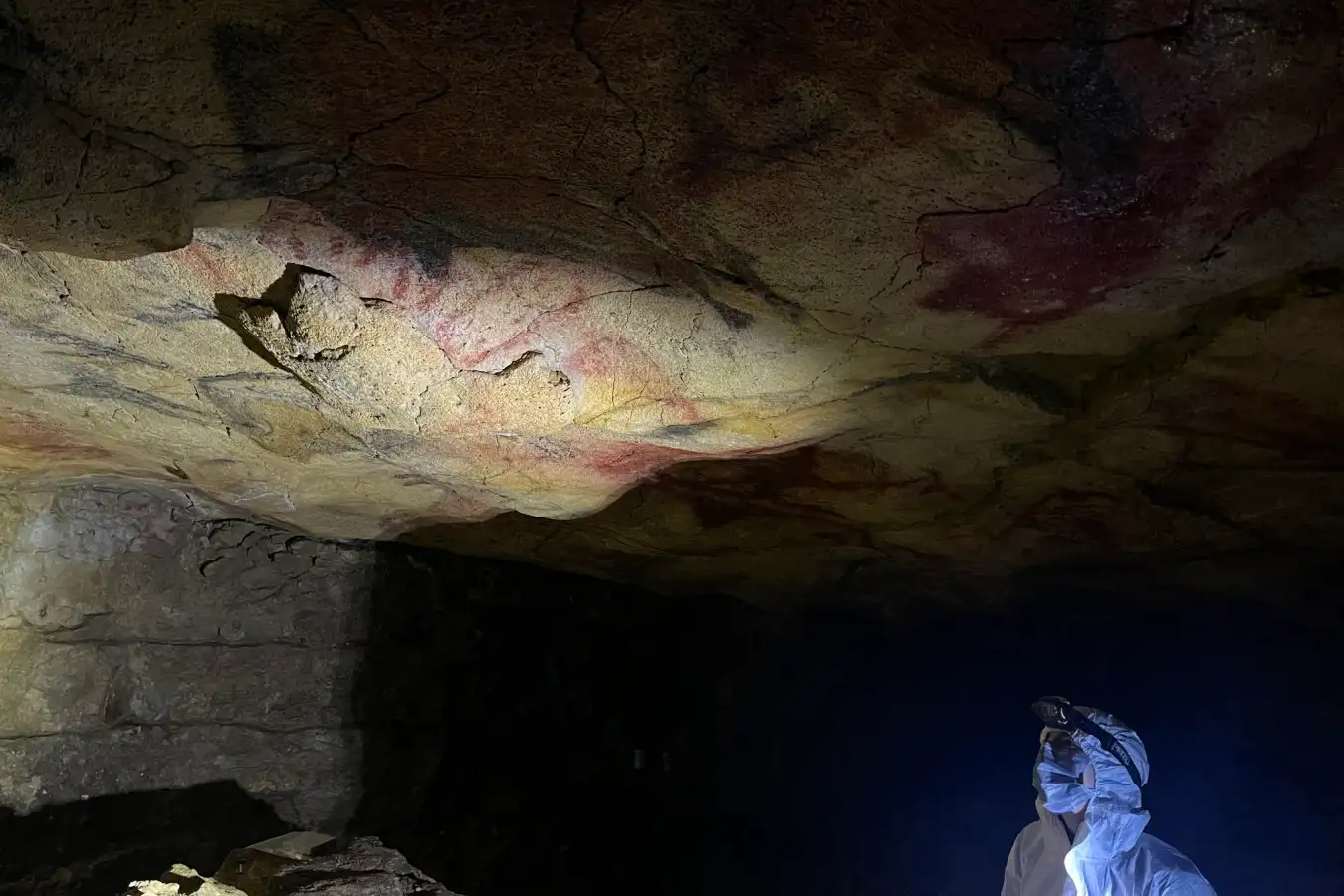
Pigment samples were collected from the ceiling of Altamira cave in Spain
Matthias Meyer
Another big surprise came when the researchers took samples from areas of the cave walls with no art, intended as controls, and found ancient human DNA in some of them too, presumably left over by prehistoric visitors to the cave who touched the walls. “We were absolutely astonished,” says Collado Giraldo. This means that cave walls could be a treasure trove of information about the ancient humans who visited them, even where there are no cave drawings or archaeological artefacts.
What’s more, the study showed that the DNA on the walls of the Escoural cave most likely came from direct contact with ancient humans, rather than from sediments from the cave that become deposited on the walls. This is because when human DNA is found in sediment, it is mixed with that of different animals, whereas the genetic material on the Escoural cave wall was exclusively human.
The cave wall DNA also revealed crucial details about the ancient humans it came from. Three of the samples were mainly from females, whereas the fourth was predominantly male. The genetic profile was most closely matched to a population known as western hunter-gatherers who date from around 5200 to 17,000 years ago.
There was not enough DNA recovered to carry out exact dating, but we know that the Escoural cave was sealed off between 4000 and 5000 years ago, so the DNA is probably older than that.
But this study is just the start. Earlier this month, First Art researchers, including von Petzinger and Collado Giraldo, carried out extensive sampling at a number of other caves in Spain. This included Nerja and Ardales caves that contain art attributed to Neanderthals – though this is the subject of much debate. “One question that I would really love to answer… is whether Neanderthals were making art,” says Bossoms Mesa.
DNA from cave walls could open up new ways of understanding ancient humans and the drawings they made, says Francesco d’Errico at the University of Bordeaux in France, who was not involved with the study. “Were the artists men or women or both? Were animal [drawings] from the same panel made by a single artist? Can we find Neanderthal DNA [in the very old paintings in the Iberian peninsula] or Denisovan DNA in hand stencils found in Indonesia? The potential is huge.”
However, ancient DNA was only found in one of the 24 rock art panels sampled, suggesting that preservation might be the exception rather than the norm. “The success rate is very low right now,” says Bossoms Mesa. This is likely to improve as the researchers hone their ability to extract tiny amounts of DNA from cave samples.
Collado Giraldo is excited about the prospect of discovering invaluable information without the need to carry out excavations, which are inherently destructive. “Excavation inevitably removes part of the archaeological record,” he says. “However, this new discovery offers us the opportunity to uncover and reconstruct entirely new stories without excavation – stories that will help us better understand the people and societies of the past.”
Topics:
[ad_2]
Source link : https://www.newscientist.com/article/2532130-ancient-human-dna-found-on-cave-art-for-the-first-time/?utm_campaign=RSS%7CNSNS&utm_source=NSNS&utm_medium=RSS&utm_content=home
Author :
Publish date : 2026-06-26 12:45:00
Copyright for syndicated content belongs to the linked Source.