[ad_1]
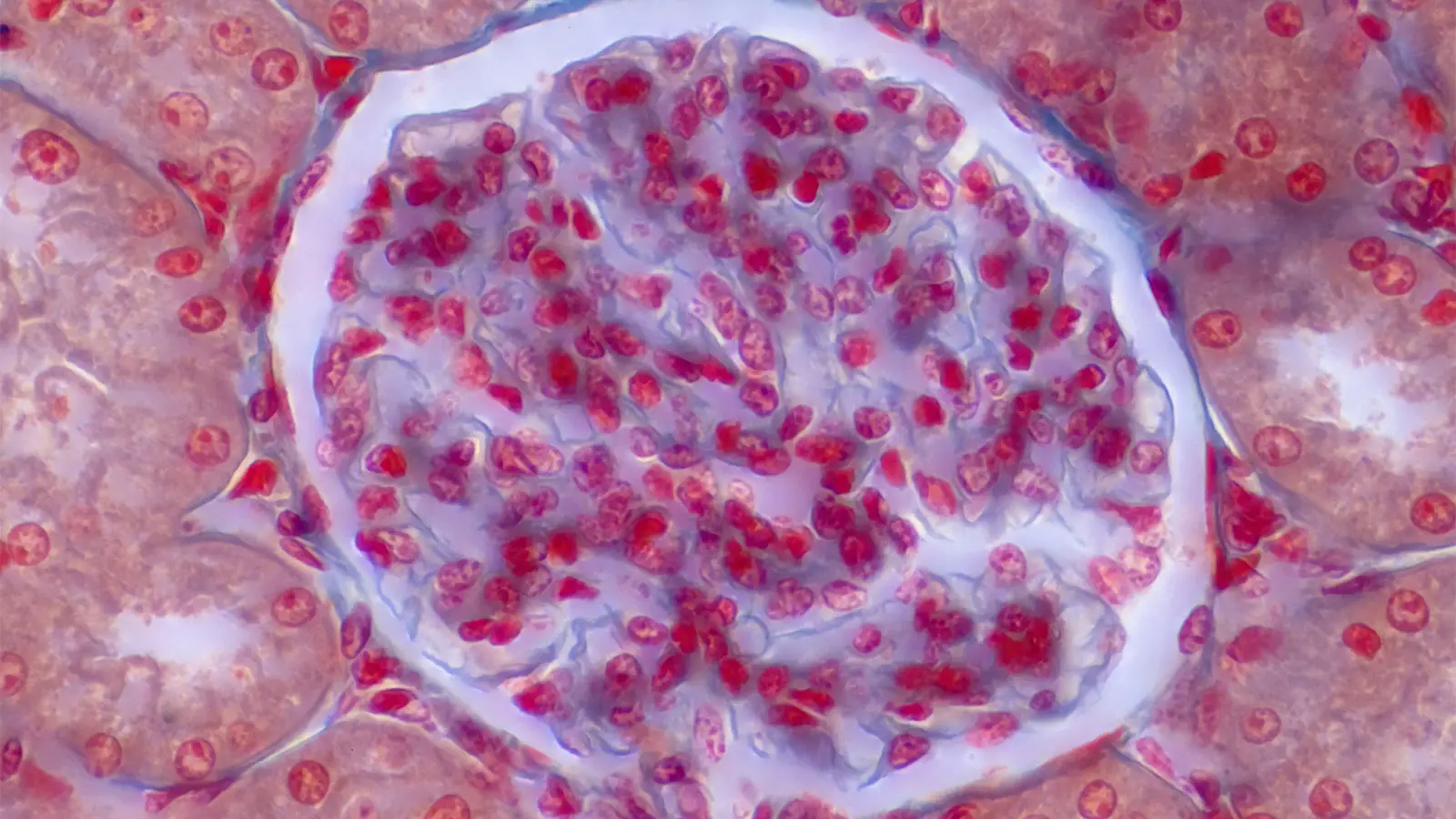
Variants in the apolipoprotein L1 (APOL1) gene are associated with a significant increase in the risk of focal segmental glomerulosclerosis (FSGS), a rare and aggressive kidney disease characterized by scarring of the glomeruli.
The variants, present only among people of African descent, have also been linked to treatment resistance in FSGS and a significantly elevated risk of progression to end-stage renal disease (ESRD), making early screening vital.
FSGS is categorized into primary, secondary, and genetic subtypes, and the identification of high-risk mutations in APOL1 has reshaped clinical classification and allowed physicians to move toward a more definitive diagnosis in some FSGS cases.
“Accurate identification of the underlying etiology is crucial for guiding treatment decisions, predicting prognosis, and assessing transplant risks,” wrote Krishna Baradhi, MD, of the University of Oklahoma in Tulsa, and co-authors in StatPearls.
Higher FSGS Risk With APOL1 Gene
APOL1 variants conferred a 17-fold higher odds for developing FSGS, according to a 2011 study by Jeffrey Kopp, MD, of the NIH in Bethesda, Maryland, and co-authors.
FSGS associated with two APOL1 risk alleles was associated with an earlier age of onset (P=0.01) and faster progression to ESRD (P<0.01), but showed similar sensitivity to steroids compared with other subjects. Individuals with two APOL1 risk alleles have an estimated 4% lifetime risk for developing FSGS, they said.
The effect of carrying two APOL1 risk alleles explains 18% of FSGS, Kopp and his team wrote in the Journal of the American Society of Nephrology.
Data have also shown that donor kidneys with high-risk APOL1 variants fail at higher rates, although the recipient APOL1 genotype has not been demonstrated to correlate with allograft survival, according to guidelines from Kidney Disease: Improving Global Outcomes.
“Therefore, in donors at high risk for APOL1 risk variants, genetic testing for APOL1 mutations may provide information for both the disease risk in the donor and allograft outcomes in the recipient,” the guidelines note.
Genetic Variants Exclusive to People of African Ancestry
Severe kidney diseases disproportionately affect Black populations, a major health disparity that had been largely unexplained until about 15 years ago, noted David Friedman, MD, and Martin Pollak, MD, both of Beth Israel Deaconess Medical Center and Harvard Medical School in Boston. Researchers discovered genetic variants in the APOL1 gene in 2010 “that explained a surprisingly large fraction” of this disparity, they wrote in the Clinical Journal of the American Society of Nephrology.
In a Kidney Medicine review, Vinay Srinivasan, MD, MBA, of Cooper University Hospital and Cooper Medical School of Rowan University in Camden, New Jersey, and co-authors noted that “The discovery of the APOL1 gene and, subsequently, the G1 and G2 risk alleles has helped [us] understand some of these disparities.”
In the U.S., roughly 6 million African Americans have a high-risk genotype for kidney disease, they added.
“The APOL1 gene does not appear to be necessary for normal kidney function, and the high-risk alleles appear to be gain-of-function mutations offering protection against Trypanosoma species,” Srinivasan and his team explained. Trypanosoma brucei is the parasite that causes African sleeping sickness.
A survey of world populations indicated that the APOL1 kidney risk alleles are present only on African chromosomes, Kopp and colleagues noted in their study.
In a recent case-control study, more than 40% of the Ghanaian and Nigerian individuals tested carried APOL1 variants, reported Rasheed Gbadegesin, MD, of Duke University Medical Center in Durham, North Carolina, and colleagues.
Gbadegesin and his team found that the presence of one APOL1 G1 or G2 risk allele carried 61% higher odds of FSGS than having no risk alleles. Carrying two risk alleles was associated with 84% higher odds of FSGS.
“There is an obvious disparity in chronic kidney disease and FSGS in people of African ancestry,” Gbadegesin said at the 2024 American Society of Nephrology Kidney Week meeting, where the findings were presented.
“We have some ideas about what the drivers of these disparities are: structural racism, mistrust of the health system, disparity in care, implicit bias, and a lot of environmental factors. But there are actually biological genetic factors that are also important for this,” he said.
Currently, the once-daily oral tablet sparsentan (Filspari) is the only FDA-approved drug for FSGS. Investigational inaxaplin — a small molecule acting as an APOL1 function inhibitor — is currently in development to target APOL1-mediated kidney disease. Positive phase II trial findings were seen with the drug in a small group of patients with biopsy-proven FSGS and two APOL1 mutations.
[ad_2]
Source link : https://www.medpagetoday.com/spotlight/fsgs/121700
Author :
Publish date : 2026-06-10 20:18:00
Copyright for syndicated content belongs to the linked Source.