Just a week after Health Secretary Robert F. Kennedy Jr. downplayed rabies during a Senate hearing based on the few annual fatalities, CDC staff held a call with physicians to emphasize that preventing further deaths requires millions of U.S. medical visits every year along with 100,000 preventive vaccinations.
In an online seminar for clinicians on Thursday, a CDC official offered guidance on accurately preventing a dangerous viral infection that has an effective yet costly postexposure prophylaxis (PEP) vaccine but no FDA-approved treatment.
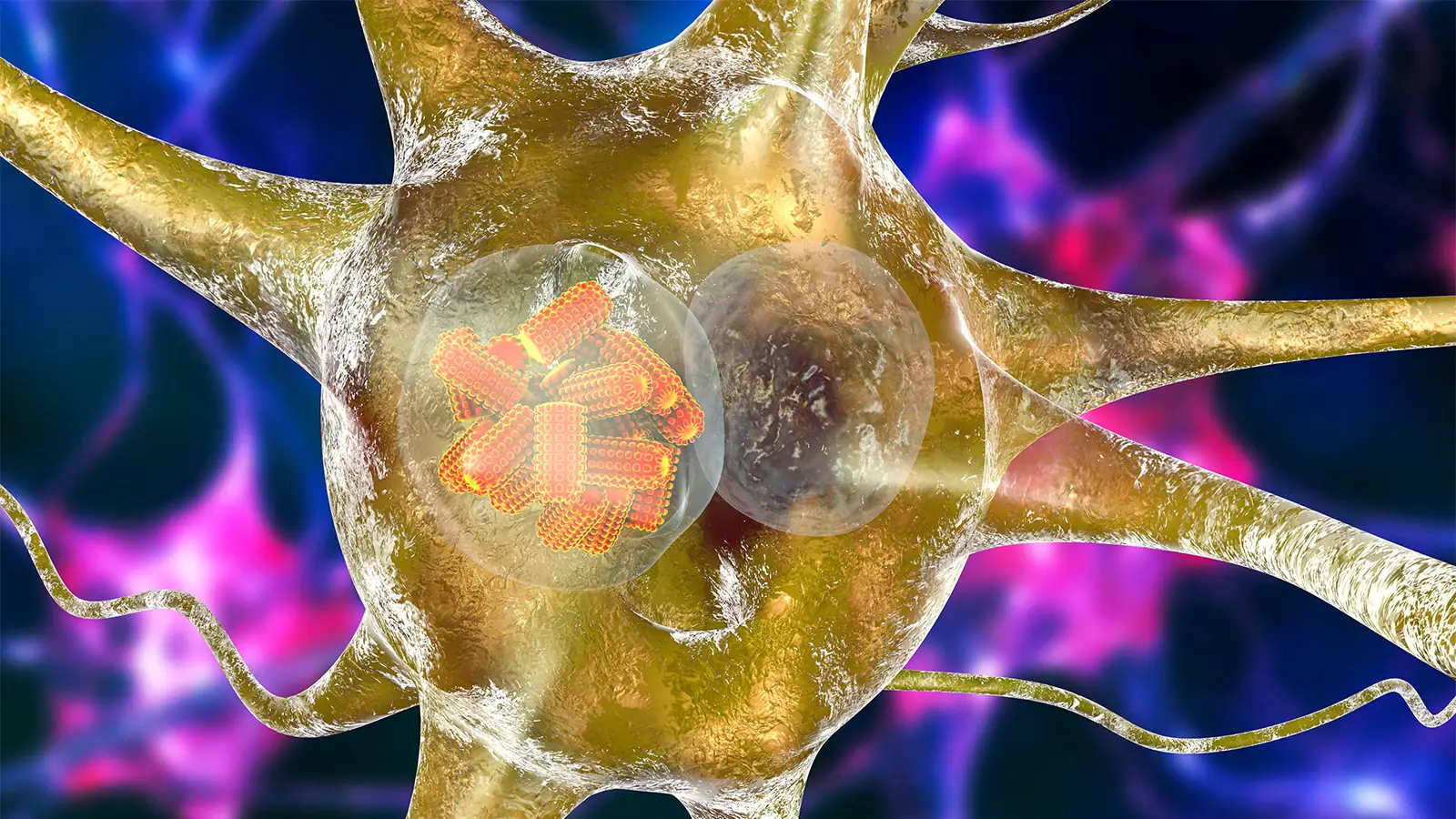
The rabies virus attacks the central nervous system and causes progressive, fatal inflammation of the brain and spinal cord. Humans are typically infected via saliva from bites or scratches by infected mammals such as dogs, bats, skunks, or raccoons. Without timely PEP before symptom onset, infection is fatal.
Worldwide, rabies causes an estimated 59,000 deaths annually. However, since 2000 the CDC has received only 1 to 8 reports per year of rabies-related human deaths in the U.S., in large part because of widespread canine vaccination. Two such deaths happened in 2024 in Minnesota and California, both following encounters with bats. Neither patient reported their bat encounter, and both failed to seek medical attention before the onset of rabies symptoms.
U.S. Deaths Are Rare, but Medical Interactions to Prevent Them Are Not
During a U.S. Senate hearing April 22, Sen. Raphael Warnock (D-Ga.) questioned Kennedy about the effect CDC staffing cuts have had on the agency’s rabies response capabilities. The agency announced last month that it was pausing diagnostic testing for rabies, monkeypox, and a number of other infectious diseases. As of May 1, rabies testing was still not available, according to CDC’s website.
“There’s only one person left to staff the line and respond to families about this very deadly and terrifying infectious disease,” Warnock said, noting that historically staff would be available 24/7 to field emergency calls from providers about complex cases. Kennedy responded that there are “only a few rabies cases per year” in the U.S., adding, “I think one person manning that office full-time probably can handle that traffic.”
The U.S. rabies death rate indeed may be low, with only 89 rabies-related deaths since 1990. But rabies-related interactions with the U.S. healthcare system in general, and with the CDC in particular, are anything but rare, cautioned Ryan Wallace, DVM, of the CDC’s National Center for Emerging and Zoonotic Infectious Diseases.
“I really want to emphasize that rabies is a daily threat here in the United States and a daily challenge for our public health departments,” Wallace said.
Annually, an estimated 1.3 million people in the U.S. seek medical care for an animal bite, according to the CDC, and about 100,000 of them (7%) get rabies PEP. There are an average of two rabies consultations daily in the roughly 3,000 health departments in the U.S., Wallace said, and the CDC receives seven rabies consultations every day. Overall, the nation’s rabies prevention system costs about $7.2 billion per year to operate, he added.
How to Assess Potential Rabies Risk
Accurately assessing people’s potential risks from rabies exposure can ensure that clinicians deliver the disease’s costly preventive care correctly and quickly. “Our ability to tell more than a million people that they don’t need the vaccine is because we have confidence in our surveillance system, and we have a really structured risk assessment process,” Wallace said.
Unnecessary PEP has a price. A PEP course in the U.S. costs $12,000 per person, on average, and exposures often affect multiple family members. That’s a tremendous financial burden, particularly for those who are uninsured or underinsured, Wallace noted. The complex vaccine regimen also comes with potential adverse events. Finally, with only two vaccine makers, regional vaccine shortages aren’t uncommon.
The first step in the risk assessment process is to determine if an exposure actually occurred. Infectious materials from a suspected rabid animal must make direct contact with either fresh broken skin or mucous membranes, typically a scratch or bite, Wallace explained.
If an exposure did occur, clinicians can conduct a bio-geo-behavioral risk assessment:
- Bio: Is the animal a rabies reservoir species or a high-risk animal?
- Geo: Is rabies commonly found in the local region?
- Behavioral: Was the animal showing signs of rabies?
“If we put all of this together, we can get a very accurate recommendation for whether postexposure prophylaxis is necessary,” he explained.
The CDC offers clinicians two online risk assessment and PEP treatment tools: a quantitative risk assessment for rabies tool to determine the probability that an animal has rabies, and a rabies PEP calculator that can generate a PEP vaccination schedule.
Source link : https://www.medpagetoday.com/infectiousdisease/generalinfectiousdisease/121082
Author :
Publish date : 2026-05-01 20:12:00
Copyright for syndicated content belongs to the linked Source.