[ad_1]
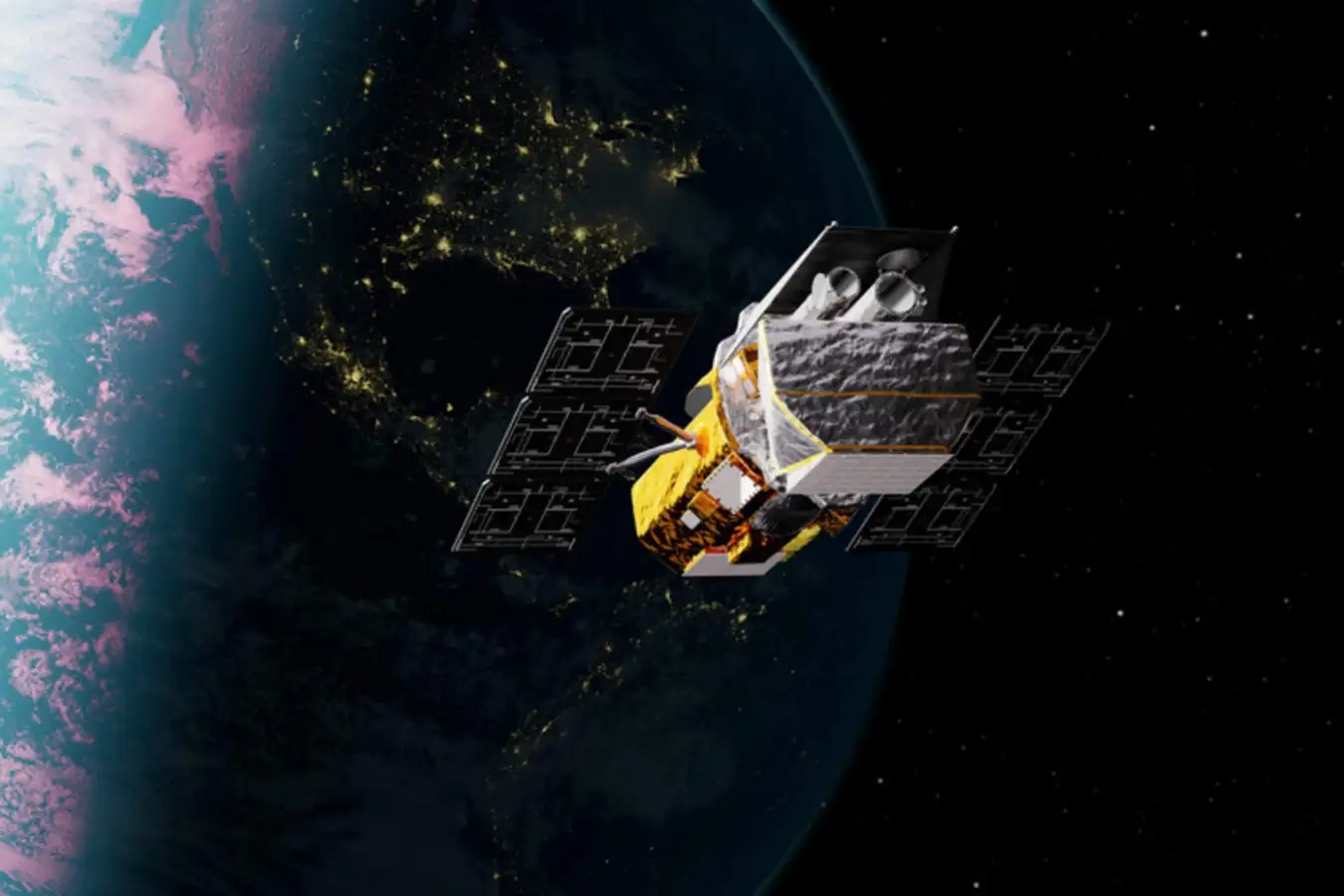
NASA’s Neil Gehrels Swift Observatory
NASA Goddard Space Flight Center
One of NASA’s premier space telescopes is falling, and an audacious mission to rescue it has just begun. The Neil Gehrels Swift Observatory is months from dropping back to Earth, but if the rescue works, it could continue watching the sky for years to come.
All satellites’ orbits eventually decay, and Swift is no exception. The outer edges of Earth’s atmosphere have been dragging it down since it launched in 2004: its initial orbit was at an altitude of about 600 kilometres from the ground, and now it’s only about 375 kilometres up. Its descent in recent years was faster than expected because of powerful solar flares depositing energy into the atmosphere, puffing it outwards and increasing drag on satellites.
So if NASA wanted to keep Swift operating, the agency had few options. The one that won out was a proposal by Katalyst Space Technologies, a small start-up based in Arizona, to give the orbiting observatory a boost.
The plan rests on a satellite called LINK, designed to grab Swift with a trio of robotic arms and pull it upward. At less than 2 metres tall, its main body is only about one-third the size of Swift, but it is flanked by immense sheets of solar panels to power its thrusters and grappling arms.
LINK launched atop a Northrop Grumman Pegasus XL rocket on the morning of 3 July, in what is intended to be the final launch for Pegasus XL before it is retired. The spacecraft will now go through a few weeks of testing in space before it grabs Swift and slowly pushes upwards for about two months, letting go when it reaches its original 600-kilometre altitude. If all goes well, this manoeuvre will keep Swift operating for as much as a decade longer.
Swift was originally built to study gamma-ray bursts, which are the brightest and most powerful explosions in the universe. Over the years, it has detected about 1800 of these blasts, and has also made crucial discoveries about other cosmic objects, ranging from comets and planets to supernovae and black holes.
Boosting it will allow it to continue observing, but if it works, it will also be an important demonstration that it is possible to save a space telescope. “Swift wasn’t designed to be serviced,” said Ghonhee Lee, CEO of Katalyst, in a statement. “By demonstrating we can quickly and cost-effectively extend its lifetime, we’re creating a blueprint for servicing spacecraft that were never designed for on-orbit maintenance.” This could be a cost-effective way to extend the lifetimes of other satellites as well, in particular the Hubble Space Telescope, which is predicted to fall in the 2030s if it doesn’t get a boost.
Topics:
[ad_2]
Source link : https://www.newscientist.com/article/2532627-audacious-mission-to-rescue-nasas-falling-telescope-has-launched/?utm_campaign=RSS%7CNSNS&utm_source=NSNS&utm_medium=RSS&utm_content=home
Author :
Publish date : 2026-07-03 14:14:00
Copyright for syndicated content belongs to the linked Source.