
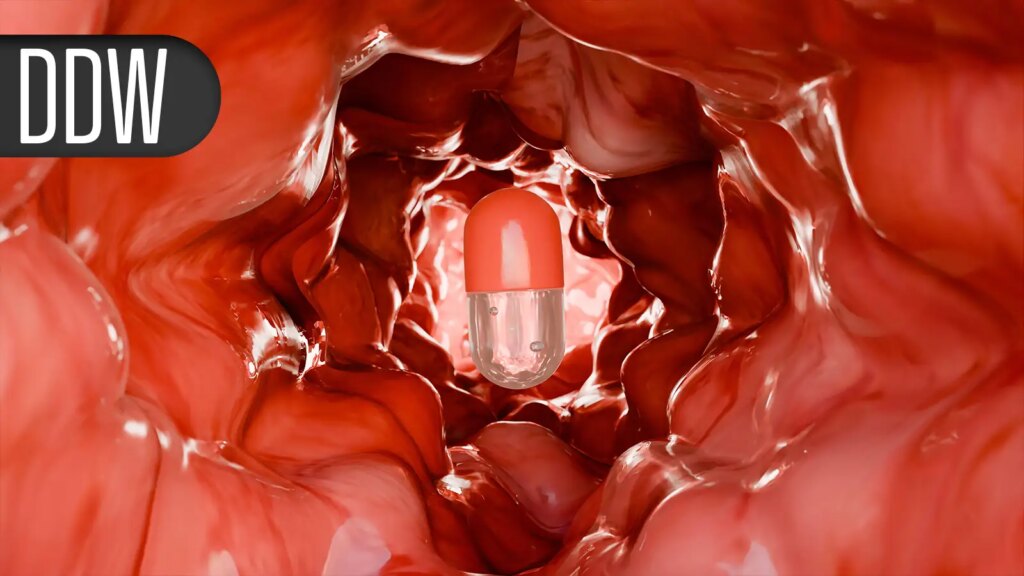
An investigational endoscopic procedure showed a trend for reducing weight rebounds after patients with obesity discontinued the GLP-1 agonist tirzepatide (Zepbound), according to preliminary results from the REMAIN-1 trial.
Among 45 patients who had shed about 15% of their body weight — or roughly 40 lb — before stopping tirzepatide, duodenal mucosal resurfacing was associated with a numerically lower percentage of weight regain at 6 months compared with a sham procedure (4.5% vs 7.5%, P=0.07), reported Shelby Sullivan, MD, of the Dartmouth Geisel School of Medicine in Hanover, New Hampshire.
Although not powered for formal hypothesis testing, the pilot trial suggested a direct dose response, with more ablations “correlating with more weight loss,” she said during a press briefing in advance of the annual Digestive Disease Week (DDW) meeting. Those who had a longer length of resurfacing only regained 7 lb on average, and maintained more than 80% of their weight loss, while the sham group regained about twice that amount (P=0.048).
“We know that weight regain after GLP-1 discontinuation is one of the most pressing unmet needs in obesity today,” Sullivan said. “These early findings suggest that duodenal mucosal resurfacing may offer a real long-term solution, one that resets the gut’s biology, rather than requiring lifelong pharmacotherapy.”
The novel minimally invasive procedure involves hydrothermal ablation of only the surface of the duodenum that sends signals to the brain to regulate hunger and metabolism. Saline injection into the submucosa protects deeper structures. Mucosal resurfacing stimulates the growth of new healthy tissue within 1 month, which is hoped to provide a sustainable metabolic reset.
“If validated in the full trial, this procedure could fundamentally change how we think about GLP-1 therapy” and could support FDA approval, Sullivan suggested. She added that if the procedure locks in the metabolic benefits, it could provide “an off-ramp for patients who either can’t or don’t want to be on these drugs long-term.”
While weight loss with GLP-1 receptor agonists “can be dramatic,” an estimated 60-70% of patients will discontinue the drugs within a year, Sullivan said in explaining the rationale of the study. First the metabolic benefits are lost, and then patients start regaining weight — as demonstrated in the SURMOUNT-4 trial.
Noting that duodenal mucosal resurfacing has suggested a weight-loss benefit in non-randomized trials, DDW press briefing moderator Loren Laine, MD, of the Yale School of Medicine in New Haven, Connecticut, asked “why not just get rid of the GLP and do it?”
“It’s not as effective in initiating weight loss compared to when weight loss has already been achieved,” said Sullivan, despite changing patients’ hunger.
“We get a small amount of weight loss with this therapy by itself and have significant improvement in metabolic function and metabolic control of glucose and in hepatic steatosis and MASH [metabolic dysfunction-associated steatohepatitis],” she said. “But we don’t see a ton of weight loss with this procedure by itself.”
As for how long the procedure might work in maintaining weight loss, Sullivan said data from diabetes studies suggest stable weight loss for up to 2 years and longer.
The REMAIN-1 study enrolled 45 patients with obesity, and all received structured lifestyle counseling. Participants were neither diabetic nor on a GLP-1 receptor agonist at baseline. Patients completed a tirzepatide run-in phase until they reached at least 15% total body weight loss, then they stopped the drug. At least a week after discontinuation, patients were randomized 2:1 to the resurfacing or sham procedure.
Baseline characteristics were balanced between arms. Patients had a median age of 43 years, 80% were female, and 42% had prediabetes. Weight went from 99 kg before tirzepatide to 82 kg afterward, representing 18% total body weight loss, and post-tirzepatide body mass index was 30.
No device- or procedure-related serious adverse events occurred.
“Participants really could not tell if they had had the sham or the real procedure, because they really don’t have much in the way of symptoms after the procedure,” Sullivan said.
Please enable JavaScript to view the comments powered by Disqus.
Source link : https://www.medpagetoday.com/meetingcoverage/ddw/120984
Author :
Publish date : 2026-04-27 21:25:00
Copyright for syndicated content belongs to the linked Source.