Just before the holidays in 2025, Julie Hart felt stuck. A nagging problem she had struggled with for years left her ruminating all day and questioning nearly everything she had ever said, done, or could do.
She was considering traditional therapy but decided instead to try single-session counseling. Rather than committing to weekly therapy sessions, she would get only 60 minutes to tackle the problem. It worked.
“It helped me get unstuck, is how I would describe it, in a very positive, meaningful, and effective way,” said Hart, of Springfield, Virginia.
Hart joined what experts say is an increasing number of people who, at least for now, have decided to forgo the weeks, months, or even years that traditional therapy implies in favor of a more targeted approach.
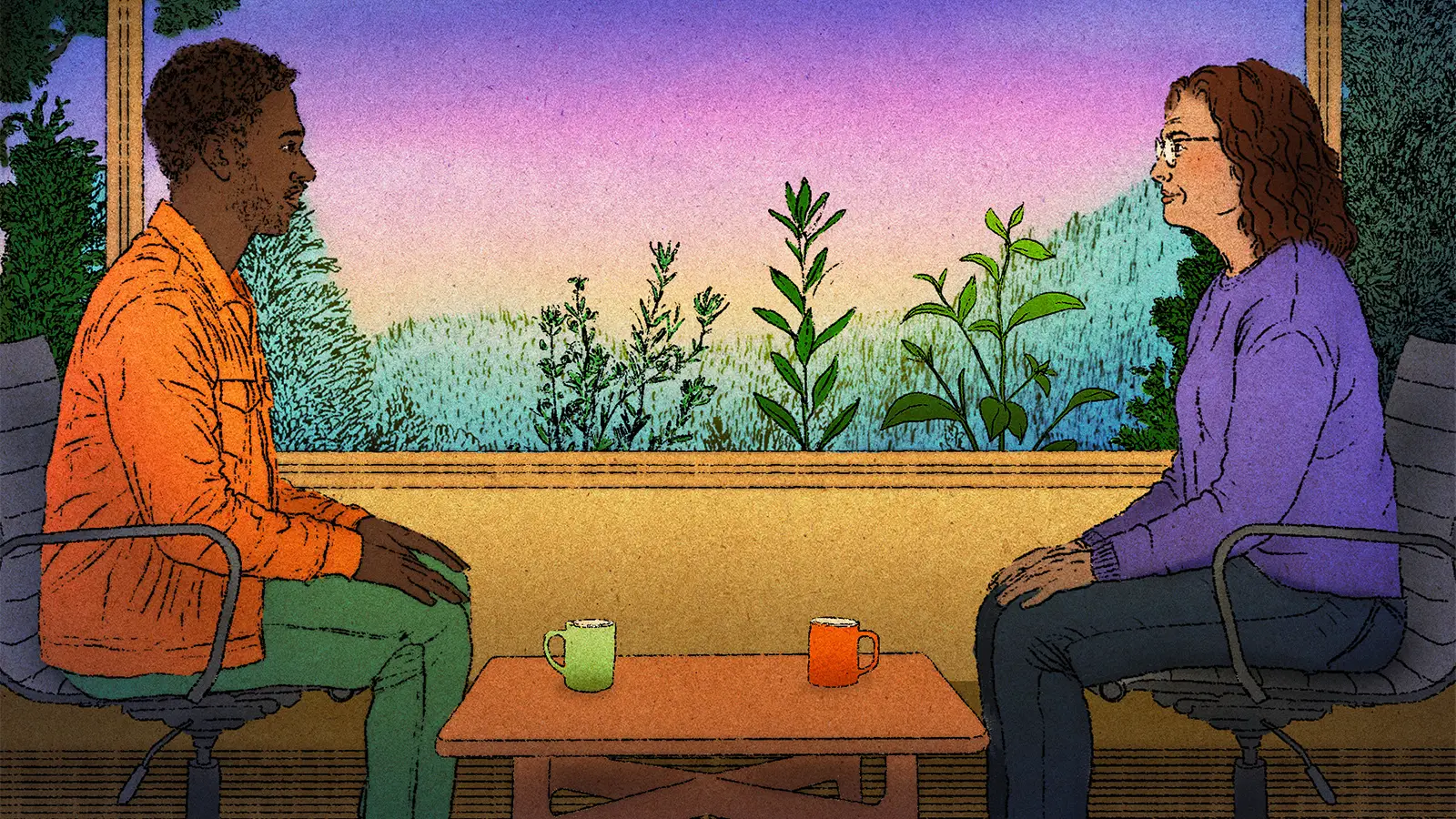
The therapy is what it sounds like: one session, typically an hour, where a counselor helps the client identify concrete steps toward relieving a specific problem. The intention is not to completely solve a problem, but rather to help clients walk away with a toolbox of strategies on how to approach it.
“Those strategies made all kinds of sense,” Hart said. “But you can’t identify them when you’re in it.”
Where Single-Session Therapy Comes From
It’s not new. Sigmund Freud notably offered it.
But it has become increasingly common as a way to fill gaps in access to mental healthcare, and the need is greater than ever, said Jessica Schleider, PhD, a Northwestern University psychology professor and the founding director of the Lab for Scalable Mental Health.
The cost of traditional therapy has risen to several hundred dollars a month, and even those who can afford it or have insurance encounter long waiting lists.
“Even if we doubled miraculously the number of trained mental health professionals overnight, we still wouldn’t come anywhere close to meeting the need for mental health support,” Schleider said.
That doesn’t factor in other barriers, such as people who can’t take time off work to attend weekly sessions.
Besides, data show that the most common number of sessions people are likely to receive is just one because many people start and don’t come back, Schleider said.
“It’s a really elegant solution to get people support they need at the moment that need arises,” she said.
How It Differs From Traditional Therapy
Sharon Thomas, PhD, a psychologist and director of single-session therapy at the Ross Center in Washington, D.C., said both counselor and client enter the session with expectations: “That the client will be able to have meaningful change in their life, and that we’ll see an improvement in both their self-efficacy and a decline in their symptoms in just one visit.”
Rather than do a full assessment of the client’s past and current circumstances, the counselor targets a specific problem. By the end of the session, the client walks away with a written plan of steps toward alleviating it.
“Not everyone wants to discuss childhood trauma,” Thomas said. “It’s very much focused on what the client wants to focus on in that moment.”
Who It’s For
Most people can benefit from single-session therapy, whether they are struggling with a difficult circumstance like a work problem or something more persistent, such as anxiety, said Arnold Slive, PhD, a psychology professor at Our Lady of the Lake University in Texas, who helped pioneer walk-in single-session therapy clinics in Canada in the 1990s.
Slive said counselors still have an obligation to screen for risk of self-harm, and many people with chronic mental health issues could still benefit from traditional therapy or medication.
“It’s not meant to replace all those other things that mental health professionals do, but it can help people feel better,” Slive said.
Another expectation is that every client already walks in with strengths that will help them address their issue. Single sessions also often attract a different type of client, such as someone who might be skeptical about whether traditional therapy is right for them.
“It’s like putting a toe in the water,” Slive said.
Experts Point to Research That It Works
Schleider said research on single-session intervention has “blossomed in the past 5 or 10 years to where this has become a more well-established form of mental health support.”
Her lab conducted a meta-analysis of 415 clinical trials and found that in most cases, single-session approaches reduced mental health difficulties across various problems, including depression and anxiety, for both youth and adults, she said.
For Hart, she has continued to feel better months later, and she said she felt more confident because she knew she could come back.
“I left feeling so optimistic,” Hart said.
Source link : https://www.medpagetoday.com/psychiatry/generalpsychiatry/120689
Author :
Publish date : 2026-04-07 21:31:00
Copyright for syndicated content belongs to the linked Source.