[ad_1]
- There is debate about whether surgical excision for cervical intraepithelial neoplasia grade 2 (CIN2) is necessary.
- Many CIN2 cases naturally regress and unnecessary excision can lead to adverse health effects.
- This target trial emulation study found that delaying treatment by 6 months or more did not alter cancer or CIN3+ risk at 3 years compared with immediate excision.
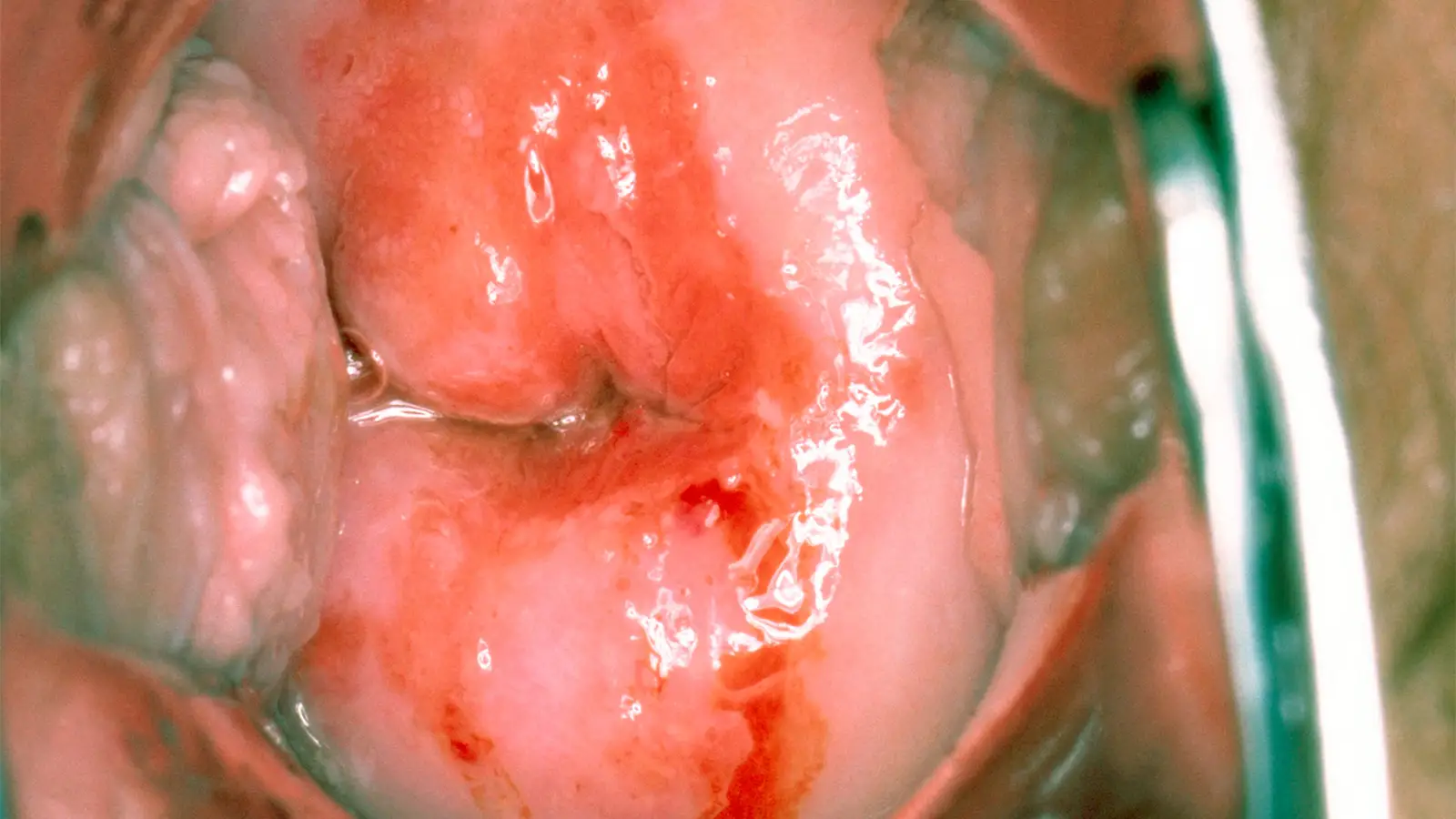
Delaying treatment for cervical intraepithelial neoplasia grade 2 (CIN2) wasn’t linked to increased cancer risk at 3 years and may reduce unnecessary excisions compared with immediate treatment, an observational emulation target trial suggested.
Among more than 12,000 women with CIN2, there were no major differences in 3-year risk for invasive cervical cancer whether the patient was treated immediately — defined as excision within 6 months of CIN2 identification — or if excision was delayed by at least 6 months with continued surveillance (respectively, 0.39% vs 0.43%), reported Li C. Cheung, PhD, of the National Cancer Institute’s Division of Cancer Epidemiology and Genetics in Rockville, Maryland, and co-authors.
Risk for the more severe CIN3+ at 3 years was also similar between groups at 8.85% with immediate treatment and 10.31% with delayed treatment, they wrote in Annals of Internal Medicine.
Immediate treatment was associated with a higher 3-year probability of less than CIN2 upon excision — a signal of a potentially unnecessary procedure — compared with delayed treatment (respectively 36.2% vs 7.8%).
“This study provides evidence that treatment of CIN2, especially those with lower-risk CIN2 … may be safely delayed,” Cheung told MedPage Today. “However, women with a CIN2 diagnosis remain at higher risk than women with less-than-CIN2 diagnoses and require continued monitoring.”
There’s near universal agreement on the necessity to treat CIN3, but less agreement on CIN2 as it is a less reliable diagnosis, and among younger women it’s more likely to regress without treatment. Recent research found that 22% of untreated CIN2 progressed to CIN3+ with 0.3% developing cancer, whereas 57% naturally regressed.
Cheung explained that “treatment may increase risk for obstetric complications, and therefore it is important to avoid unnecessary treatments.” He added that this study found that delaying treatment reduced unnecessary excisions, defined as excisions in which the excised tissue was found to be less than CIN2 and with no concurrent high-grade cytologic abnormalities.
In women at higher risk — those with human papillomavirus (HPV) 16/18 positivity and/or high-grade cytology — CIN3+ risk was higher regardless of management strategy, with little difference in rates of potentially unnecessary excisions. However, among lower risk women — those with high-risk HPV positivity but with normal or low-grade cytology — immediate treatment was associated with higher probability of a potentially unnecessary excision.
“These findings suggest that delayed treatment may be most appropriate for women with lower-risk antecedent screening results and support a risk-based approach to CIN2 management,” authors wrote.
“These findings also suggest that a tailored prevention approach may improve CIN2 management by identifying women at lower risk for progression who may benefit most from delayed treatment,” they continued.
For this emulation target trial, authors utilized observational data to compare immediate versus delayed treatment of CIN2, estimating the intention-to-treat effect. Cheung explained that an actual randomized trial “would be difficult to conduct because many women and their clinicians may have strong preferences regarding management.”
Eligible participants who presented at Kaiser Permanente Northern California were identified via electronic medical records. These patients had a biopsy-diagnosed CIN2 between January 2017 and October 2023 without concurrent CIN3 or prior CIN2 or more severe diagnosis, and no history of hysterectomy or other destructive treatment. This resulted in a cohort of 12,012 women.
Patients were either treated immediately, with loop electrical excision within 6 months of CIN2 detection without interim surveillance by screening and colposcopy, or had delayed treatment with continued surveillance and excision performed after at least 6 months if needed.
Excision outcomes at 3 years were categorized as appropriate (CIN3+), intermediate (CIN2 or less severe but with concurrent high-grade cytology), potentially unnecessary (less than CIN2), or no excision. The occurrence of invasive cervical cancer or CIN3+ within 3 years was also assessed.
Those receiving immediate treatment skewed older than women who had delayed treatment (median age 38 vs 29) and had higher antecedent HPV 16/18 positivity (12.4% vs 7.0%). Both groups had similar median numbers of follow-up visits but those in the delayed treatment group had longer median duration of follow-up than those with immediate treatment (22 vs 17 months). Baseline characteristics were balanced after inverse probability weighting.
Authors noted some limitations, including the possibility of residual confounding, that the study design doesn’t capture long-term differences, and that cancer outcomes were rare, and thus estimates may be imprecise.
Cheung said that next steps include determining the optimal frequency and modality of continued monitoring of women with CIN2.
[ad_2]
Source link : https://www.medpagetoday.com/obgyn/cervicalcancer/121876
Author :
Publish date : 2026-06-22 21:34:00
Copyright for syndicated content belongs to the linked Source.