[ad_1]
I had a friend working as a paramedic at the time, and when I recounted this experience, he told me the criteria he was trained to follow in the field were a lot narrower. He could declare someone dead if he found decapitation, incineration, lividity and rigidity, decomposition, or evisceration of the heart, brain, or liver. Otherwise, they had to start CPR and rush the patient to a hospital, where only a doctor could declare death.
I was confused — why would my assessment with a stethoscope and a penlight be more valid just because I was performing it in a hospital?
Only years later, after I became a forensic pathologist, did I come to understand that none of the different protocols for declaring death are foolproof. It doesn’t happen often, but it happens enough: someone, somewhere gets declared officially dead when they haven’t actually given up the ghost. Usually it’s an elderly person who had been expected to die but is found still breathing in the morgue. They often get resuscitated only to die days or weeks later, and the distraught family files a complaint that fuels a macabre flurry of clickbait stories.
Sometimes it’s an unhoused person, unconscious, and the first responders declare death based on a finding of decomposition because of a smell coming off the patient, or even the sight of maggots on them. When the medical examiner finds a heartbeat, the case makes the news and all paramedics everywhere get a memo telling them to check for signs of life on every single call-out, period.
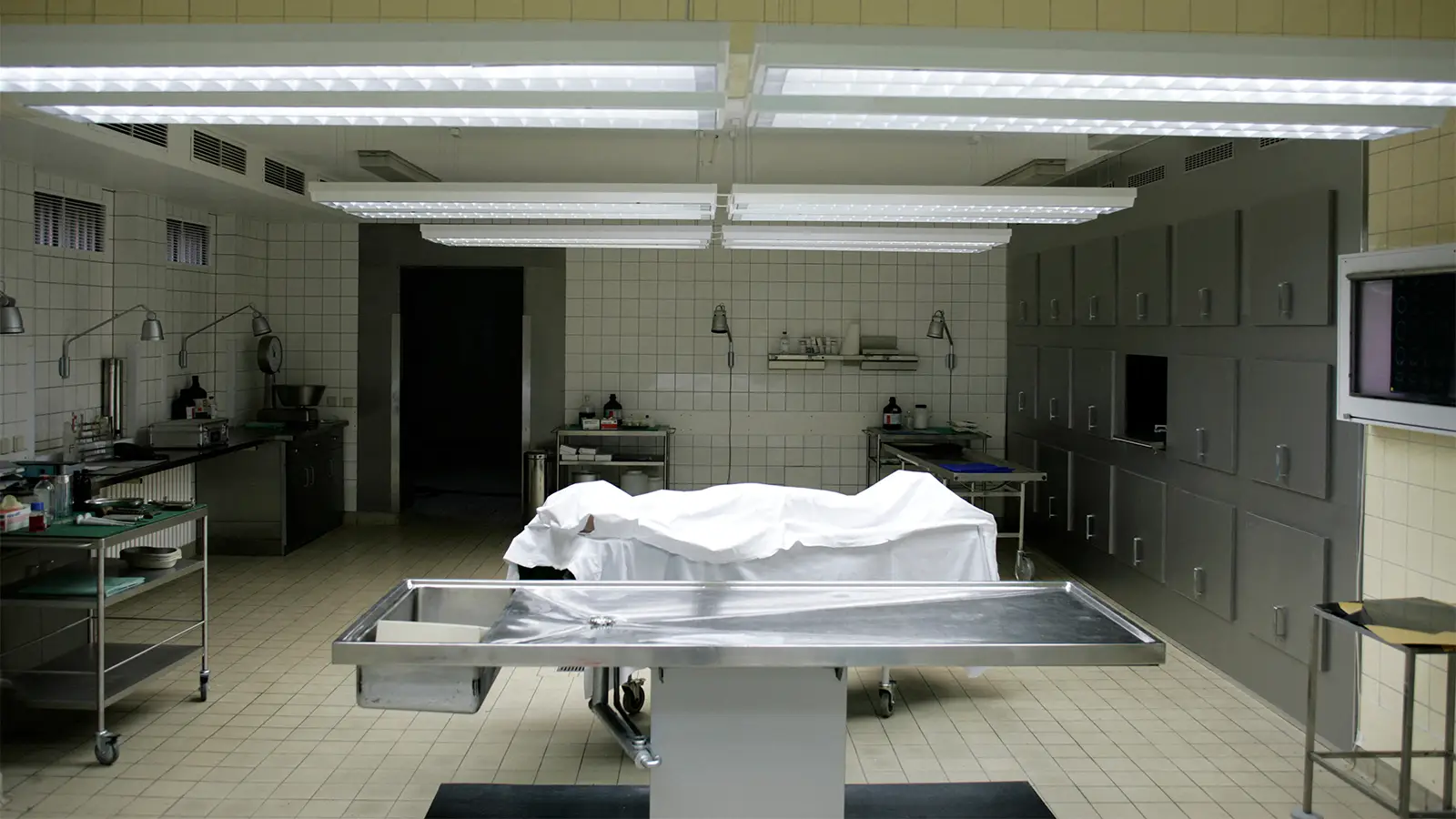
For months after one of these stories hits, we in the morgue get an uptick in profoundly decomposed bodies arriving with electrocardiogram (EKG) pads on them.
So how about that electrocardiograph? If our crude assessment using only eyes and ears and the occasional stethoscope can so easily miss shallow breaths and a weak pulse, why aren’t we always slapping on those pads and looking for an electrical flatline? Well, as with any tool, an EKG only works if you use it right. If you misplace the leads or if the machine is somehow faulty, then you’ve just relied on a technology that is going to fool you into finding death where life hangs on. Same with an electroencephalograph (EEG) — it’s only reliable if you know how to read an EEG. That’s why so many hospitals require that brain death in children be assessed with two reads, separated by up to 48 hours.
Then there’s “locked in” syndrome, a horrific condition that results from a rare focal brain stem injury that leaves the patient aware of their surroundings, aware of what’s going on around them, but paralyzed, speechless, and unable to respond — maybe even appearing brain-dead while they’re quite conscious. Which is why you need that EEG. Hypothermia — especially in children rescued from drowning — can deliver us patients in a state of suspended animation, all their metabolic systems so slowed by cold that advanced cardiovascular life support and emergency medicine training teaches that “they aren’t dead till they’re warm and dead.” Get that patient warmed to normal human body temperature, then check again for signs of life.
So, is burial alive such an irrational fear? It’s not exclusively a modern one: Victorian coffins could famously come with an option for an alarm bell operable from within, just in case of premature interment.
This brings us to the recent news of an Arizona toddler declared dead by a hospital physician and then, 5 hours later, found breathing by the team from the Maricopa County Medical Examiner’s Office who were sent to retrieve the body. The child was resuscitated and rushed to a (different) hospital for successfully life-saving care.
It’s possible that the doctor didn’t have much experience with the “warm and dead” rule for child drowning cases, or that hospital protocols for declaration of death were not followed, or both. Body cam footage and police records indicate that the family members and police officers said they believed the child was still breathing and gasping for air, only to have their concerns dismissed by medical staff.
Meanwhile, Mercy Gilbert Medical Center is hiding behind patient confidentiality, closing the door to all public inquiry. It seems that those in the community wondering what the hospital is doing to prevent the same thing happening in their emergency department tomorrow will have to wait until management decides they deserve to know.
What the community should get instead is transparency and full disclosure. There are ways to reassure the public without revealing privileged patient medical information. From a public relations standpoint, the hospital’s risk managers could find ways to explain how hard it can be to declare someone dead — that mistakes can be made, even with modern medical equipment and well-trained physicians, because of the circumstances of injury or the patient’s underlying medical conditions. It’s harder to explain why the concerns of family members and police officers were so readily dismissed. Instead of even trying, the hospital just calls it “a heartbreaking situation.”
But it didn’t have to be — and it’s not enough to refuse to explain what made it so.
[ad_2]
Source link : https://www.medpagetoday.com/opinion/working-stiff/122163
Author :
Publish date : 2026-07-13 16:57:00
Copyright for syndicated content belongs to the linked Source.