
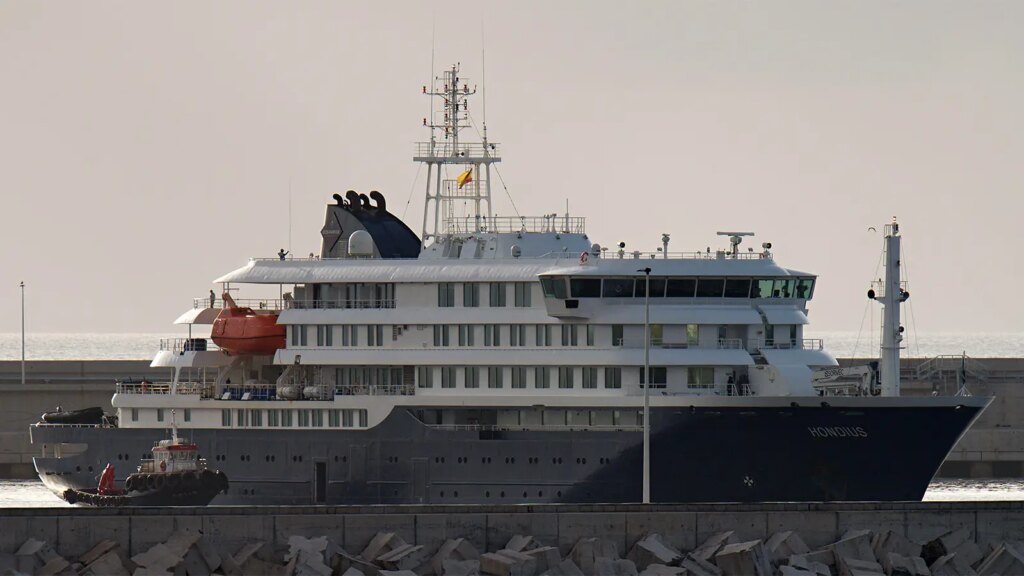
The doctor who is in isolation in a biocontainment unit in Nebraska described to CNN what it was like to be on board the cruise ship hit by a hantavirus outbreak — and questioned whether he and others on board may have already had the disease.
Oregon oncologist Stephen Kornfeld, MD, who is at the University of Nebraska Medical Center (UNMC) in Omaha, said he and a number of other passengers experienced flu-like symptoms in early April.
“I had 3 days of night sweats, a lot of chills, some mild respiratory [symptoms], and a lot of fatigue,” Kornfeld told CNN. The night sweats and respiratory issues cleared up, but the fatigue lingered for more than 2 weeks.
At the time, it seemed like an ordinary virus one catches on a ship, Kornfeld said. But since tests aren’t as “straight-forward to interpret” as one might think, “it may never be known if that illness, which others also had, was hantavirus” or some other virus.
The CDC and other labs are running tests to assess whether Kornfeld has the virus, he explained. Results are expected later this week.
Along with members of the ship’s staff, Kornfeld had nasal swabs taken and frozen in early May, which were later processed in the Netherlands. One test was negative and the other was “faintly positive,” he noted. Those results were shared with the CDC, “and here I am,” he said.
Kornfeld acknowledged that his “faintly positive” result might indicate that he is either about to get sick or has already been ill with the virus.
The latter would be “good news … but it’s still possible that that test represents evolving disease, and I will get symptoms down the road,” which is why he’s in isolation, he explained.
“I’m not ill, but the term I hear a lot is ‘abundance of caution,'” he added. “This is a very secure facility. So if I am to get sick and spill virus, there’s no way that virus is getting out of this building.”
Kornfeld became the ship’s de facto doctor after its hired doctor became sick. He said he had two key points of contact on the ship: a “gentleman who was sick, was around us, and socializing with us,” as well as contact with other sick people in early May.
“Now, maybe I’d already had the disease, or maybe I hadn’t. There’s a lot of speculation, but I had two different contacts, which certainly puts me at higher risk,” he pointed out.
Asked whether he believes transmission might occur with more casual contact or could be airborne, Kornfeld called the idea “very speculative.”
“I didn’t have direct intimate contact with the original patient, [but] a lot of us had frequent, mild contact with each other,” he said, adding that it’s possible that this contact was “repetitive enough that it allowed transmission.”
Kornfeld and 17 other American passengers from the ship were flown to UNMC; 16 remained in Nebraska while two were flown to Emory University in Atlanta after one partner developed symptoms. That individual has since tested negative, according to HHS.
Fifteen passengers remain in quarantine at UNMC. Kornfeld is the only one there in a biocontainment unit.
The oncologist appeared healthy during the interview. “I feel wonderful, 100%,” he said.
As for his stay in isolation, Kornfeld said that his room looks like any other hospital room on the inside, but has multiple layers of biocontainment including “many doors” and “clean rooms” — vestibules between the isolation rooms and the rest of the facility where medical staff can change in and out of protective gear.
“It’s a little weird being in here by myself,” he said, but he sees the doctors and nurses often, and is constantly checking WhatsApp. “It’s really amazing how quickly time flies. Many weeks of this? Well, we’ll see how that goes.”
Please enable JavaScript to view the comments powered by Disqus.
Source link : https://www.medpagetoday.com/infectiousdisease/generalinfectiousdisease/121252
Author :
Publish date : 2026-05-13 20:33:00
Copyright for syndicated content belongs to the linked Source.